
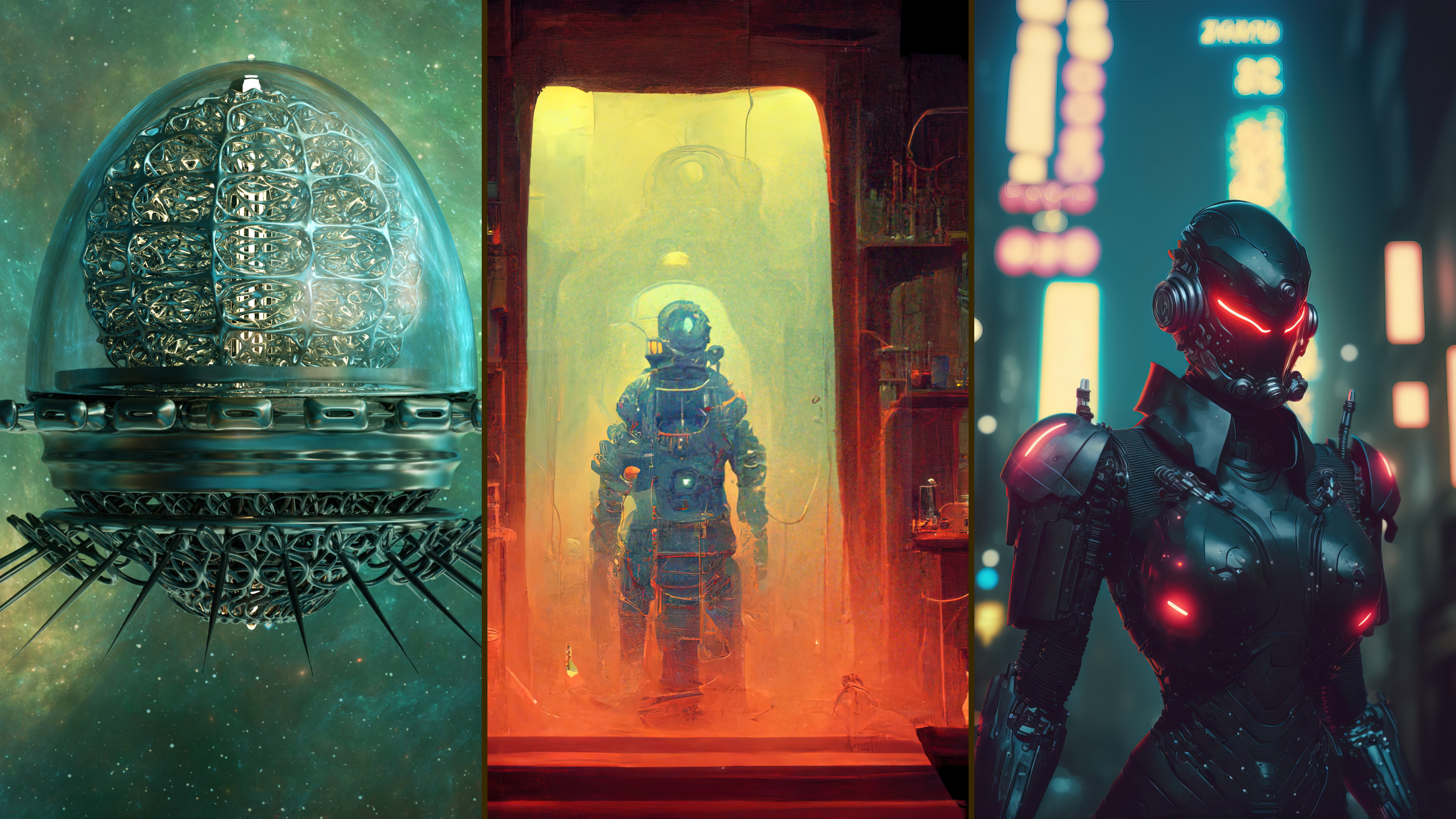
I keep coming back to science fiction.
Not necessarily the same books, movies, games, or fictional universes. Some stay with me longer than others. Some change when I come back to them. A few probably survive better in memory than they do under close inspection years later.
But the genre itself never really seems to leave.
Give me a ruined civilization, an impossible machine, a distant world, a collapsing empire, or a messy argument about whether something that looks human actually is human, and I’m interested.
There is something familiar about those stories even when everything inside them is deliberately strange.
That is probably why science fiction still feels a little like home.
At Some Point, Stories Stop Being Things You Watched
There are stories you enjoy and move on from. Then there are stories that somehow become part of the equipment you use to understand every story that comes afterward. You recognize ideas because you’ve seen another version of them before. New worlds remind you of old ones. A character makes a choice and somewhere in the back of your head another character from another story is standing there making the opposite one. The references accumulate. Eventually, being a lifelong science fiction fan isn’t just a list of things you have watched or read. Those stories become part of your vocabulary. And I don’t mean trivia. Knowing the designation of every spaceship in a fictional navy is certainly a kind of knowledge, although perhaps one best deployed carefully at dinner parties. I mean the ideas underneath it. The questions. The types of worlds that immediately make sense to you because you’ve spent so much time wandering around inside variations of them. There is actual research behind the idea that fiction can become entangled with the way we understand ourselves. Work on fiction reading and narrative identity has explored how fictional stories can interact with memories, emotions, and the stories people construct about their own lives. I don’t need science to tell me that a good story can stick with someone. But it is interesting that the sticking part may be more important than we usually admit.Some stories stop being things you consumed. They become part of the language you use to understand everything that comes after them.
Science Fiction Gave Me Questions Bigger Than the Spaceships
To be clear, the spaceships help. I am not above a good spaceship. But the thing that keeps pulling me toward science fiction isn’t really the technology. It’s what the genre gets to do with it. Science fiction can take a question we already have and make it enormous. What makes someone human? Now make a machine that remembers being human. What happens when political power becomes too concentrated? Now stretch the empire across thousands of worlds. What happens when technology advances faster than our ability to decide whether we should use it? Give humanity another twenty thousand years and see how badly we can complicate the answer. This is one reason questions of identity are so persistent in science fiction. The Encyclopedia of Science Fiction‘s entry on identity runs through clones, memory changes, cyborgs, uploaded minds, duplicated people, parallel selves, and all the other cheerful ways the genre has found to make “Who am I?” substantially more difficult. And that is just one question. Science fiction gives us room to ask what happens to faith when civilization changes beyond recognition. Whether progress actually makes people better. What survives when institutions collapse. What happens when survival requires a moral compromise. Whether humanity can escape the same cycles if we just move them to another planet. Sometimes the answer is hopeful. Sometimes everyone is eaten. It’s a flexible genre.The Worlds I Keep Circling Back To Aren’t Very Much Alike
This is part of what makes trying to explain a lifelong attachment to science fiction difficult. “Science fiction” covers an absurd amount of territory. Dune, Blade Runner, and Warhammer 40,000 can all fit somewhere beneath the same enormous genre umbrella, but they are doing very different things once you get underneath the machinery. And I think that difference is part of the appeal.Dune Makes the Future Feel Ancient
One of the things that stands out to me about Dune is how little its distant future feels like the clean technological future we are often promised. It is full of old houses, inherited power, religion, ritual, prophecy, political marriages, human ambition, and institutions that have had enough time to become almost geological. The technology is futuristic. The people remain extremely human. That is more interesting to me than a future where technical progress conveniently solves all the old problems. Civilization can invent astonishing things and still carry pride, greed, faith, fear, loyalty, tribalism, love, and the desire for power right along with it. Apparently those fit in the luggage.Blade Runner Turns Humanity Into the Question
Blade Runner comes at science fiction from somewhere else entirely. Its technology matters, but the more interesting problem is what happens when the distinction between a manufactured person and a “real” person becomes harder to defend than everyone would prefer. Memory. Mortality. Empathy. Creation. Identity. The machinery exists to make those questions unavoidable. That kind of science fiction sticks with me because the speculative idea isn’t merely there to make the world look different. It puts pressure on something we already believe.Warhammer 40K Asks What Happens When Everything Goes Wrong
Warhammer 40,000 takes a somewhat less restrained approach. Humanity reaches the distant future and discovers that nearly every problem can, in fact, become worse. Much worse. But underneath the enormous armies, impossible scale, religious imagery, alien civilizations, psychic horrors, and machinery decorated with a statistically concerning number of skulls, there are still recognizable questions. What happens when institutions survive longer than anyone remembers why they existed? What does faith look like when it becomes inseparable from political power? What happens when survival becomes the justification for almost anything? What parts of humanity survive an empire that has forgotten most of its own history? The setting exaggerates everything until it becomes grotesque. And sometimes exaggeration makes an idea easier to see.Coming Back to Old Science Fiction Is a Strange Experience
The interesting thing about returning to old stories is that the story has been sitting there doing absolutely nothing. You are the thing that changed. That can be inconvenient. Something that once seemed incredibly profound may suddenly sound like it was written by a philosophy student who discovered Nietzsche two hours ago. Characters you barely noticed can become the most interesting people in the story. A straightforward hero can look more complicated. A villain’s argument can become more understandable without becoming correct. And themes that went straight past you before can suddenly become impossible to miss. That’s one reason I don’t think sci-fi nostalgia is quite enough to explain why these stories keep mattering. Nostalgia wants the old thing to remain exactly where we left it. Good science fiction often doesn’t cooperate. You bring more life back with you every time you return. Family. Work. Faith. Failure. Responsibility. Things you’ve learned. Things you were very certain about before discovering that certainty was doing most of the work. The story hasn’t grown up. You have.The story hasn’t changed. You bring a different person back to it.
Being a Science Fiction Fan Becomes Its Own Language
Spend enough time around science fiction and you start collecting a weird shared vocabulary. Not literally the vocabulary, although there is plenty of that too. The references. The visual shorthand. The arguments that apparently have no natural end point. You can tell another fan that something feels very Dune, very cyberpunk, very Star Trek, very grimdark, or suspiciously like someone reinvented a concept science fiction writers have been worrying about since before either of you were born. And they probably know what you mean. Fandom becomes a kind of shared cultural memory. That doesn’t mean everyone likes the same things. If anything, science fiction fandom has produced heroic amounts of disagreement over stories about imaginary futures. But even the arguments come from caring about the same broad territory. The ships matter because somebody imagined them. The lore matters because we spent time learning it. The stories matter because they gave us something worth arguing about afterward. At a certain point, saying “I’m a science fiction fan” tells people something about you that goes beyond a preferred shelf at the bookstore.Science Fiction Also Taught Me What I Want to Create
This is probably where science fiction connects most directly to what I’m doing with EpicAgain now. There is a point where consuming fictional worlds starts creating another urge. You start wondering how they were built. Why this civilization works the way it does. Why the writer chose this technology but rejected another. What assumptions are hiding underneath the setting. What you would change. What question you would ask instead. And eventually, at least for me, looking at other people’s worlds makes me want to build some of my own. That is a big part of why worldbuilding has a place inside EpicAgain. I don’t want to reproduce Dune, Blade Runner, Warhammer 40,000, or any of the other things feeding the creative machine. I want to understand why parts of those worlds work, what questions underneath them continue to bother me, and then push those questions somewhere else. That is also what I’m beginning to do through the original universe I’m building here. Science fiction gave me worlds to explore for years. Now I want to see what happens when I start building one.Home Doesn’t Have to Mean Comfortable
Calling science fiction “home” sounds warmer than a lot of science fiction deserves. There are dying worlds. Totalitarian states. Body horror. Alien parasites. Machines asking uncomfortable questions about personhood. Entire civilizations making decisions that suggest somebody should perhaps confiscate the keys. Cozy. But I don’t mean home as comfort. I mean recognition. I know this territory. I know the kinds of questions hiding behind the impossible technology and ruined civilizations. I recognize the curiosity that drives someone to imagine a world that doesn’t exist and then spend an unreasonable amount of time deciding how its transportation system works. The details change. The scale changes. The future changes. The urge behind it feels familiar.Science fiction feels like home not because it is comfortable. It feels like home because my imagination recognizes the territory.
No Comments yet!