Two free guides. One small creative adventure. Start your adventure here!

You Do Not Need a Warhammer PhD: The Beginner’s Road From “That Army Looks Cool” to Your First Game

It usually starts with one miniature.

A towering armored warrior. A strange little goblin riding something with far too many teeth. An elegant alien skimmer that looks like it should be illegal to park in a normal garage.

You stop scrolling. You look closer. You think, “That looks cool.”

And then you make the dangerous mistake of asking the internet how to start Warhammer.

Suddenly you are being introduced to several fictional millennia, multiple game systems, army-building advice, rules discussions, painting equipment, edition changes, and an argument about which faction is supposedly doomed this month. You came here because of one excellent plastic wizard. Now you appear to be enrolling in a postgraduate program.

The good news is that Warhammer does not require an entrance exam. The bad news is that the hobby has so many interesting doors that beginners often try to walk through all of them at once.

So here is a smaller plan: pick the door that matches what made you curious. You can open the others later.

First, Decide What You Actually Want From Warhammer

Warhammer is not one activity. It is a collection of overlapping hobbies. Some people spend their evenings painting individual models. Some want tactical games with friends. Others get lost in novels, art, factions, and the absurdly elaborate history of these worlds. Plenty eventually do all three, but that does not mean you have to start with all three.

Try this question: if you could only do one Warhammer thing next weekend, what would make you happiest?

Door One: “I want to paint something.”

Door Two: “I want to play a game.”

Door Three: “I want to explore the story.”

That answer is your starting point, not a lifetime contract. Choosing a door means you can stop researching the entire hobby and do one real thing.

Door One: I Want to Paint Something

If the miniature itself grabbed you, start there. You do not need an army list to paint a miniature. You do not even need to know whether its faction wins games.

Your first quest is wonderfully unimpressive: choose one model you genuinely like and get paint on it.

One model. Not a starter army. Not a thirty-color shopping basket. Not a beautifully organized workstation that requires moving the dining room into the garage.

Look for an introductory miniature-and-paint set if you want a straightforward bundle. Warhammer Colour publishes beginner tutorials covering basic preparation, basecoating, shading, drybrushing, and other techniques. You can follow one simple guide or pick a few colors and experiment.

A sensible first setup is a model, the supplies needed to assemble it safely, an appropriate primer if the paint process calls for one, a small selection of paints, a brush, water, and a surface you can clean. Follow safety instructions for tools and paints, especially around children. You can acquire fancy lighting and seventeen specialty brushes after you know you enjoy holding the first one.

For your first paint session, aim to finish one visible section. An armor plate. A cloak. A shield. A suspiciously expressive goblin face.

The first model is not a job interview. It is a place to find out whether you enjoy the process.

When I started choosing an Aeldari army, I was interested in how the models looked and how much room they gave me to experiment with color. The project even took a different turn when my daughter became interested in pink space elves. That was a useful reminder: a paint scheme can be a creative choice, not a test of whether you copied the box correctly.

If you discover that you love painting but do not particularly care about playing, you are still doing Warhammer. No imaginary hobby inspector is going to confiscate your brush.

Door Two: I Want to Play a Game

If the appeal is moving tiny armies across a table, making risky decisions, and watching dice ruin your excellent plans, begin with a format designed to be manageable.

For Warhammer 40,000, look at Combat Patrol. It uses compact, predefined forces so you can learn the game without immediately building a giant custom army list. As of the July 2026 update, Games Workshop says the Combat Patrol rules in its Warhammer 40,000 app are free, without needing a Codex or subscription for that content. Check that the specific force you are considering is supported in the current app, especially if you are buying an older secondhand box.

For Warhammer Age of Sigmar, look at Spearhead. It is a smaller format using predefined forces from dedicated boxed sets, with downloadable rules for each Spearhead. It is built to get players into games without first assembling a sprawling army.

Neither option means “buy the box immediately.” In fact, I would suggest the opposite first.

Your first quest is to watch or join one introductory game. Ask a local hobby shop, club, or Warhammer store whether someone runs demonstrations or beginner nights. Ask whether you can borrow an army or watch a teaching game. A friendly player explaining why that unit just charged the wrong thing can be more useful than three hours of video tutorials.

If you are learning with a friend, use a beginner-oriented starter set or arrange to borrow suitable forces, dice, terrain, measuring tools, and any format-specific cards or materials. Free rules do not necessarily mean you already own every physical thing required for a game. Check the current format requirements before purchasing.

For game one, measure success by what you understood, not the final score. Did you learn how a turn works? Did you move toward an objective? Did you understand one ability better by the end? Excellent. Your troops have already achieved more than many fictional military commanders.

Door Three: I Want the Story

Maybe you are here because the setting caught you. That is a perfectly good reason to start, and it may be the least expensive door to open.

Warhammer 40,000 offers a far-future galaxy full of empires, aliens, ancient grudges, and a truly irresponsible quantity of skulls. Age of Sigmar is a high-fantasy setting of realms, gods, monsters, cities, and armies with very different ideas about civilization.

Do not start with a demand to understand the complete timeline. Pick one faction you find intriguing and one conflict involving them.

Your first quest is to answer three questions: Who are these people? What do they want? Who or what is in their way?

Read a short official faction introduction, sample a story, or explore a beginner-friendly novel connected to that group. If a character or setting hooks you, follow it. If not, switch factions. There is no prize for stubbornly studying a corner of the lore you do not enjoy.

The lore door can also lead to painting or gaming later. A favorite character might make you want a model for your shelf. A battle you read about might make you curious about how the tabletop game represents it. But the reading was never just preparation. Enjoying the world is already participation.

Warhammer 40,000 or Age of Sigmar?

You can spend days researching which game is the better investment. A simpler question is which world you want to spend time in.

Does science-fiction warfare, alien technology, and ancient space civilizations make you curious? Start by exploring 40K.

Do you want fantastical creatures, magical realms, monsters, and armored heroes? Age of Sigmar may be the more interesting doorway.

This is not a claim that one is easier, cheaper, or better for everyone. Your local community matters too. If your friends play one game every Thursday and nobody nearby plays the other, that is useful information if tabletop gaming is your goal.

And if you are mostly painting or reading, the local player count matters much less. The best universe for your first miniature may simply be the one whose models you keep coming back to look at.

Choosing a Faction Without Turning It Into Homework

There is a temptation to search for the best beginner faction. That can help if you know exactly what kind of game experience you want, but “best” is often doing far too much work in that sentence.

Try the Three-Yes Test instead.

First: Do I like looking at these models? You may spend many evenings assembling and painting them. Visual interest matters.

Second: Does the faction’s general story or battlefield personality interest me? You do not need to know every rule. You just need a reason to be curious.

Third: Can I imagine enjoying a small first project with them, even if I lose my early games or change my color scheme?

If you have three yeses, you have a strong candidate. If you only have one, keep exploring before making a large purchase.

I chose Aeldari because their fast, specialized style interested me, their models looked fun to paint, and the idea of space elves made the project feel inviting at home. That choice does not guarantee easy games. It gives me a reason to keep learning.

Rules and competitive rankings can change. Your affection for a weird little army of tree spirits, skeletons, or futuristic warriors is a much sturdier foundation.

The “Do Not Buy Yet” Box

Warhammer has a remarkable ability to make the next purchase feel like the thing standing between you and having fun. Sometimes it is. Often it is not.

Before you know which door you enjoy, postpone the big army expansion, the premium painting station, the huge collection of paints, and the stack of faction books you have not yet learned how to use.

If you are painting, one small project will teach you what supplies you actually need next.

If you are playing, confirm the current rules and materials for your chosen format, and ask your local group what they use before buying books or older boxed sets. A standalone force box may not include an opponent’s army, a board, terrain, or all the accessories needed to play.

If you are reading, do not buy six novels because someone says they are essential. Finish one story and see whether you want another.

There is no shame in buying hobby supplies you love and can afford. But buying everything before doing anything can turn curiosity into an expensive waiting room. Your goal is to discover the activity, not assemble a museum gift shop.

Your Seven-Day First Quest

You do not need seven days of free evenings. Think of this as seven tiny decisions you can spread across a week or two.

Day 1: Pick your door. Painting, playing, or story. Write it down.

Day 2: Choose two factions that catch your eye. Do not research the entire roster.

Day 3: Give each faction the Three-Yes Test. Pick one to explore first.

Day 4: Find your smallest next action. One miniature, one beginner game, or one short piece of lore.

Day 5: Check what you already have or can borrow. Make a short shopping list only if something is genuinely missing.

Day 6: Spend twenty minutes doing the hobby, not preparing to do it. Put down paint, watch or join the teaching game, or read the story.

Day 7: Ask what you want to do again. That is your next quest.

Notice what is missing: no deadline to finish an army, no requirement to memorize every rule, no pressure to select a permanent faction, and no promise that the first miniature will look like the studio photograph.

If life interrupts halfway through, nothing has been lost. Pick up at the next small action. Hobbies are allowed to fit around real life.

A Note to the Veteran Helping a New Player

If a friend asks how to get into Warhammer, you have a wonderful opportunity to make the door smaller rather than showing them the entire castle.

Ask what attracted them first. Then help them do that thing.

If they love painting, hand them a model and a brush. If they want to play, offer a simple teaching game with borrowed miniatures. If they love the story, recommend one approachable entry point connected to a faction they already like.

Save the competitive meta, edition history, and fifteen exceptions to the rules for the moment they become useful. Enthusiasm is generous, but a fire hose of knowledge can feel remarkably similar to a locked gate.

The best introduction is one that leaves someone excited to come back.

You Are Allowed to Begin Before You Understand

There will always be more Warhammer than you know. More models, more stories, more rules, more painting techniques, more opinions about whether that particular shade of blue is technically correct.

Good. That means the hobby has room to grow with you.

You do not need to master it before you start. You need one small reason to begin and one next action that fits your actual life.

That model you stopped scrolling for? Go look at it again. Decide whether you want to paint it, play with it, or learn why it exists.

Pick a door. Take the tiny first quest. The rest of the world can wait until you are ready to explore it.
Warhammer Pile of Shame? Build a Hobby Queue Instead

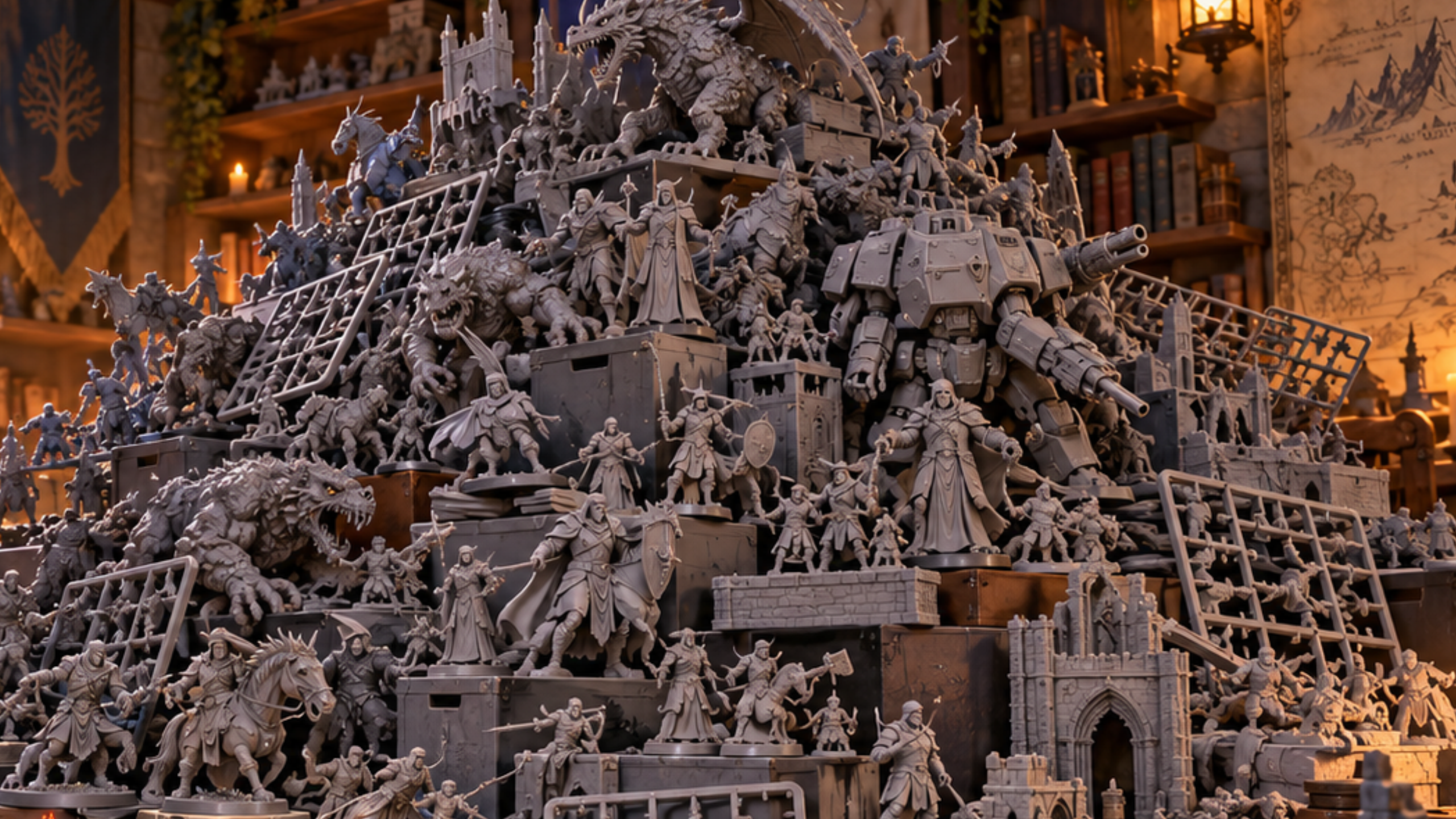
Your Pile of Shame Is Lying to You: Turn the Gray Mountain Back Into a Hobby

The first box is exciting. You open it, look at the sprues, imagine the colors, and briefly become the kind of person who absolutely has a plan for every miniature.

Then another box arrives. Perhaps there is a starter set you wanted, a character model that looks fantastic, or a discount that seemed rude to ignore. Life gets busy. A few assembled models wait for primer. A few primed models wait for paint. Somewhere in the cupboard, an unopened army is developing its own civilization.

Warhammer players have a name for this: the pile of shame.

It is a funny name right up until you start believing it. A hobby that was supposed to offer a few hours of creativity begins to resemble a warehouse with a very disappointed manager.

Here is the part I think we get wrong: unpainted plastic is not a debt. It is a collection of possible projects. The problem begins when every box on the shelf gets an equal vote in what you should do next.

You do not necessarily need to paint faster. You need to be able to choose again.

When the Joke Starts Sounding Like an Invoice

The pile of shame joke works because nearly everyone who collects miniatures recognizes some version of it. We buy a model because it looks wonderful. We set it aside for a free weekend. Then the free weekend goes somewhere else, usually into laundry, errands, family plans, or recovering from the week.

There is nothing especially mysterious about that. A miniature is not an emergency. It should be allowed to wait.

But the language we use changes how the shelf feels. If every unpainted model is unfinished business, then even sitting down to paint one miniature can feel insufficient. You finished a Guardian? Lovely. There are forty-nine more behind it, and the large centerpiece model has been staring at you since spring.

Now your hobby session has a performance review.

That does not mean every collection is healthy or every purchase was wise. Buying beyond your budget or available space deserves an honest look. But guilt is a poor project manager. It tells you everything is urgent while offering no useful advice about where to begin.

What helps is separating the pleasure of owning options from the decision of what you want to work on next.

Stop Counting Models. Start Counting Hours.

A pile of forty miniatures sounds like one number. It is not one amount of work.

Forty simple infantry models are different from forty highly detailed characters. A single large vehicle might take more of your attention than an entire squad. Assembly, cleanup, priming, painting, basing, and the inevitable moment when you decide the shoulder pads need another color all count.

So make a rough estimate in hours. Not because you should schedule every brushstroke, but because time is the resource your adult life actually asks you to manage.

Imagine ten infantry models that you think will take forty-five minutes each to paint to a finish you like. That is roughly seven and a half hours, before setup or assembly. Add a centerpiece you expect to spend four hours on, and you are already looking at more than eleven hours. Those are examples, not universal painting speeds.

If you paint for thirty minutes twice a week, eleven hours represents quite a few evenings. That is not a moral failing. It is a useful reality check.

Write an estimate beside each project: one short session, a few sessions, or a longer project. If numbers make the hobby feel too much like work, use those categories instead.

The point is not to calculate how far behind you are. It is to stop promising yourself that you will finish an entire army during the mythical weekend when nothing else happens.

The Three-Box Hobby Queue

Here is the system I would use to give the shelf some breathing room. You need three boxes, three shelves, or three headings on a piece of paper. The containers can be imaginary. The decisions should be real.

Box One: Next 5 Models

Choose five miniatures you actually want to work on next. Not the five you feel most guilty about. Not necessarily the five that have been waiting longest. The five that would make you happy to sit down with a brush.

If you are working on a large vehicle or monster, let that count as several slots, or even the whole box. Five is a limit on active attention, not a weekly quota.

Keep these models easy to reach, ideally with the paints you need nearby. When you finally get twenty quiet minutes, you should not have to negotiate with the entire collection.

Box Two: Later

This is the home for projects you still genuinely want. That squad you plan to use in a future game? Later. The terrain piece that needs a clear table and a free afternoon? Later. The army you love but are not ready to start? Also Later.

Later is not a punishment box. It is a way of saying, “I still like this, and I do not have to do it today.”

Revisit it when the Next 5 are done or when your interests change. You do not need to keep shuffling every model around each night.

Box Three: Maybe Never

This is the most useful box and, for some of us, the hardest.

Maybe you bought an army because the rules sounded exciting two editions ago. Maybe you planned a huge display board before realizing you prefer painting individual characters. Maybe you inherited models that simply do not interest you.

You are allowed to change your mind.

Maybe Never does not require an immediate sale or dramatic purge. It simply removes the project from the list of promises you keep making to yourself. Later, you can trade it, gift it, sell it, use it for experiments, or leave it on the shelf without pretending it has a deadline.

The useful question is not “How much did I spend on this?” That money is already spent. The useful question is “Would I choose to spend my next ten hobby hours on this?”

Let One Joy Project Break the Rules

Every good system needs one rule that keeps it from becoming another boss fight.

For this one, it is the joy project.

At any time, you can move one miniature into your active space simply because you want to paint it. A strange little character. A monster you have been thinking about for months. A bright pink space elf that does not match the color scheme you originally planned.

No explanation required.

This is not permission to scatter twenty unfinished projects across the table. Keep the joy project to one at a time, and decide whether it replaces a Next 5 slot or temporarily sits beside it.

Why make an exception? Because a hobby queue should protect curiosity, not train it to ask permission.

When I wrote about restoring old Aeldari Guardians, the interesting part was not clearing inventory. It was having inexpensive models that gave me room to experiment with a black-and-pink scheme, make mistakes, and see what worked. The experiment was the hobby. The finished tally was secondary.

A 20-Minute Reset for the Gray Mountain

You do not need to spend an entire Saturday cataloging plastic. In fact, please do not turn this into a spreadsheet project unless spreadsheets are secretly your second hobby.

Set a timer for twenty minutes. For the first five, gather the obvious unfinished projects into view. You do not have to empty every cupboard. Start with the shelf or box that bothers you most.

For the next five, pick your Next 5. Put them somewhere visible and accessible. Ask which models you would choose if nobody were keeping score.

Spend another five sorting the rest into Later and Maybe Never. If a model is difficult to place, Later is fine. You are not making a legally binding declaration to the High Lords of Terra.

Use the last five minutes to make the first session easy. Put out the brush, select two or three paints, and write down the first action: “Prime the base,” “Paint the cloak,” or “Try pink on one shoulder plate.”

Stop when the timer ends. You can improve the system later. Today you are just making it easier to begin.

What If the Buying Really Is the Problem?

It would be too easy to say every pile is harmless and every new box is self-care. Sometimes collecting outruns the budget, the storage space, or the time you actually want to spend building and painting. That is worth noticing without turning it into a character judgment.

Try a pause before the next purchase. Ask three questions: Do I have room for it? Can I comfortably afford it? Do I want this model enough to give it some of my limited hobby time, or do I mostly want the feeling of buying something new?

If the answers are uncomfortable, set a spending limit, make a wishlist, or try a thirty-day pause on new kits. Those are boundaries, not punishments.

There is no universal rule that says you must finish a box before buying another. Some people enjoy collecting, converting, and planning as much as painting. That is a legitimate part of the hobby when it fits their means and brings them pleasure.

The warning sign is not the raw number of unpainted models. It is when purchases stop feeling like choices and start creating stress.

Your Miniatures Do Not All Need the Same Finish

Another trap hides inside the word “finished.”

A rank-and-file unit you want on the table may only need a straightforward color scheme and a tidy base. A character you love might deserve three evenings of careful highlights. A used miniature might be a test model whose entire purpose is to survive several questionable color decisions.

Those are different jobs. Give them different definitions of done.

If you play organized events, check the event’s painting requirements before deciding what is table-ready. But at your own hobby desk, you can decide whether a model is a practice piece, a playable unit, or a display project.

I like separating “ready to enjoy” from “perfect.” Perfect has a remarkable ability to keep moving whenever you get close to it.

There is no prize for giving every belt buckle the same amount of attention, especially if doing so makes you dread the next session.

A Week With Five Models, Not Fifty Promises

Suppose your Next 5 are four infantry models and one character. You have a couple of short evenings and perhaps one longer session. What does progress look like?

On the first evening, you clean up two models and decide on the base colors. That counts. On the second, you paint armor on one miniature. Also counts. If the weekend opens up, you finish a base, add a wash, or start the character. If it does not, the models are still waiting exactly where you left them.

Nothing about this requires finishing five models in seven days. “Next 5” is a focus limit, not a weekly quota.

At the end of a session, leave yourself a tiny instruction for next time. One sentence is enough. “Finish the helmets.” “Try the brighter green.” “Find the missing shield.” Future-you should not need twenty minutes to remember what past-you was doing.

If a week passes without painting, the queue has not failed. It has simply stayed put while you lived your life. That is one of its better features.

Sometimes the Best Hobby Decision Is Letting a Project Go

There may be a box on your shelf that belongs to an older version of you. Someone with different tastes, different plans, or a wildly optimistic estimate of how much free time adulthood would provide.

You do not owe that version of yourself an entire painted army.

You can keep a favorite miniature and pass the rest along. You can sell a kit to fund the project you actually want. You can decide that assembling models is fun even when painting them is not. You can leave something unfinished because the experience of working on it was enough.

This matters especially when the hobby is part of how you are trying to reconnect with creativity. The goal is not to recreate a younger person’s endless weekends. It is to find something that fits the life you have now.

The Shelf Should Invite You Back

The next time you look at your unpainted Warhammer collection, try not to see a list of overdue assignments.

See five models you want to touch next. See a Later box full of options. See a Maybe Never box that is allowed to be honest. Give yourself one joy project that can interrupt the plan when curiosity shows up with a paintbrush.

You might still have a lot of gray plastic afterward. That is fine. The number on the shelf was never the whole problem.

The better question is whether, when you finally have half an hour to yourself, the shelf makes you want to sit down and create something.

If it does, the mountain is becoming a hobby again.

Restoring Old Aeldari: Stripping Years of Paint From Facebook Marketplace Miniatures

Sometimes the cheapest way to build an army means buying somebody else’s old project and accepting that your first hobby session is going to involve a toothbrush.

Facebook Marketplace gets dangerous once you learn to look past a bad paint job.

A miniature covered in thick orange, green, white, blue, or several colors that seem to have gotten into an argument can look pretty rough in a listing.

But the model is still under there.

Hopefully.

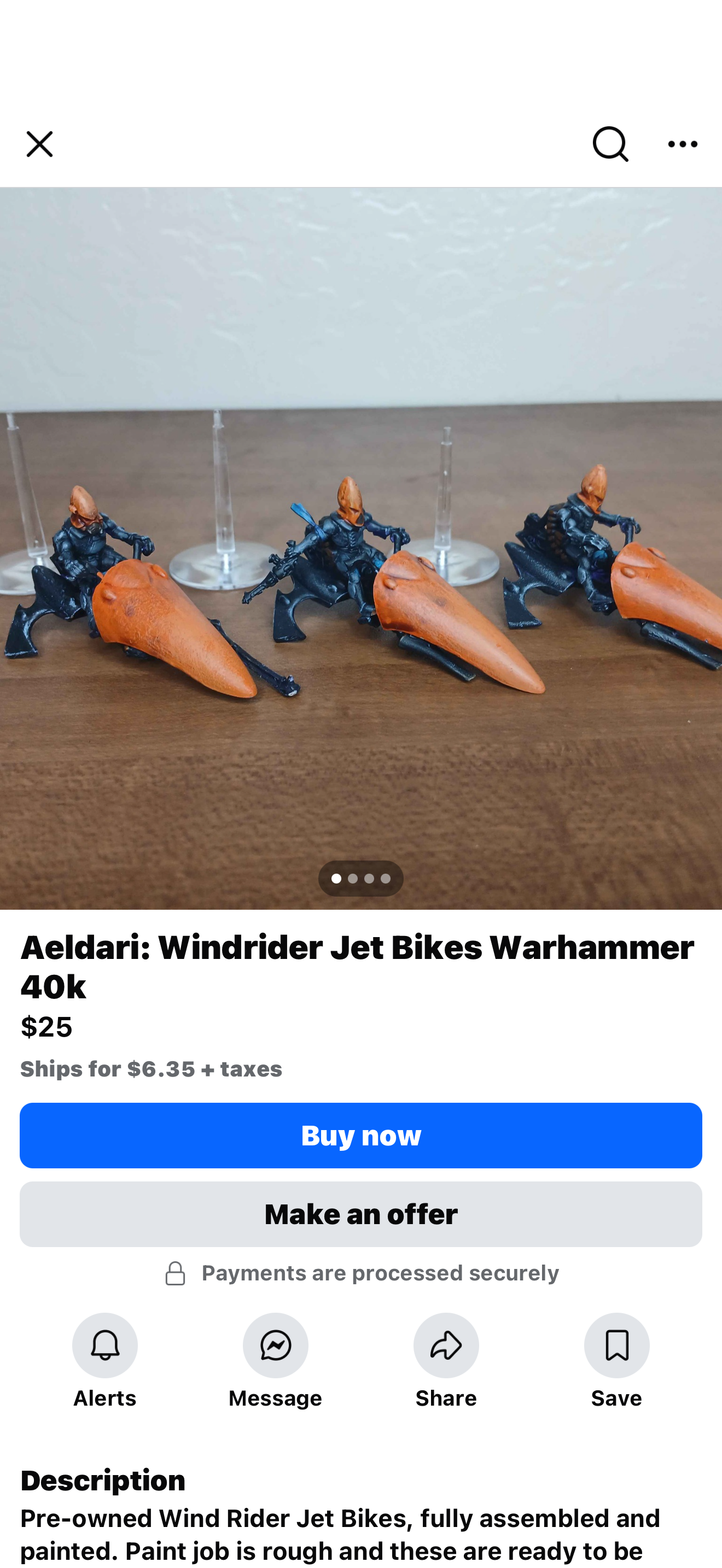
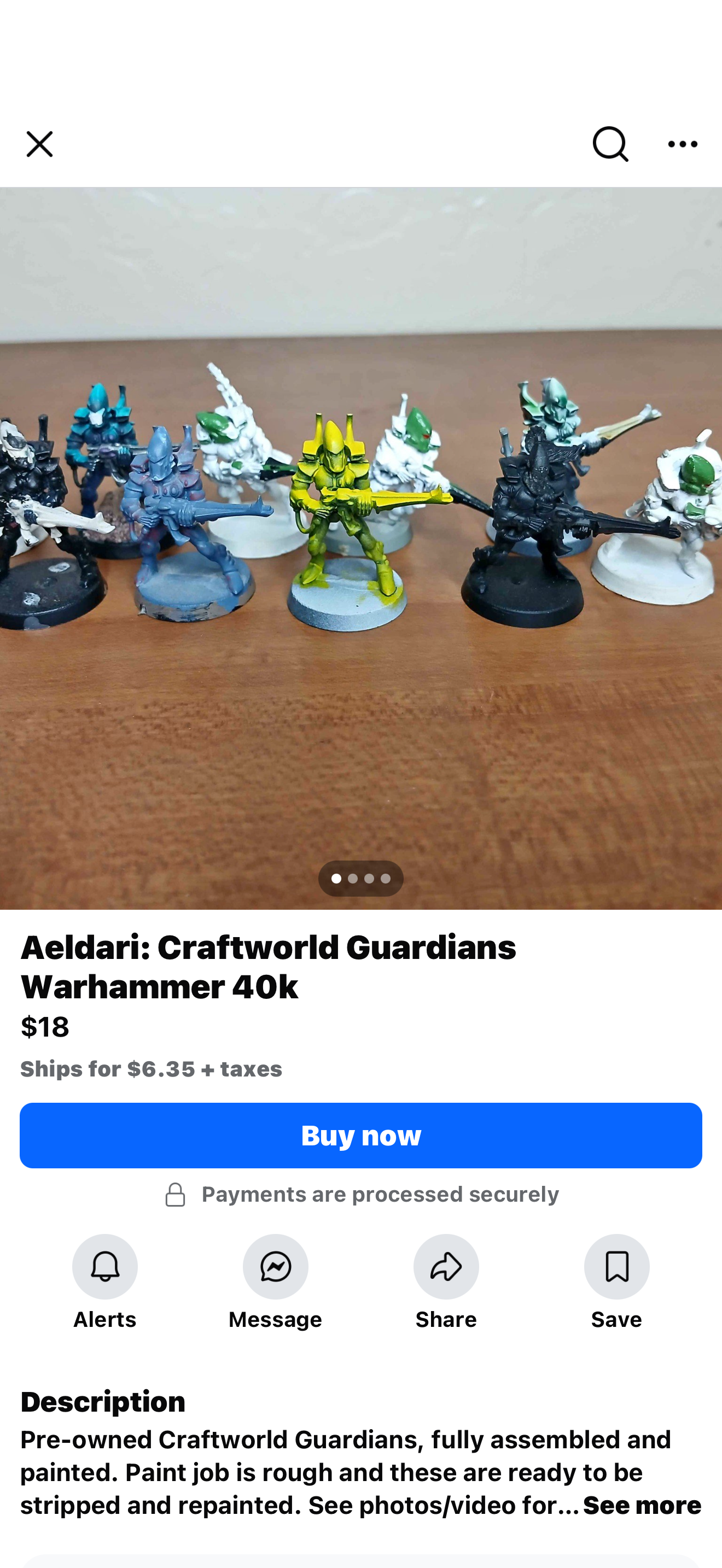
As I have been building my first Aeldari army, I picked up a batch of older Guardians and three Windrider jetbikes through Facebook Marketplace. They were already assembled and very, very painted.

The seller was not hiding that. These were inexpensive models meant to be stripped, cleaned up, and put back on the table.

That was exactly what I wanted.

I Wanted Practice Models, Not Perfect Models

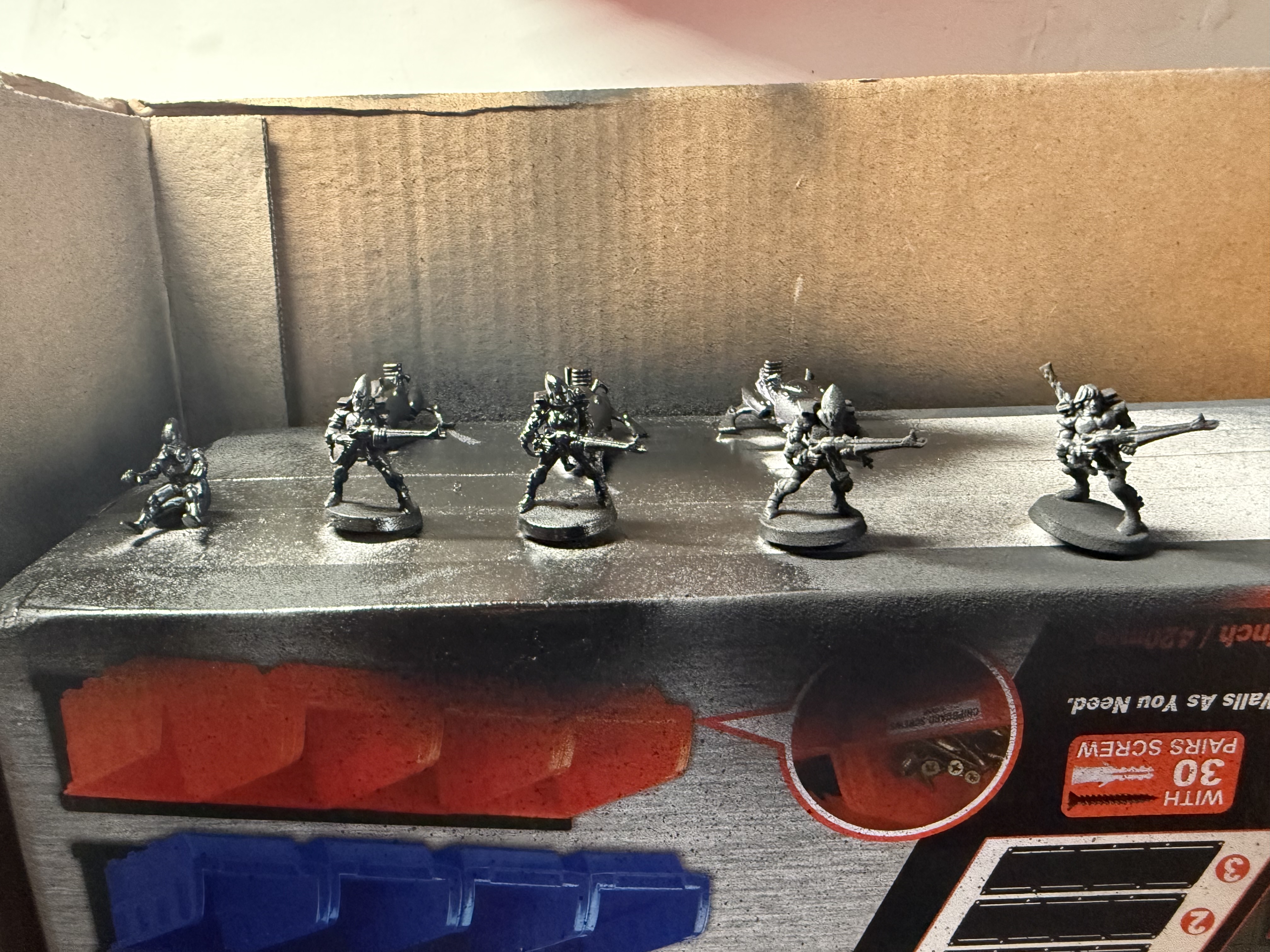
I am still figuring out the black-and-pink paint scheme I want to use across this army.
Which means I need somewhere to make mistakes.

I would much rather discover that an idea looks terrible on an inexpensive used Guardian than on one of the models I have been especially excited to paint.

These Guardians are perfect for that.

There are enough of them that I can play around with how much pink I actually want, how I highlight the black armor, what I do with helmets, weapons, spirit stones, and all the other ideas that tend to look much better in my head than they do the first time I put paint on plastic.

The Windriders give me the same opportunity on a bigger surface.

Those old jetbike cowls are basically giant test panels.

Before I could start experimenting with my paint, though, I had to remove somebody else’s.

The Starting Point Was Rough

The Guardians looked less like one army and more like the leftovers from several completely unrelated painting projects.

There were black ones, white ones, blue ones, green ones, and one particularly committed yellow-and-green Guardian.

The Windriders were at least consistent. Dark riders. Bright orange jetbikes.

Unfortunately, some of that paint was thick.

I could have primed over everything and hoped for the best, but that would have buried even more of the detail.

And that was really the problem.

I did not need every molecule of old paint removed.

I just needed the sculpt back.

Armor edges needed to look like edges again. Helmets needed definition. Weapons needed to stop looking like vaguely rifle-shaped chunks of paint.

So I decided to strip the whole batch and see what was actually underneath.

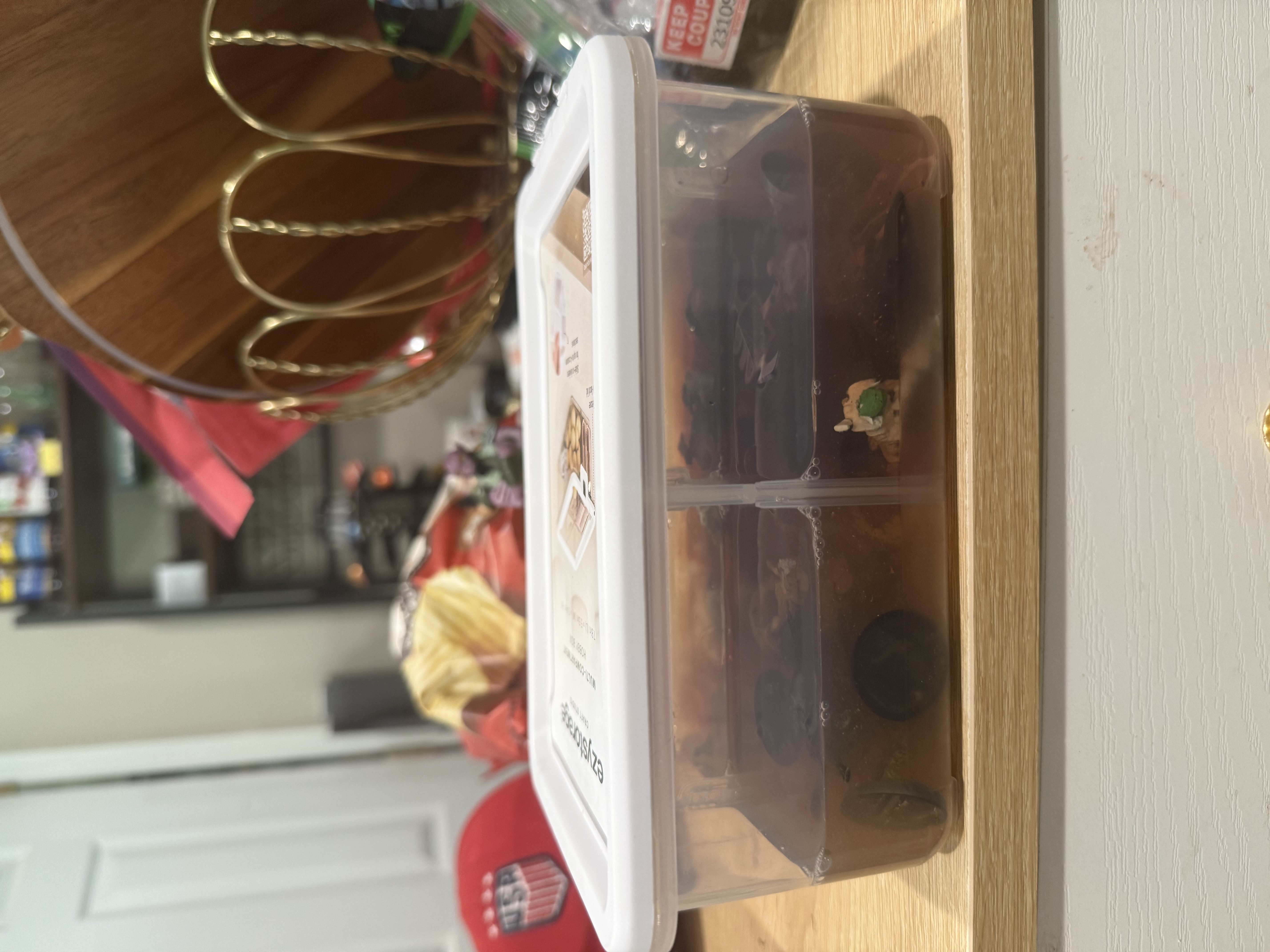
Using LA’s Totally Awesome to Strip the Old Paint

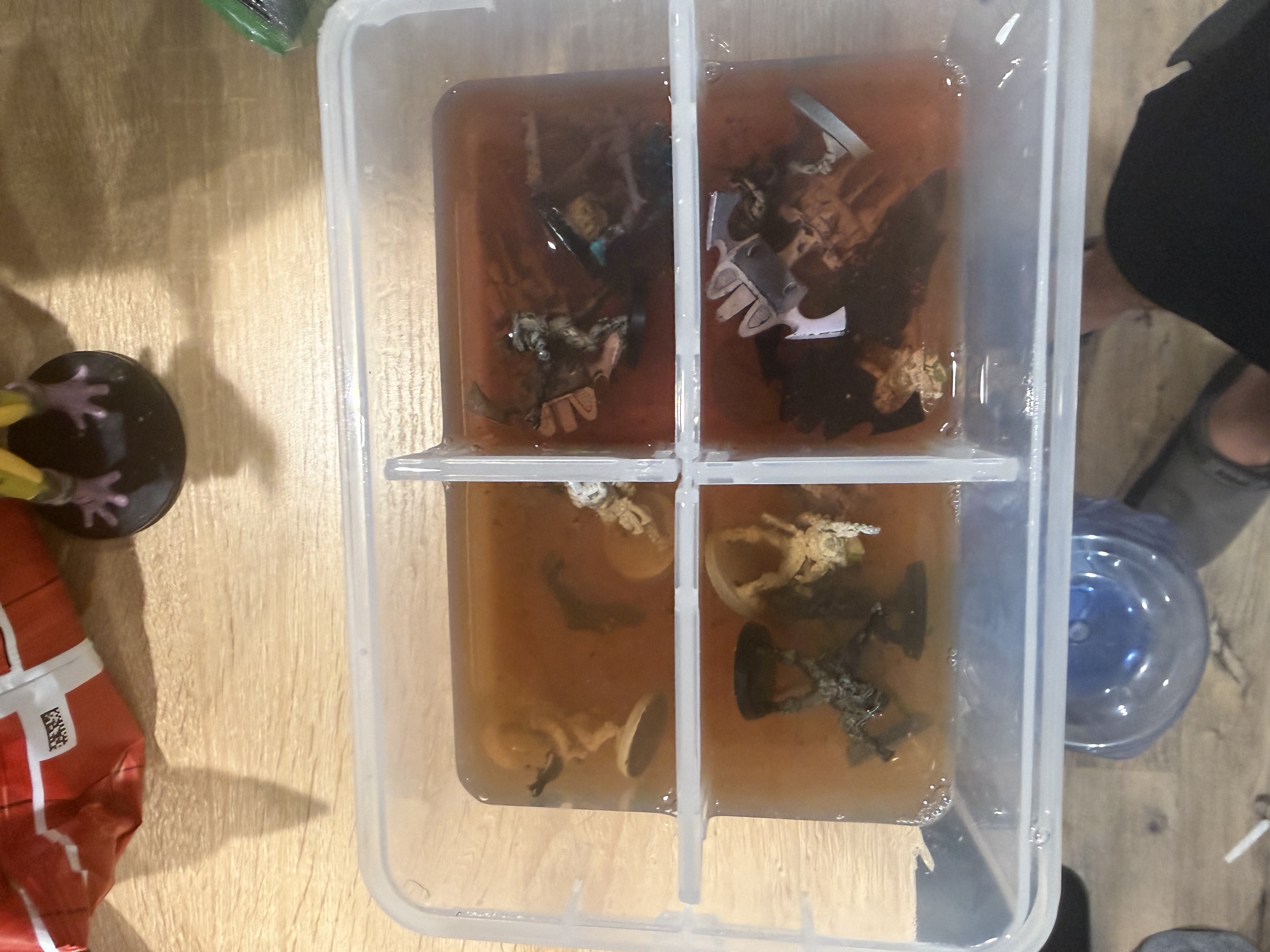
For the stripping bath, I used LA’s Totally Awesome All-Purpose Cleaner.

It is a household cleaner and degreaser, not a product made specifically for miniatures. I was repurposing it for hobby use, so I followed the handling information on the container rather than assuming miniature painters have somehow discovered better chemical safety rules than the company that makes it.

You can find the manufacturer’s information on LA’s Totally Awesome here:

https://www.lastotallyawesome.com/products/all-purpose-cleaner/

My setup itself was highly technical.

A plastic container, cleaner, and a pile of old Aeldari.

That was pretty much it.

I submerged the models and let the cleaner start working through the old layers. I checked on them instead of treating soaking time like some exact formula, because these miniatures had clearly lived very different lives before they reached me.

Some had different primers. Paint thickness varied all over the place. I would not be surprised if there were several different kinds of paint involved too.

A few layers started giving up almost immediately.

Others had apparently decided they were part of the model now.

The Brown Soup Is Apparently Progress
One of the more satisfying parts was watching the cleaner stop looking clean.

It happened pretty quickly.

Old paint started coming away from the models and the liquid turned into a murky brown-orange mess that looked increasingly questionable the longer everything sat in it.

Good.

That meant at least some of the paint was moving into the soup instead of staying on my Aeldari.

Once the old layers softened up, the cleaner had done about as much as it could do on its own.

Now I actually had to work.

The Toothbrush Did Most of the Work

An old toothbrush ended up doing most of the actual paint removal.

And I mean an old toothbrush.

This one is not going back into anybody’s bathroom afterward.

The bristles were stiff enough to work loosened paint out of armor, helmets, weapons, bike surfaces, and bases without immediately chewing into the plastic underneath.

I would scrub a section, clear away the loose paint, and see what I had.

Some areas came clean pretty easily.

The recesses were another story.

Aeldari have plenty of little seams, armor transitions, weapon details, and tiny corners where old paint can settle in and apparently begin planning for retirement.

Trying to bully it out usually was not worth it.

Scrub what will move. Check the detail. Put the model back in the cleaner if it needs more time.

Then do it again.

Very exciting television.

The Wire Brushes Were for the Stubborn Parts

I also used small wire brushes where the paint was especially stubborn.

This is where I slowed down.

A wire brush is much more aggressive than a toothbrush, especially on plastic. If you get carried away, you stop restoring the miniature and start sanding your Guardian with metal bristles.

That felt like a bad trade.

So the toothbrush stayed my normal tool. The wire brushes only came out for problem spots, and even then I used light pressure and checked constantly to make sure I was attacking paint instead of detail.

If you are doing this yourself, I would absolutely start with nylon first.

Metal bristles can work, but there is no prize for getting the paint off three minutes faster if the helmet looks like it survived orbital re-entry afterward.

I Wasn’t Trying to Make Them Factory New

This was probably the biggest lesson from the whole process.

At first, I wanted every model back to bare plastic.

It feels like that should be the goal. Old paint gone. Clean reset. Start over.

Except eventually you are standing over a container with a toothbrush, trying to remove one tiny blue dot from the deepest recess on a thirty-year-old miniature, and you have to ask yourself what exactly you are accomplishing.

If a little staining or old primer remains somewhere but the sculpt is sharp and there is no thick buildup left, I am done.

The next primer coat does not care about my archaeological standards.

What matters is getting the heavy paint off and bringing the details back.

So now I check a few things:

  • Are the armor edges visible again?
  • Are panel lines and recesses clear?
  • Did the faces and helmets keep their detail?
  • Are the weapons free of heavy buildup?
  • Does the surface feel smooth enough to prime?

If the answer is yes, that model is ready to move on.

Used Miniatures Feel Less Intimidating

There is another thing I have started to like about these older models.

They already have history.

Somebody built them. Somebody picked those colors. They may have played games with them, displayed them for years, thrown them into storage, or eventually looked at the box and decided it was finally time for them to go.

Now they are becoming part of my first army.

For some reason, that makes them easier to experiment on.

A brand-new miniature can feel weirdly precious.

You just paid for it. The plastic is clean. Everything looks perfect. There is a little voice telling you that maybe you should know exactly what you are doing before the brush touches it.

These Guardians have already survived somebody else’s paint job, years of storage, Facebook Marketplace, and a bath in brown cleaning fluid.

They can handle me figuring out pink.

If the first attempt looks terrible, fine.

We already know where the stripping container is.

A used miniature is a pretty good place to give yourself permission to experiment.

Facebook Marketplace Is Becoming Part of the Hobby

I originally started looking at used miniatures because they were cheaper.

That is still a big part of the appeal.

But I am starting to enjoy the restoration itself.

There is something satisfying about finding an old sculpt buried under somebody else’s paint, cleaning it up, figuring out exactly what you bought, repairing anything that needs attention, and eventually folding it into a completely different army.

It scratches a different part of the hobby than opening a fresh box.

New models give you the clean start.

Used ones give you a rescue mission.

Apparently my Aeldari army is going to have a little of both.

The Next Step Is Finally Making Them Ours

Once everything is cleaned, rinsed, completely dry, and ready for primer, I finally get to the part I bought these models for.

Black and pink.

That has been the plan for this army from the beginning.

I just do not know exactly what version of black and pink yet.

The Guardians are going to help me figure that out.

I can try different amounts of pink, change the helmet treatment, move accents around, play with weapons and spirit stones, and see how far I can push things before the army starts looking less like a unified force and more like another Facebook Marketplace listing.

The Windriders might be even more useful.

Those big curved cowls give me enough room to experiment with the brighter color against the black without immediately turning the whole jetbike into a flying piece of bubblegum.

This is the part of miniature painting I am beginning to enjoy the most.

https://epicagain.com/miniature-painting/

I do not know exactly what the finished army looks like yet.

I have a direction.

Now I get to try things and see what survives contact with an actual paintbrush.

Some ideas will work.

Others absolutely will not.

That is fine.

These models started as somebody else’s Aeldari.

Then they spent a while sitting in what looked like extremely questionable soup.

Now I get to figure out what they become next.

That seems like a pretty good second life for a box of old space elves.

Starting Warhammer 40K as a Complete Beginner: Why I Chose Aeldari

I didn’t choose my first Warhammer 40K army because someone told me it was the easiest one for a beginner. I chose Aeldari because the way they play sounded interesting, the models gave me plenty of room to experiment with paint, and my four-year-old daughter thought the idea of space elves was great. That last one may not appear in many competitive army guides. It still mattered. Starting Warhammer 40K from absolutely zero means making a surprising number of decisions before you have any real idea what you’re doing. There are factions, subfactions, Combat Patrols, datasheets, paints, lore, army lists, weapon options, and enough abbreviations floating around online to make you wonder if everyone else received an orientation packet you somehow missed. So naturally, one of the first big questions is which army to choose. I ended up with Aeldari.

Starting Warhammer 40K Means Choosing Something You Actually Care About

A lot of beginner advice focuses on finding the easiest army. That makes sense. Warhammer 40K already has a lot to learn, so picking a forgiving faction can remove some of the friction. But I think there is another part of the decision that matters just as much, especially when you are brand new. You have to actually want the army. Not just the rules. The army. You are going to spend hours building these things. Then you are going to spend more hours painting the miniatures. Eventually you have to learn what all the models do, remember which weapons belong to which unit, and figure out why the beautifully painted squad you carefully positioned just disappeared from the table. Probably because you positioned it less carefully than you thought. If I was going to put that much time into one faction, I wanted one that interested me beyond whether it happened to be considered beginner-friendly at the moment.

Your first Warhammer 40K army probably shouldn’t just be the army somebody tells you is easiest. It should be an army that gives you enough reasons to keep building, painting, learning, and playing it.

The Aeldari Playstyle Sounded Like Something I’d Actually Enjoy

The first thing that pushed me toward Aeldari was the way the army is supposed to play. At a broad level, Aeldari are fast, mobile, and specialized. Their units tend to have particular jobs rather than simply being good at everything, and much of their battlefield identity revolves around getting those units into the right place at the right time. That isn’t just community shorthand. Games Workshop’s own guide to starting an Aeldari army describes them as relying on specialist units for precise, powerful attacks while using speed to compensate for forces that can often be relatively fragile. That immediately sounded more interesting to me than choosing an army primarily because it could absorb mistakes.

I Like the Idea of Movement Matter­ing

I like the idea that where I put something should matter. Movement, positioning, picking a fight, getting a specialized unit where it needs to be, and then trying to get it out again all sound like the kind of tactical problems I want to learn. The current Warhammer 40,000 Aeldari Faction Focus still puts a heavy emphasis on that speed, particularly across the faction’s vehicles and mobile shooting. Of course, liking the concept and executing it correctly are two completely different things. I am very much at the first part. But that is also why the army appealed to me. I want to learn the positioning part of the game rather than just discovering which units can stand in one place most efficiently.

Specialized Units Also Mean More to Learn

This is also where I think the usual question of whether Aeldari are a good Warhammer 40K beginner army gets slightly complicated. The same specialization that makes them interesting can make them less forgiving. If one unit is particularly good at solving one kind of problem, I eventually need to learn what that problem is. Speed does not automatically make an army easier either. Moving very quickly in the wrong direction is still moving in the wrong direction. You just arrive at the mistake sooner. And many Aeldari units trade durability for mobility or offensive power, so poor positioning can have consequences. That doesn’t make them a bad beginner army. It just means good for beginners and easy to play aren’t necessarily the same thing.

Then My Daughter Heard “Space Elves”

The second reason was considerably less technical. My four-year-old daughter loved the idea of space elves. Fair enough. There are substantially worse sales pitches. Warhammer 40K is full of enormous armored soldiers, walking skeleton robots, alien swarms, daemons, religious machinery, and several factions that appear to have looked at the phrase “too many skulls” and rejected the premise entirely. And then there are elegant psychic space elves flying around on anti-gravity vehicles. That clicked with her. Her interest didn’t determine the whole decision, but it gave me another reason to like it. Part of what I want from getting into hobbies again is finding places where my own interests can overlap naturally with the things my kids find interesting. Not because every hobby has to become a family activity. Some things can just be mine. But if I’m going to spend hours painting tiny science-fiction warriors and my daughter is already interested in what they look like, what colors they should be, and the fact that they are apparently elves in space? That’s a pretty good bonus. It also connects to the bigger reason I’m building The Creative Return in the first place. I want creativity and hobbies to be things that exist alongside family life rather than things I vaguely remember having time for before it.

Aeldari Gave Me Room to Paint Something That Was Mine

The painting side may have been just as important as the tabletop side. One of the reasons I wanted to start Warhammer was the miniatures themselves. I didn’t just want an army that sounded fun to play. I wanted models that I would actually enjoy painting, experimenting with, and eventually making look like my army rather than a slightly worse copy of the picture on the box. Aeldari are extremely good for that. Different Craftworlds already use dramatically different color schemes, while Aspect Warriors traditionally bring their own recognizable colors and visual identities. Games Workshop’s beginner painting material specifically points out the faction’s wide range of colors and the freedom painters have to incorporate those traditions however they want. That opened the door for what I wanted to do anyway. Experiment.

I Didn’t Want the Box Art to Become a Rule

There is nothing wrong with painting an established Craftworld scheme exactly as shown. Some of them look great. But as a new painter, I like the idea that I can try different combinations without feeling like I broke some sacred rule because the left knee pad is the wrong shade of red. I especially wanted room to work pink into the army for my daughter. And Aeldari feel almost built for that kind of experimentation. Sleek armor, bright colors, contrasting helmets, spirit stones, Aspect Warriors, vehicles, and all the little details give me a lot of places to play with color without making every model look identical. That matters because painting isn’t just the chore standing between buying a box and playing the game. For me, it is part of the reason to buy the box at all.

I didn’t just want an army that sounded fun to play. I wanted an army I would still want to work on when there wasn’t a game scheduled.

Are Aeldari Actually a Good Beginner Army?

I think they can be. But I would put an asterisk the size of a Wraithknight next to that answer. If by “good beginner army” you mean an army designed to forgive every bad decision while you learn the rules, Aeldari probably aren’t the most obvious answer. The faction’s emphasis on specialization, speed, and positioning means there is quite a bit to learn. Some units are less durable than the giant armored warriors found elsewhere in Warhammer 40K, and using the wrong tool for the wrong job can go badly. But if by “good beginner army” you mean an army that gives you reasons to stay interested while you learn? That is different. Aeldari have a huge visual identity, lots of different unit styles, fast vehicles, Aspect Warriors, Wraith constructs, psychic weirdness, plenty of painting options, and enough variation that I can see several different directions an army could eventually go. I find that much more useful than being told I should start with something else purely because it has a gentler learning curve. The rules can be learned. Wanting to spend the next hundred hours with the models is harder to fake.

The First Army Doesn’t Have to Be the Perfect Army

This is probably the biggest thing I have taken from choosing my first Warhammer 40K army. I don’t think there is a perfect choice. Rules change. Points change. Units get stronger and weaker. New books appear. Games Workshop occasionally reaches into the machinery and moves several important gears around while everyone is still arguing about the previous arrangement. If your entire reason for choosing a faction is that somebody online says it is currently the easiest or strongest option, that reason has an expiration date. The models don’t change nearly as quickly. Neither does the basic fantasy of the faction. If you love the lumbering war machines, pick the lumbering war machines. Do you want an endless swarm of horrible bugs, there is an army waiting for you. If giant armored knights are the reason you started looking at Warhammer in the first place, that probably tells you something useful. For me, it was fast, specialized space elves that I could paint in colors my daughter and I both thought looked cool. That seems like enough of a reason to start.

For Me, That Was Aeldari

I am still at the beginning of all this. That’s important. This isn’t an article written after years of tournament games explaining why everyone else has misunderstood Aeldari. It is the opposite. I am learning the army while I learn Warhammer 40K itself. And that is part of what I want to document on EpicAgain: starting hobbies from the uncomfortable point where other people already seem to know all the terminology, all the tricks, and apparently which shade paint produces the objectively correct buckle. I picked Aeldari because the playstyle makes me want to understand the game. I picked them because the models make me want to paint. And I picked them because my daughter thinks space elves are cool. None of that proves they are the correct first Warhammer army. It only proves they were the right one for me to start with. I still have to learn how to play them. But at least I picked an army I actually want to learn.

Sharing Hobbies With Kids: Planning Pink Aeldari With My Daughter

The project started bringing creativity back before we painted a single miniature. We haven’t painted a single pink Aeldari yet. We do, however, have enough tiny space elves waiting for paint that this distinction is becoming increasingly academic. What started as me getting into Warhammer 40,000 has slowly turned into something my four-year-old daughter has a piece of too. We’ve been shopping together, looking at models, building up the army, and settling on the most important tactical decision of the entire project. They’re going to be black and pink. The actual painting still has to happen. There will be mistakes, experiments, colors that look much better in my head than they do on plastic, and probably several Guardians sacrificed to the ancient hobby gods of Trying Something Weird. But the interesting part is that the project already feels like it has started. And that has made me think differently about sharing hobbies with kids.

Sharing Hobbies With Kids Doesn’t Have to Start With Teaching

I think we often picture sharing a hobby with our kids in one particular way. The parent knows how to do something. The child becomes interested. Then the parent teaches them. That is not what is happening here. I am new too. I’m learning Warhammer 40K, learning the Aeldari, learning how the army works, and getting back into miniature painting as part of the same process. There is something useful about that. I don’t have to stand over the project as the expert showing her the correct way to do everything. There isn’t a correct Gary Method for Painting Aeldari that has been passed down through generations. We’re figuring things out. She gets to have opinions before I have enough expertise to explain why those opinions are supposedly wrong. I rather like that arrangement.
You don’t have to be the expert to invite your child into your curiosity.

It Started With Space Elves

Aeldari were already the army I was leaning toward when I started looking seriously at Warhammer 40K. The playstyle appealed to me. They’re fast, specialized, and built around using different units for particular jobs rather than expecting the same heavily armored brick to solve every problem. But there was another factor. My daughter liked the idea of space elves. Which, honestly, is a very efficient faction pitch. You can spend quite a while explaining the Fall of the Aeldari, Craftworlds, psychic abilities, Aspect Warriors, spirit stones, ancient galactic tragedy, and several thousand years of accumulated lore. Or you can say: Space elves. Apparently that works too. Her interest didn’t make the decision for me, but it made the army more fun immediately. Something I had been researching for myself suddenly had a small connection to her imagination as well. That was enough to start changing the project.

Then Pink Became Part of the Army

The next step was color. I knew I wanted something that felt different from simply copying the box art, and having Aeldari gave us plenty of freedom to do that. Games Workshop’s own guide to starting an Aeldari army specifically highlights the faction’s wide range of Craftworld colors and the freedom painters have to incorporate traditional Aspect Warrior schemes however they want. That suits me just fine. Because our army is going black and pink. The black gives me the darker base I wanted. The pink gives the models something brighter and more distinctive, and it brings my daughter into the visual identity of the army in a way that feels natural rather than tacked on afterward. Pink isn’t there because it provides +1 to anything. It’s there because she matters to the project. Which is probably a better reason to choose a paint color anyway.
The army doesn’t have to look like mine with a little bit of her added. It can become something different because she was part of it.

Apparently Planning an Army Involves Buying Quite a Few Elves

The collection has also grown slightly beyond the theoretical stage. At this point, we have a Combat Patrol: Aeldari, Lhykhis, three Windriders, Swooping Hawks, and twenty used Guardian models that I picked up through Facebook. Lhykhis in particular caught my attention because she is the Phoenix Lord associated with the Warp Spiders, a newer addition to the Aeldari model range. Games Workshop introduced the character as Lhykhis, the Whispering Web. The Swooping Hawks and Windriders give the army even more of the fast Aeldari look that attracted me in the first place. But the least glamorous part of the collection may actually be the most useful right now.

The Used Guardians Have a Job

The twenty used Guardians are practice. That is intentional. Rather than making the first model I seriously experiment on one of the miniatures I care most about, the Guardians give me a place to work out the black-and-pink scheme. How much pink is enough? Where does black need a different highlight so everything doesn’t disappear into one dark shape? Do the helmets stay dark or become one of the bright focal points? What colors work for the weapons, spirit stones, cloth, and smaller details? I don’t know yet. That is what the Guardians are for. Some of them may look great. One or two may eventually look like they were painted during a minor electrical emergency. Good. They are allowed to. One thing I want to get better at through EpicAgain is being willing to make something badly while I’m learning how to make it well. Having practice models makes that easier. They aren’t failed finished models. They’re experiments.

The Project Is Already Working Before the Paint Does

This is the part I didn’t expect. When I started thinking seriously about returning to creativity, I naturally thought about finished things. Writing something. Painting something. Building something. Having an object at the end that proved creativity had occurred. But this project has made me think the return happens earlier than that. I’m thinking about colors again. I’m looking at models and wondering what I could do with them. I’m learning techniques because I want to try them rather than because they have some practical use elsewhere. I’m planning an army that doesn’t exist yet. And my daughter is part of those conversations. The imagination is already working.
We haven’t painted the army yet. But we’ve already started imagining it.
That feels important. Creativity doesn’t begin when something is good enough to photograph. It starts when you become interested enough to make something that wasn’t there before.

I Don’t Want This to Become Her Homework

There is another side to sharing hobbies with kids that I want to remember as this project develops. She doesn’t have to love Warhammer because I do. She might love picking colors. She might enjoy painting. She might eventually want models of her own. Or she might paint two things, decide that was plenty, and move on to something completely different. All of those outcomes are fine. The goal isn’t to create a tiny hobbyist who approaches Warhammer exactly the way I do. And at four years old, the parts she participates in naturally need to be the parts that make sense for her. Choosing colors, looking at models, talking about what looks cool, and eventually doing age-appropriate painting are very different from handing over every tool on the hobby desk. I want this to stay an invitation. Not another thing she is expected to perform correctly. That distinction probably matters for any hobby we share with our kids.

Maybe the Better Hobby Is the One We Change Together

I used to think sharing an interest meant bringing someone else into something that already existed. Now I’m wondering if the more interesting version is letting them change it. The army I might have built completely on my own would probably look different. That’s the point. Her involvement doesn’t need to mean she paints half the force or learns every unit name. She has already changed the project simply by helping shape its identity. I think that idea extends well beyond Warhammer. If you draw with your kids, let them invent something you wouldn’t. If you build models, let them choose a strange color. If you write stories together, let the creature have six eyes because six eyes are apparently necessary. If you build a fictional world, let them put something in it that disrupts your carefully organized logic. Sometimes that’s where the interesting part begins. Sharing creativity doesn’t always mean teaching the next generation how to make things our way. Sometimes it means giving them enough room to alter what we were going to make.

Eventually, We Should Probably Paint Them

At some point, all of this planning needs to survive contact with an actual paintbrush. The Guardians are waiting. The black-and-pink scheme still exists mostly in our heads. Lhykhis and the Swooping Hawks remain substantially better painted in my imagination than they are in reality, largely because reality currently contains no paint at all. That will change. And when it does, I want to document the experiments, what works, what absolutely does not, and how the final army scheme develops rather than pretending I knew the answer from the beginning. That is part of what I want EpicAgain to be. Not a display case where everything appears after it has been figured out. A record of figuring it out. Somewhere between buying old Guardians off Facebook, talking about pink armor with my daughter, and accumulating a suspicious number of space elves, creativity started feeling active again. Nothing is finished yet. That doesn’t seem to matter. We haven’t painted a miniature together yet. But the army already has both of us in it.