
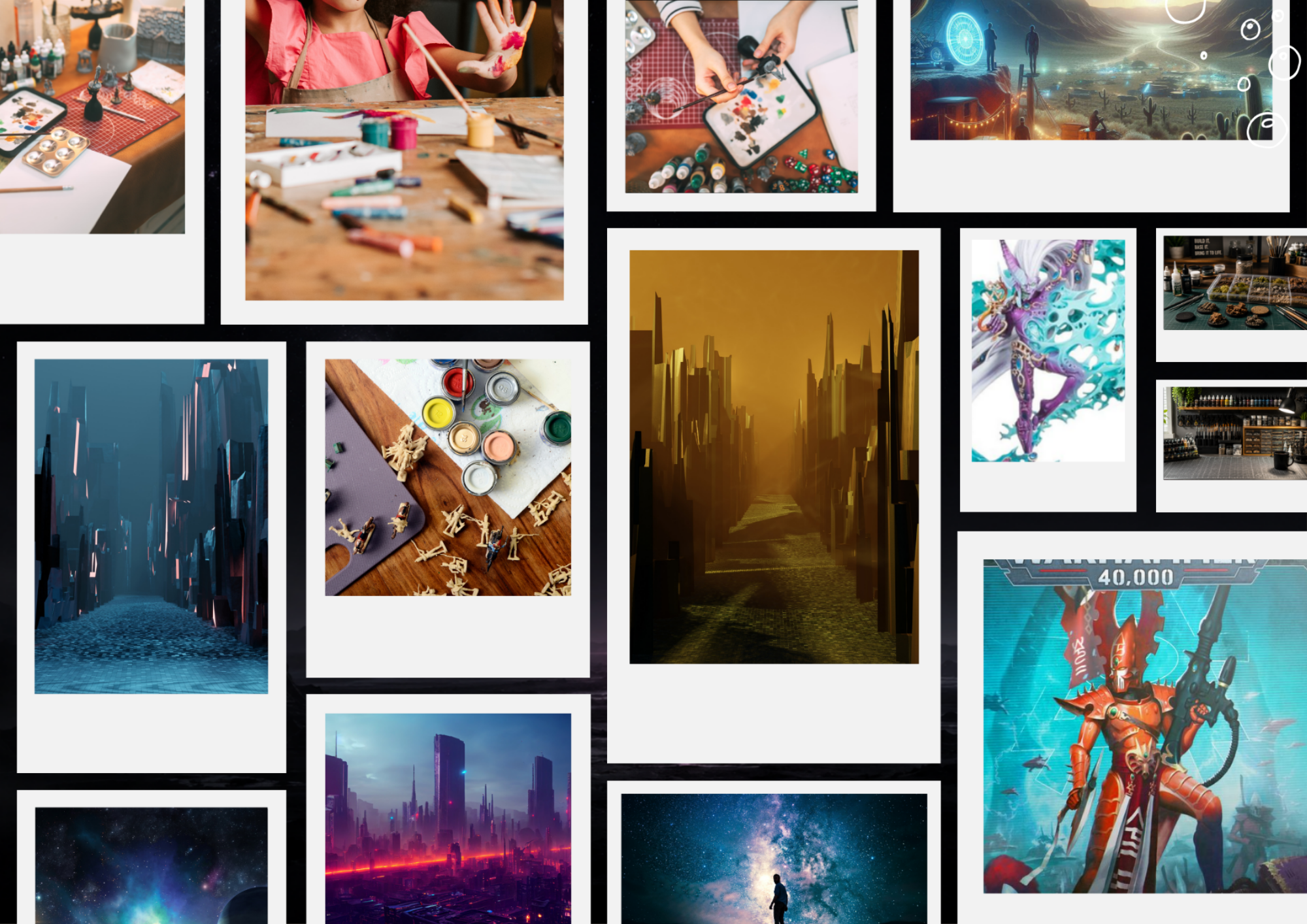
The project started bringing creativity back before we painted a single miniature.
We haven’t painted a single pink Aeldari yet.
We do, however, have enough tiny space elves waiting for paint that this distinction is becoming increasingly academic.
What started as me getting into Warhammer 40,000 has slowly turned into something my four-year-old daughter has a piece of too. We’ve been shopping together, looking at models, building up the army, and settling on the most important tactical decision of the entire project.
They’re going to be black and pink.
The actual painting still has to happen. There will be mistakes, experiments, colors that look much better in my head than they do on plastic, and probably several Guardians sacrificed to the ancient hobby gods of Trying Something Weird.
But the interesting part is that the project already feels like it has started.
And that has made me think differently about sharing hobbies with kids.
Sharing Hobbies With Kids Doesn’t Have to Start With Teaching
I think we often picture sharing a hobby with our kids in one particular way. The parent knows how to do something. The child becomes interested. Then the parent teaches them. That is not what is happening here. I am new too. I’m learning Warhammer 40K, learning the Aeldari, learning how the army works, and getting back into miniature painting as part of the same process. There is something useful about that. I don’t have to stand over the project as the expert showing her the correct way to do everything. There isn’t a correct Gary Method for Painting Aeldari that has been passed down through generations. We’re figuring things out. She gets to have opinions before I have enough expertise to explain why those opinions are supposedly wrong. I rather like that arrangement.You don’t have to be the expert to invite your child into your curiosity.
It Started With Space Elves
Aeldari were already the army I was leaning toward when I started looking seriously at Warhammer 40K. The playstyle appealed to me. They’re fast, specialized, and built around using different units for particular jobs rather than expecting the same heavily armored brick to solve every problem. But there was another factor. My daughter liked the idea of space elves. Which, honestly, is a very efficient faction pitch. You can spend quite a while explaining the Fall of the Aeldari, Craftworlds, psychic abilities, Aspect Warriors, spirit stones, ancient galactic tragedy, and several thousand years of accumulated lore. Or you can say: Space elves. Apparently that works too. Her interest didn’t make the decision for me, but it made the army more fun immediately. Something I had been researching for myself suddenly had a small connection to her imagination as well. That was enough to start changing the project.Then Pink Became Part of the Army
The next step was color. I knew I wanted something that felt different from simply copying the box art, and having Aeldari gave us plenty of freedom to do that. Games Workshop’s own guide to starting an Aeldari army specifically highlights the faction’s wide range of Craftworld colors and the freedom painters have to incorporate traditional Aspect Warrior schemes however they want. That suits me just fine. Because our army is going black and pink. The black gives me the darker base I wanted. The pink gives the models something brighter and more distinctive, and it brings my daughter into the visual identity of the army in a way that feels natural rather than tacked on afterward. Pink isn’t there because it provides +1 to anything. It’s there because she matters to the project. Which is probably a better reason to choose a paint color anyway.The army doesn’t have to look like mine with a little bit of her added. It can become something different because she was part of it.
Apparently Planning an Army Involves Buying Quite a Few Elves
The collection has also grown slightly beyond the theoretical stage. At this point, we have a Combat Patrol: Aeldari, Lhykhis, three Windriders, Swooping Hawks, and twenty used Guardian models that I picked up through Facebook. Lhykhis in particular caught my attention because she is the Phoenix Lord associated with the Warp Spiders, a newer addition to the Aeldari model range. Games Workshop introduced the character as Lhykhis, the Whispering Web. The Swooping Hawks and Windriders give the army even more of the fast Aeldari look that attracted me in the first place. But the least glamorous part of the collection may actually be the most useful right now.The Used Guardians Have a Job
The twenty used Guardians are practice. That is intentional. Rather than making the first model I seriously experiment on one of the miniatures I care most about, the Guardians give me a place to work out the black-and-pink scheme. How much pink is enough? Where does black need a different highlight so everything doesn’t disappear into one dark shape? Do the helmets stay dark or become one of the bright focal points? What colors work for the weapons, spirit stones, cloth, and smaller details? I don’t know yet. That is what the Guardians are for. Some of them may look great. One or two may eventually look like they were painted during a minor electrical emergency. Good. They are allowed to. One thing I want to get better at through EpicAgain is being willing to make something badly while I’m learning how to make it well. Having practice models makes that easier. They aren’t failed finished models. They’re experiments.The Project Is Already Working Before the Paint Does
This is the part I didn’t expect. When I started thinking seriously about returning to creativity, I naturally thought about finished things. Writing something. Painting something. Building something. Having an object at the end that proved creativity had occurred. But this project has made me think the return happens earlier than that. I’m thinking about colors again. I’m looking at models and wondering what I could do with them. I’m learning techniques because I want to try them rather than because they have some practical use elsewhere. I’m planning an army that doesn’t exist yet. And my daughter is part of those conversations. The imagination is already working.We haven’t painted the army yet. But we’ve already started imagining it.That feels important. Creativity doesn’t begin when something is good enough to photograph. It starts when you become interested enough to make something that wasn’t there before.
No Comments yet!