Two free guides. One small creative adventure. Start your adventure here!

Science Fiction and Identity: Why It Still Feels Like Home

I keep coming back to science fiction. Not necessarily the same books, movies, games, or fictional universes. Some stay with me longer than others. Some change when I come back to them. A few probably survive better in memory than they do under close inspection years later. But the genre itself never really seems to leave. Give me a ruined civilization, an impossible machine, a distant world, a collapsing empire, or a messy argument about whether something that looks human actually is human, and I’m interested. There is something familiar about those stories even when everything inside them is deliberately strange. That is probably why science fiction still feels a little like home.

At Some Point, Stories Stop Being Things You Watched

There are stories you enjoy and move on from. Then there are stories that somehow become part of the equipment you use to understand every story that comes afterward. You recognize ideas because you’ve seen another version of them before. New worlds remind you of old ones. A character makes a choice and somewhere in the back of your head another character from another story is standing there making the opposite one. The references accumulate. Eventually, being a lifelong science fiction fan isn’t just a list of things you have watched or read. Those stories become part of your vocabulary. And I don’t mean trivia. Knowing the designation of every spaceship in a fictional navy is certainly a kind of knowledge, although perhaps one best deployed carefully at dinner parties. I mean the ideas underneath it. The questions. The types of worlds that immediately make sense to you because you’ve spent so much time wandering around inside variations of them. There is actual research behind the idea that fiction can become entangled with the way we understand ourselves. Work on fiction reading and narrative identity has explored how fictional stories can interact with memories, emotions, and the stories people construct about their own lives. I don’t need science to tell me that a good story can stick with someone. But it is interesting that the sticking part may be more important than we usually admit.
Some stories stop being things you consumed. They become part of the language you use to understand everything that comes after them.

Science Fiction Gave Me Questions Bigger Than the Spaceships

To be clear, the spaceships help. I am not above a good spaceship. But the thing that keeps pulling me toward science fiction isn’t really the technology. It’s what the genre gets to do with it. Science fiction can take a question we already have and make it enormous. What makes someone human? Now make a machine that remembers being human. What happens when political power becomes too concentrated? Now stretch the empire across thousands of worlds. What happens when technology advances faster than our ability to decide whether we should use it? Give humanity another twenty thousand years and see how badly we can complicate the answer. This is one reason questions of identity are so persistent in science fiction. The Encyclopedia of Science Fiction‘s entry on identity runs through clones, memory changes, cyborgs, uploaded minds, duplicated people, parallel selves, and all the other cheerful ways the genre has found to make “Who am I?” substantially more difficult. And that is just one question. Science fiction gives us room to ask what happens to faith when civilization changes beyond recognition. Whether progress actually makes people better. What survives when institutions collapse. What happens when survival requires a moral compromise. Whether humanity can escape the same cycles if we just move them to another planet. Sometimes the answer is hopeful. Sometimes everyone is eaten. It’s a flexible genre.

The Worlds I Keep Circling Back To Aren’t Very Much Alike

This is part of what makes trying to explain a lifelong attachment to science fiction difficult. “Science fiction” covers an absurd amount of territory. Dune, Blade Runner, and Warhammer 40,000 can all fit somewhere beneath the same enormous genre umbrella, but they are doing very different things once you get underneath the machinery. And I think that difference is part of the appeal.

Dune Makes the Future Feel Ancient

One of the things that stands out to me about Dune is how little its distant future feels like the clean technological future we are often promised. It is full of old houses, inherited power, religion, ritual, prophecy, political marriages, human ambition, and institutions that have had enough time to become almost geological. The technology is futuristic. The people remain extremely human. That is more interesting to me than a future where technical progress conveniently solves all the old problems. Civilization can invent astonishing things and still carry pride, greed, faith, fear, loyalty, tribalism, love, and the desire for power right along with it. Apparently those fit in the luggage.

Blade Runner Turns Humanity Into the Question

Blade Runner comes at science fiction from somewhere else entirely. Its technology matters, but the more interesting problem is what happens when the distinction between a manufactured person and a “real” person becomes harder to defend than everyone would prefer. Memory. Mortality. Empathy. Creation. Identity. The machinery exists to make those questions unavoidable. That kind of science fiction sticks with me because the speculative idea isn’t merely there to make the world look different. It puts pressure on something we already believe.

Warhammer 40K Asks What Happens When Everything Goes Wrong

Warhammer 40,000 takes a somewhat less restrained approach. Humanity reaches the distant future and discovers that nearly every problem can, in fact, become worse. Much worse. But underneath the enormous armies, impossible scale, religious imagery, alien civilizations, psychic horrors, and machinery decorated with a statistically concerning number of skulls, there are still recognizable questions. What happens when institutions survive longer than anyone remembers why they existed? What does faith look like when it becomes inseparable from political power? What happens when survival becomes the justification for almost anything? What parts of humanity survive an empire that has forgotten most of its own history? The setting exaggerates everything until it becomes grotesque. And sometimes exaggeration makes an idea easier to see.

Coming Back to Old Science Fiction Is a Strange Experience

The interesting thing about returning to old stories is that the story has been sitting there doing absolutely nothing. You are the thing that changed. That can be inconvenient. Something that once seemed incredibly profound may suddenly sound like it was written by a philosophy student who discovered Nietzsche two hours ago. Characters you barely noticed can become the most interesting people in the story. A straightforward hero can look more complicated. A villain’s argument can become more understandable without becoming correct. And themes that went straight past you before can suddenly become impossible to miss. That’s one reason I don’t think sci-fi nostalgia is quite enough to explain why these stories keep mattering. Nostalgia wants the old thing to remain exactly where we left it. Good science fiction often doesn’t cooperate. You bring more life back with you every time you return. Family. Work. Faith. Failure. Responsibility. Things you’ve learned. Things you were very certain about before discovering that certainty was doing most of the work. The story hasn’t grown up. You have.
The story hasn’t changed. You bring a different person back to it.

Being a Science Fiction Fan Becomes Its Own Language

Spend enough time around science fiction and you start collecting a weird shared vocabulary. Not literally the vocabulary, although there is plenty of that too. The references. The visual shorthand. The arguments that apparently have no natural end point. You can tell another fan that something feels very Dune, very cyberpunk, very Star Trek, very grimdark, or suspiciously like someone reinvented a concept science fiction writers have been worrying about since before either of you were born. And they probably know what you mean. Fandom becomes a kind of shared cultural memory. That doesn’t mean everyone likes the same things. If anything, science fiction fandom has produced heroic amounts of disagreement over stories about imaginary futures. But even the arguments come from caring about the same broad territory. The ships matter because somebody imagined them. The lore matters because we spent time learning it. The stories matter because they gave us something worth arguing about afterward. At a certain point, saying “I’m a science fiction fan” tells people something about you that goes beyond a preferred shelf at the bookstore.

Science Fiction Also Taught Me What I Want to Create

This is probably where science fiction connects most directly to what I’m doing with EpicAgain now. There is a point where consuming fictional worlds starts creating another urge. You start wondering how they were built. Why this civilization works the way it does. Why the writer chose this technology but rejected another. What assumptions are hiding underneath the setting. What you would change. What question you would ask instead. And eventually, at least for me, looking at other people’s worlds makes me want to build some of my own. That is a big part of why worldbuilding has a place inside EpicAgain. I don’t want to reproduce Dune, Blade Runner, Warhammer 40,000, or any of the other things feeding the creative machine. I want to understand why parts of those worlds work, what questions underneath them continue to bother me, and then push those questions somewhere else. That is also what I’m beginning to do through the original universe I’m building here. Science fiction gave me worlds to explore for years. Now I want to see what happens when I start building one.

Home Doesn’t Have to Mean Comfortable

Calling science fiction “home” sounds warmer than a lot of science fiction deserves. There are dying worlds. Totalitarian states. Body horror. Alien parasites. Machines asking uncomfortable questions about personhood. Entire civilizations making decisions that suggest somebody should perhaps confiscate the keys. Cozy. But I don’t mean home as comfort. I mean recognition. I know this territory. I know the kinds of questions hiding behind the impossible technology and ruined civilizations. I recognize the curiosity that drives someone to imagine a world that doesn’t exist and then spend an unreasonable amount of time deciding how its transportation system works. The details change. The scale changes. The future changes. The urge behind it feels familiar.
Science fiction feels like home not because it is comfortable. It feels like home because my imagination recognizes the territory.

I’m Still Looking for the Next One

There is a trap waiting for anyone who has loved something for a long time. You can start believing the best version of it already happened. The best movies were the ones you grew up with. The best books were the ones you found at exactly the right age. Everything new gets judged against a memory with twenty years of polishing behind it. I don’t want to do that. Part of The Creative Return is going back to things that mattered to me, but the point isn’t to live there. I want to find new stories too. New writers. New worlds. New ideas that make me reconsider old ones. Stories that irritate me for interesting reasons. Stories that do something I would never have thought to do myself. And somewhere in all of that, I want to make some stories of my own. Maybe that is the real reason science fiction still feels like home. I know this kind of place. I still don’t know what I’ll find in the next room. “`

Sharing Hobbies With Kids: Planning Pink Aeldari With My Daughter

The project started bringing creativity back before we painted a single miniature. We haven’t painted a single pink Aeldari yet. We do, however, have enough tiny space elves waiting for paint that this distinction is becoming increasingly academic. What started as me getting into Warhammer 40,000 has slowly turned into something my four-year-old daughter has a piece of too. We’ve been shopping together, looking at models, building up the army, and settling on the most important tactical decision of the entire project. They’re going to be black and pink. The actual painting still has to happen. There will be mistakes, experiments, colors that look much better in my head than they do on plastic, and probably several Guardians sacrificed to the ancient hobby gods of Trying Something Weird. But the interesting part is that the project already feels like it has started. And that has made me think differently about sharing hobbies with kids.

Sharing Hobbies With Kids Doesn’t Have to Start With Teaching

I think we often picture sharing a hobby with our kids in one particular way. The parent knows how to do something. The child becomes interested. Then the parent teaches them. That is not what is happening here. I am new too. I’m learning Warhammer 40K, learning the Aeldari, learning how the army works, and getting back into miniature painting as part of the same process. There is something useful about that. I don’t have to stand over the project as the expert showing her the correct way to do everything. There isn’t a correct Gary Method for Painting Aeldari that has been passed down through generations. We’re figuring things out. She gets to have opinions before I have enough expertise to explain why those opinions are supposedly wrong. I rather like that arrangement.
You don’t have to be the expert to invite your child into your curiosity.

It Started With Space Elves

Aeldari were already the army I was leaning toward when I started looking seriously at Warhammer 40K. The playstyle appealed to me. They’re fast, specialized, and built around using different units for particular jobs rather than expecting the same heavily armored brick to solve every problem. But there was another factor. My daughter liked the idea of space elves. Which, honestly, is a very efficient faction pitch. You can spend quite a while explaining the Fall of the Aeldari, Craftworlds, psychic abilities, Aspect Warriors, spirit stones, ancient galactic tragedy, and several thousand years of accumulated lore. Or you can say: Space elves. Apparently that works too. Her interest didn’t make the decision for me, but it made the army more fun immediately. Something I had been researching for myself suddenly had a small connection to her imagination as well. That was enough to start changing the project.

Then Pink Became Part of the Army

The next step was color. I knew I wanted something that felt different from simply copying the box art, and having Aeldari gave us plenty of freedom to do that. Games Workshop’s own guide to starting an Aeldari army specifically highlights the faction’s wide range of Craftworld colors and the freedom painters have to incorporate traditional Aspect Warrior schemes however they want. That suits me just fine. Because our army is going black and pink. The black gives me the darker base I wanted. The pink gives the models something brighter and more distinctive, and it brings my daughter into the visual identity of the army in a way that feels natural rather than tacked on afterward. Pink isn’t there because it provides +1 to anything. It’s there because she matters to the project. Which is probably a better reason to choose a paint color anyway.
The army doesn’t have to look like mine with a little bit of her added. It can become something different because she was part of it.

Apparently Planning an Army Involves Buying Quite a Few Elves

The collection has also grown slightly beyond the theoretical stage. At this point, we have a Combat Patrol: Aeldari, Lhykhis, three Windriders, Swooping Hawks, and twenty used Guardian models that I picked up through Facebook. Lhykhis in particular caught my attention because she is the Phoenix Lord associated with the Warp Spiders, a newer addition to the Aeldari model range. Games Workshop introduced the character as Lhykhis, the Whispering Web. The Swooping Hawks and Windriders give the army even more of the fast Aeldari look that attracted me in the first place. But the least glamorous part of the collection may actually be the most useful right now.

The Used Guardians Have a Job

The twenty used Guardians are practice. That is intentional. Rather than making the first model I seriously experiment on one of the miniatures I care most about, the Guardians give me a place to work out the black-and-pink scheme. How much pink is enough? Where does black need a different highlight so everything doesn’t disappear into one dark shape? Do the helmets stay dark or become one of the bright focal points? What colors work for the weapons, spirit stones, cloth, and smaller details? I don’t know yet. That is what the Guardians are for. Some of them may look great. One or two may eventually look like they were painted during a minor electrical emergency. Good. They are allowed to. One thing I want to get better at through EpicAgain is being willing to make something badly while I’m learning how to make it well. Having practice models makes that easier. They aren’t failed finished models. They’re experiments.

The Project Is Already Working Before the Paint Does

This is the part I didn’t expect. When I started thinking seriously about returning to creativity, I naturally thought about finished things. Writing something. Painting something. Building something. Having an object at the end that proved creativity had occurred. But this project has made me think the return happens earlier than that. I’m thinking about colors again. I’m looking at models and wondering what I could do with them. I’m learning techniques because I want to try them rather than because they have some practical use elsewhere. I’m planning an army that doesn’t exist yet. And my daughter is part of those conversations. The imagination is already working.
We haven’t painted the army yet. But we’ve already started imagining it.
That feels important. Creativity doesn’t begin when something is good enough to photograph. It starts when you become interested enough to make something that wasn’t there before.

I Don’t Want This to Become Her Homework

There is another side to sharing hobbies with kids that I want to remember as this project develops. She doesn’t have to love Warhammer because I do. She might love picking colors. She might enjoy painting. She might eventually want models of her own. Or she might paint two things, decide that was plenty, and move on to something completely different. All of those outcomes are fine. The goal isn’t to create a tiny hobbyist who approaches Warhammer exactly the way I do. And at four years old, the parts she participates in naturally need to be the parts that make sense for her. Choosing colors, looking at models, talking about what looks cool, and eventually doing age-appropriate painting are very different from handing over every tool on the hobby desk. I want this to stay an invitation. Not another thing she is expected to perform correctly. That distinction probably matters for any hobby we share with our kids.

Maybe the Better Hobby Is the One We Change Together

I used to think sharing an interest meant bringing someone else into something that already existed. Now I’m wondering if the more interesting version is letting them change it. The army I might have built completely on my own would probably look different. That’s the point. Her involvement doesn’t need to mean she paints half the force or learns every unit name. She has already changed the project simply by helping shape its identity. I think that idea extends well beyond Warhammer. If you draw with your kids, let them invent something you wouldn’t. If you build models, let them choose a strange color. If you write stories together, let the creature have six eyes because six eyes are apparently necessary. If you build a fictional world, let them put something in it that disrupts your carefully organized logic. Sometimes that’s where the interesting part begins. Sharing creativity doesn’t always mean teaching the next generation how to make things our way. Sometimes it means giving them enough room to alter what we were going to make.

Eventually, We Should Probably Paint Them

At some point, all of this planning needs to survive contact with an actual paintbrush. The Guardians are waiting. The black-and-pink scheme still exists mostly in our heads. Lhykhis and the Swooping Hawks remain substantially better painted in my imagination than they are in reality, largely because reality currently contains no paint at all. That will change. And when it does, I want to document the experiments, what works, what absolutely does not, and how the final army scheme develops rather than pretending I knew the answer from the beginning. That is part of what I want EpicAgain to be. Not a display case where everything appears after it has been figured out. A record of figuring it out. Somewhere between buying old Guardians off Facebook, talking about pink armor with my daughter, and accumulating a suspicious number of space elves, creativity started feeling active again. Nothing is finished yet. That doesn’t seem to matter. We haven’t painted a miniature together yet. But the army already has both of us in it.

Returning to Creativity: Why I’m Making EpicAgain

Life got busy. The imagination never left. I don’t think I ever stopped being creative. I just stopped making enough things. There is a difference between those two ideas, though it took me a while to notice it. The interests were still there. Stories still pulled me in. Games, art, strange worlds, history, miniatures, writing, design, and all the other things that make my brain wander off somewhere interesting never really disappeared. But actually creating something of my own? That got pushed further and further down the list. Life has a pretty effective system for doing that. Work needs attention. Family needs attention. The house needs something. There is another practice, appointment, project, deadline, bill, email, or small domestic emergency involving an object that worked perfectly yesterday. None of those things are bad. Most of them matter quite a bit. But somewhere in all of that, I started missing a part of myself I hadn’t realized I was neglecting. That is a big part of why I’m making EpicAgain.

I Don’t Think Creativity Ever Really Left

When people talk about returning to creativity, it can sound like creativity is something we completely lose. I’m not sure that’s what happened to me. I never stopped being interested in creative things. If anything, I probably surrounded myself with more of them. Books. Games. Movies. Art. Miniatures. Ideas. Projects I wanted to try. Things I wanted to learn. Stories that sent my brain down completely unnecessary rabbit holes for the next three days. The problem was that enjoying creative things and making creative things slowly became two different parts of my life. Consuming is easy to fit into the cracks. You can watch something after everyone goes to bed. Read a few pages. Scroll through somebody else’s artwork. Look at a beautifully painted miniature and confidently think, I should try that sometime. Sometime is very accommodating. It never complains when you move something there. Creating asks a little more from you. You have to start, you have to make choices. You have to be bad at something for a while. Sometimes you need space, tools, uninterrupted time, or enough mental energy left at the end of the day to form a coherent thought. And slowly, without making any deliberate decision to stop, I made less.

I don’t think the creative part disappeared. I think it got crowded.

Life Got Busy. Then It Stayed Busy.

There was no dramatic moment when I packed away creativity and announced that adulthood had officially begun. That would almost be easier. Instead, responsibilities accumulated in the very ordinary way they tend to. Career. Family. Schedules. Commitments. Things that needed to be handled because I was the person who needed to handle them. One season of life rolls into another, and eventually you realize something you meant to get back to has been waiting for years. I think that happens to a lot of adults. Especially when we start treating creative work as the thing we are allowed to do once everything else is finished. That sounds responsible. It is also a fantastic way to never create anything again. Because everything else is never finished. There will always be laundry, always be work, always be another email somebody decided was urgent at 4:47 on a Friday afternoon. There will always be a reason that tonight would be easier if you just watched something instead. And again, none of this makes adulthood the enemy. I like my life. The people and responsibilities filling it are not obstacles standing between me and some imaginary pure creative existence. I’m not trying to escape them so I can retreat to a candlelit tower and finally finish my masterpiece while somebody else figures out what the kids are eating. That isn’t the point.

If creativity matters, it probably has to exist inside the life I actually have. Not the life I might have once things calm down.

That question, how to make creativity fit inside a life that is already full, is something I want to keep exploring through Making Time to Create.

My Kids Made Me Notice What Was Missing

One of the strange things about becoming a parent is getting a front-row seat to imagination before adulthood has had much chance to organize it. Kids don’t need everything to have a purpose. They can become interested in something because it is interesting. Kids can make something because making it sounds fun. They can care deeply about an idea that has absolutely no measurable effect on quarterly performance. There is something refreshing about that. And watching my kids has made me think more about my own relationship with creativity. Not because I suddenly decided I needed to become some sort of model Creative Dad who turns every Saturday into an elaborate family craft project. That sounds exhausting for everyone involved. It was simpler than that. Their excitement reminded me how much I still wanted to make things myself. How much I missed following an idea just because I wanted to know where it went. How much I missed learning something new without needing it to advance my career, improve a metric, solve a problem, or become useful in some defensible adult way. And maybe most importantly, it made me think about what I want them to see in me. I want my kids to know adulthood does not have to mean slowly trading every curiosity you have for responsibility. You can be responsible and still make things. People can take care of people and still have interests of your own. You can build a career, raise a family, have obligations, be tired more often than seems medically reasonable, and still decide that imagination deserves some room. I needed that reminder too.

Returning to Creativity Doesn’t Mean Going Back

I think this is the part of returning to creativity that interests me most. I’m not trying to go backward. There is no previous version of me waiting somewhere that I need to recover perfectly. I’m older now. My interests are different. The skills are different. Life’s responsibilities are definitely different. So are the things I want to make. That means rediscovering creativity cannot just be nostalgia. I don’t want to recreate exactly how I thought or worked twenty years ago. I want to take whatever survived those twenty years and see what it can do now. The things we experience while creativity sits quietly in the background still become part of us. Work teaches things. Parenthood teaches things. Failure certainly teaches things, although it tends to use a fairly obnoxious curriculum. All of that comes back with you. So maybe returning is the wrong mental picture. This feels more like continuing something that went quiet for a while.

You are not loading an old save file. You are starting the next part with a much stranger inventory.

That idea is really the heart of The Creative Return. I’m less interested in recreating who I used to be than figuring out what that creative part of me looks like now.

So I’m Making EpicAgain

EpicAgain is my attempt to give all of this somewhere to happen. Not just somewhere to talk about wanting to create. Somewhere to actually create. I want to write more. Build worlds. Tell stories. Paint things. Learn new skills. Explore games and hobbies that catch my attention. Dig into ideas that probably do not need to become anything useful. Try projects that might work and some that almost certainly won’t. I want to document parts of that process too. Not because I think my way of doing any of this will become the definitive method for creative adults everywhere. It won’t. I’m figuring it out. That is part of the point. EpicAgain can be a place for finished things, but I also want it to be a place for the messy middle. The learning. The experiments. The half-formed ideas that become better ideas. The projects that change direction halfway through because the original plan turned out to be terrible. I’ll use What I’m Learning for some of those discoveries, Writing Updates for the stories and worlds taking shape, and Monthly Progress as a place to occasionally look up from the workbench and see whether any of this is actually moving. There should be room for all of it. Because I suspect one of the things that keeps adults from rediscovering creativity is the feeling that we should already be good at whatever we choose to do. Kids generally have no such problem. Adults will avoid trying something for six years because the first attempt might look slightly embarrassing. I would like to get over that.

I Don’t Know Exactly What This Turns Into Yet

There is a temptation when starting something like EpicAgain to pretend the entire map already exists. It doesn’t. I have ideas. Plenty of them, probably more than is useful. But I don’t know exactly which projects will stick. I don’t know which hobbies will become long-term obsessions and which ones will send me enthusiastically buying supplies before quietly disappearing three weeks later. Just like I’ll never know what I will make that I’m genuinely proud of. I also don’t know what I’m going to make that will look ridiculous in hindsight. Probably several things. Good.

I don’t want EpicAgain to become a monument to having everything figured out. I want it to be evidence that I started.

And then kept going. Some weeks that might mean a lot gets made. Other weeks, life will win. That doesn’t mean the whole thing failed. I think I spent too long unconsciously treating creativity as something that required ideal conditions. Enough time. Enough energy. The right setup. A fully developed idea. Permission, apparently, from an imaginary committee that has never once returned my emails. I’m less interested in waiting for that now. Building EpicAgain will be where I document some of this site’s own evolution too, including the parts that change once I actually start using the thing instead of endlessly planning what it could become.

Maybe You Never Lost It Either

If you found this because you are thinking about your own personal creative journey, maybe some of this feels familiar. Maybe there was something you used to make. You wrote stories. Drew constantly. Played music. Built models. Took photographs. Painted. Designed games. Made videos. Invented worlds. Took things apart and rebuilt them into something they were absolutely not intended to become. Then life got bigger. And that part of you got smaller. Or at least quieter. I don’t think the answer is necessarily to blow up your schedule, find six uninterrupted hours every day, and announce to your family that you are now pursuing Art. Most of us probably need something much less dramatic. Make one thing. Pick something back up. Try the hobby you keep watching other people enjoy. Write the page. Paint the miniature. Draw the bad drawing. Build the weird little project nobody asked for. See if that part of you is still there. I have a feeling it probably is. That is what EpicAgain is for me. Not going back. Making something again.

Returning to The Invisible Man by H.G. Wells: The Book That Started My Sci-Fi Rabbit Hole

I’ve read a lot of science fiction since high school. But this is the book that made me start looking for more. The Invisible Man by H.G. Wells was the first science-fiction novel I read cover to cover on my own. I was in high school. I had encountered science fiction before that. Movies, television, games, stories, ideas. But sitting down with a science-fiction novel and actually making it all the way from the first page to the last was different. And when I finished it, I wanted another one. Then another. That sent me backward into the classics of science fiction and eventually much farther down the rabbit hole than one irritated invisible scientist could reasonably have expected. Now I want to go back. Not because I expect The Invisible Man to magically become my favorite science-fiction novel again, assuming it ever really was. I want to see the book that started something.

Before the Rabbit Hole, There Was Griffin

H.G. Wells published The Invisible Man: A Grotesque Romance in 1897, after the story first appeared serially in Pearson’s Weekly. The Morgan Library’s copy of the first edition dates to that same year. The premise is familiar enough now that it barely needs explaining. Griffin is a scientist who discovers how to make himself invisible. Which sounds useful right up until you start thinking about it for longer than thirty seconds. He can make himself invisible, but he cannot simply turn himself visible again. Clothes can still be seen. Food creates practical problems. Weather still exists. Other people remain other people. And Griffin himself is not exactly the sort of man you would ideally hand an extraordinary new power and then leave unsupervised. The basic idea is wonderfully simple. What if someone could become invisible? Wells then spends the novel making that question progressively less convenient. If you have never actually read the original novel, The Invisible Man is available free through Project Gutenberg. It is in the public domain in the United States, which makes revisiting a nineteenth-century classic considerably easier than hunting down the exact copy you once had in high school.

Finishing One Book Made Me Want the Older Ones

The part I remember most clearly isn’t simply the plot. It is what happened afterward. I started looking for more science fiction. More importantly, I started looking backward. There was suddenly this whole older layer of the genre sitting behind the things I already knew. H.G. Wells. Older speculative fiction. The books and writers that helped establish ideas science fiction would spend the next century borrowing, changing, arguing with, and occasionally attaching much larger spaceships to. I didn’t have some grand reading plan. I wasn’t conducting a historical survey of speculative literature. I was a high-school kid who finished a book and thought, basically: What else is there? That may be one of the best questions a book can leave behind.
Sometimes the most important book isn’t the best book you ever read. It’s the one that teaches you where to look next.

There Is Something Weird About Returning to Your First Sci-Fi Novel

The first time I read The Invisible Man, I didn’t have decades of other science fiction sitting behind it. Now I do. That makes going back strange. The first time, Wells was helping establish part of my understanding of what science fiction could be. Now I am returning with everything that came afterward piled into my head. Different books. Different movies. Games. Worlds. Ideas about technology, humanity, faith, power, artificial intelligence, empires, personhood, and all the other subjects science fiction keeps finding new machinery to argue about. So I don’t think the question is simply: Does The Invisible Man still hold up? That is part of it. But I am more interested in something else. Can I still see what made me keep looking?

The Invisible Man Was Already Old When I Found It

There is another strange part of returning to a book like this. The Invisible Man was published in 1897. By the time I encountered Griffin in high school, the idea of an invisible person was hardly new anymore. It had been recycled through films, television, comics, cartoons, superheroes, horror stories, jokes, games, and probably several cereal commercials by then. That creates an odd problem for old science fiction. Sometimes you encounter the descendants before meeting the ancestor. An idea can feel familiar because you’ve already seen dozens of versions of it, even if the original work was doing something startling for its time. So part of rereading Wells means trying to scrape away that century of accumulated invisibility stories and look at what he was actually doing with the idea. Not simply: Invisible man. Neat trick. But: What does invisibility actually do to a person?

The Interesting Part Was Never Just Being Invisible

This is one reason I think the premise has lasted. Invisibility is the hook. Griffin is the problem. Wells doesn’t give an extraordinary ability to a perfectly reasonable man who uses it to sneak into movie theaters and avoid awkward conversations. He gives it to someone ambitious, isolated, increasingly desperate, and willing to push well past the point where most people might reconsider the whole experiment. That turns a technological idea into a human one. Science fiction does this constantly. The technology matters because of what it allows the writer to expose. A machine can change. A society can change. A human body can change. But the people involved still bring themselves along. That complication is a large part of what keeps pulling me back to science fiction now. The best speculative idea isn’t only interesting because it is possible, impossible, futuristic, or weird. It becomes interesting when somebody has to live with it.

I’m Not Going Back to Prove High-School Me Was Right

Nostalgia makes rereading dangerous. You remember how something felt and quietly start demanding that the book recreate the person you were when you first read it. Books are very bad at this. They just sit there. We do all the changing. So I don’t want to reread The Invisible Man simply to confirm that teenage me had impeccable literary judgment. He almost certainly did not. I want to see what is actually there. Maybe parts will feel more dated than I remember. Maybe the language will feel strange. Maybe things I thought were brilliant will seem much simpler now. And maybe parts I barely noticed the first time will turn out to be far more interesting. That’s the point of going back. You cannot read the same book twice because you cannot bring the same reader.
The book has been sitting still. I’m the part of this reread that changed.

The Books That Start Something Get Graded Differently

I think there are several ways a book can become important. Some are simply exceptional books. You finish them and know immediately that you just read something special. Others become important because of what they cause. They send you to another author. They make you browse a different part of the bookstore or library. They introduce a genre that turns into a lifelong interest. They give you a question you keep finding in other stories. They quietly change your creative vocabulary. The Invisible Man belongs in that category for me. I can already name science-fiction stories that have become more important to me in other ways. But this one came first. It opened a door. And what came through that door eventually became part of the reason science fiction still occupies so much space inside EpicAgain.

The Rabbit Hole Eventually Leads Back to Creativity

The interesting thing about looking backward is that connections appear that weren’t obvious while they were happening. One science-fiction novel led to more science-fiction novels. Those led into other worlds, other writers, other ideas, movies, games, settings, and stories. Eventually consuming those worlds starts creating another problem. You want to make things. You start thinking about why fictional societies work the way they do. Why writers choose certain technologies. What makes one imagined history feel enormous while another feels like a collection of encyclopedia entries. What questions you would ask differently. That curiosity is part of what I am returning to through The Creative Return. And it feeds directly into the worldbuilding I am doing now. I don’t think teenage me finished The Invisible Man and immediately began plotting all of that. Life is rarely polite enough to arrange itself into that clean a story. But looking backward, I can see the trail. This book is sitting surprisingly close to the beginning of it.

Returning Doesn’t Mean Trying to Become That Reader Again

This is also where rereading The Invisible Man connects to the bigger idea behind EpicAgain. I am not trying to go backward. I don’t want to recreate high school. I don’t want to read exactly the books I read then and somehow reset the clock. That isn’t really what returning means to me. The useful part of returning is finding something that mattered before and asking what it can become now. Same book. Different reader. Much larger pile of science fiction in between. That seems like a more interesting experiment anyway.

Time to See the Invisible Man Again

I already know what happened after I first finished The Invisible Man. I kept reading science fiction. I went looking for older books. I found more worlds. Eventually those interests became part of how I think about stories and part of what I want to create myself. That history gives Wells’s novel a permanent place for me whether the reread reveals a masterpiece, a fascinating historical artifact, a book with some very visible wrinkles, or some combination of all three. I don’t need it to be exactly what I remember. Actually, I hope it isn’t. There isn’t much point in returning to an old book if the only thing you’re willing to find is your old opinion. I already know where The Invisible Man sent me. Now I want to remember what I actually found there.

5 New Sci-Fi Movies and Shows Out Now That Are Worth Your Time (2026)

There is something I really like about finding a science-fiction story before everyone has already decided what it means.

Before the big takes. Before the arguments harden. Before every interesting idea gets boiled down to the same few talking points.

That is where a lot of these movies and shows are right now.

I have been looking through what is out in science fiction this year, trying to find the stuff that actually interests me. Big space adventures are fine. I love those. But I also want stories that leave something behind after the credits. Something strange to think about later.

These five caught my attention for very different reasons.

This list is current as of August 28, 2026. Most are 2026 releases, with one exception that I think is still too relevant to leave off.

1. The Dog Stars: The End of the World Gets Very Small

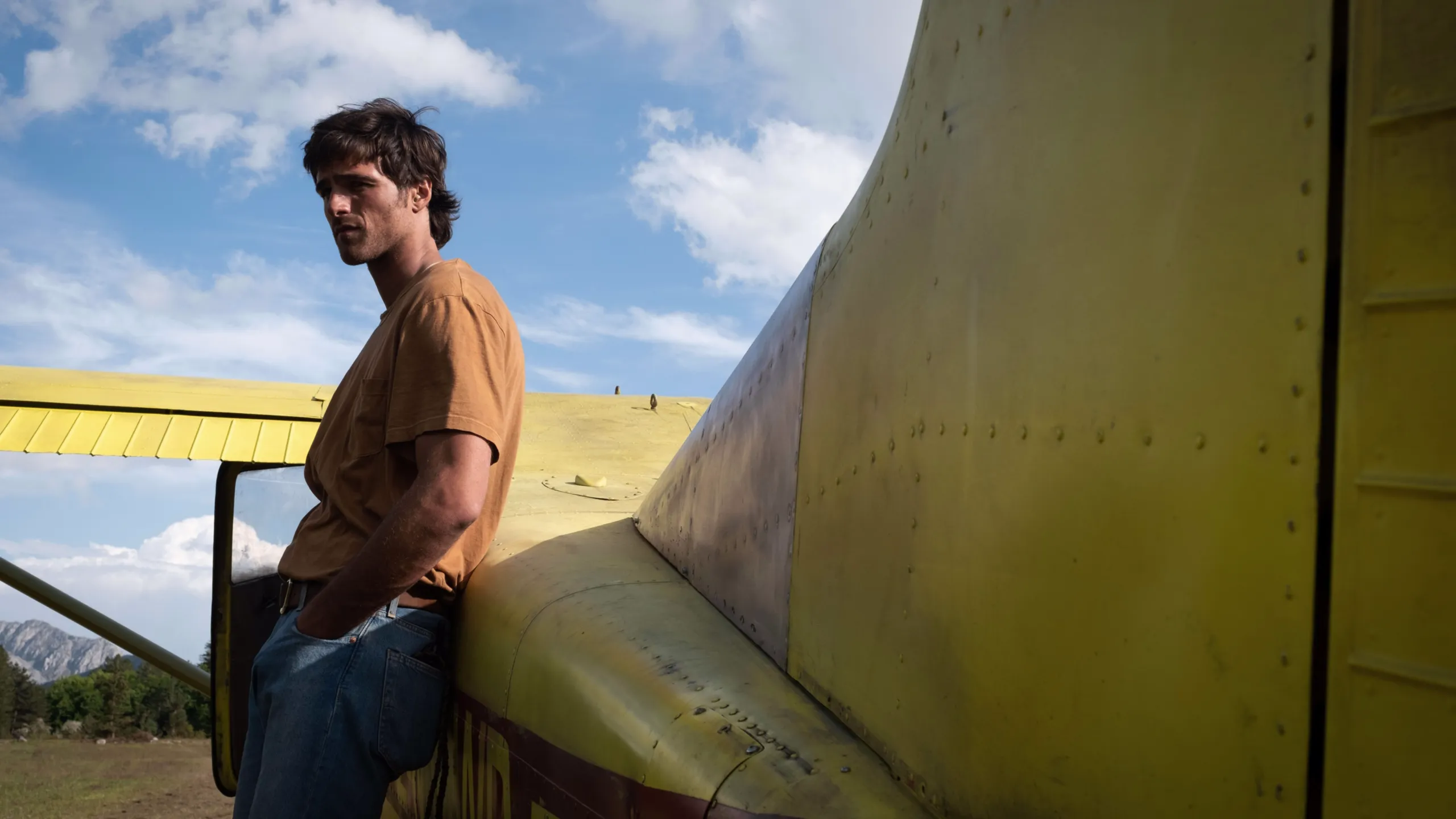
Jacob Elordi as Hig in The Dog Stars, standing in a post-apocalyptic landscape

Jacob Elordi as Hig in The Dog Stars, standing in a post-apocalyptic landscape

The Dog Stars arrived in US theaters on August 28, 2026, so this is the newest movie here.

It may also be the one I am most curious about.

Ridley Scott directs the adaptation of Peter Heller’s novel, with Jacob Elordi playing Hig, a young pilot trying to survive after a pandemic has wrecked most of civilization.

He lives on an isolated airfield with his dog and Bangley, a heavily armed survivalist played by Josh Brolin.

That setup alone works for me.

There is an uneasy little life happening here. Hig flies. Bangley protects the perimeter. They tolerate each other because survival has made the arrangement necessary.

Then Hig hears something over the radio.

Maybe someone else is out there.

Post-apocalyptic stories obviously are not new territory, and I don’t think another ruined-world movie automatically deserves attention because someone found a dusty highway and an abandoned gas station.

What interests me about The Dog Stars is how small the story seems willing to get.

Once the world is gone, what exactly are you staying alive for?

Hig has food, shelter, weapons and a plane. Technically, he is surviving. But survival by itself starts to look pretty empty after a while.

That is the part I want to see Ridley Scott dig into.

The cast also includes Margaret Qualley, Allison Janney, Benedict Wong and Guy Pearce, but this really seems built around Hig and the question of whether reaching toward another person is worth the danger that comes with it.

There will be violence. There are planes. There are guns. The world looks brutal.

Still, I suspect the stuff that sticks will be much quieter.

Best for: Post-apocalyptic fans who want something more personal than another story about rebuilding civilization.

Read the official Disney overview of The Dog Stars for the trailer, cast and release information.

2. Lanterns: Green Lantern as a Detective Story

Official Lanterns key art featuring Hal Jordan and John Stewart in the HBO Max sci-fi mystery seriesOfficial Lanterns key art featuring Hal Jordan and John Stewart in the HBO Max sci-fi mystery series

Lanterns premiered on HBO and HBO Max on August 16, 2026, with its eight-episode first season running weekly through October 4.

Of all the things DC could have done with Green Lantern, making it partly a detective show is probably the choice that got my attention fastest.

Kyle Chandler plays Hal Jordan. Aaron Pierre plays John Stewart. The two are investigating a series of crimes that start pointing toward something much bigger.

Nathan Fillion’s Guy Gardner is in there too, connecting the series to the larger DC Universe.

Yes, there are Green Lantern rings.

Yes, this thing eventually has to deal with aliens, cosmic threats and all the wonderfully ridiculous scale that comes with Green Lantern.

But it starts with an investigation.

I like that.

There is something inherently strange about taking characters who can cross space and create almost anything they can imagine, then asking them to slow down and figure out what actually happened.

Evidence matters.

People lie.

Two investigators can look at the same thing and come away with completely different conclusions.

Then you throw the universe into the middle of it.

Chris Mundy, Damon Lindelof and Tom King are behind the series, which probably explains why it seems comfortable letting things breathe instead of sprinting toward the next effects sequence.

The early response has also been strong. At the time of writing, Lanterns is sitting at 94% on Rotten Tomatoes.

I am curious to see whether it can keep the mystery feeling human once the cosmic side of Green Lantern inevitably starts getting bigger.

That balance is probably the whole game.

Best for: Anyone who likes superhero stories but wants an actual mystery holding the thing together.

You can follow the current Lanterns listing on Rotten Tomatoes as the season continues.

3. Disclosure Day: Okay, Aliens Exist. Now What?

Official Disclosure Day poster art for Steven Spielberg’s 2026 first-contact science-fiction filmOfficial Disclosure Day poster art for Steven Spielberg’s 2026 first-contact science-fiction film

Disclosure Day released in theaters on June 12, 2026, and its basic idea is almost absurdly simple.

Humanity learns we are not alone.

Fine.

Now what?

That second part is much more interesting to me than the first.

Science fiction has spent decades imagining the moment aliens arrive. Spaceships appear. Governments scramble. Someone stares into the sky.

Spielberg has already played in this territory himself.

But the thing I keep coming back to is what happens the next morning.

Do people still go to work?

What happens in churches?

What happens to markets?

What happens when every government on Earth suddenly has to explain what it knew, what it didn’t know and whether anyone should believe them?

How quickly does humanity manage to turn the biggest discovery in our history into another thing to fight about?

Probably pretty quickly.

That is what makes the premise interesting.

Disclosure Day treats first contact as something that happens to civilization itself, not only to the handful of scientists or soldiers standing closest to it.

The aliens matter.

Our reaction might matter more.

That is the kind of science fiction I tend to gravitate toward anyway. Give me the impossible discovery, sure. Then show me what it breaks.

Because every major discovery changes the story people tell themselves about where they fit.

Finding out that humanity is not alone would be one hell of a rewrite.

Rotten Tomatoes lists the movie with its June theatrical release followed by streaming beginning in July, so it is already fairly easy to catch up with if you missed the theater run.

Best for: First-contact fans who are more interested in the consequences than the spaceship.

See the Disclosure Day page on Rotten Tomatoes for current viewing information and reviews.

4. Supergirl: Sometimes I Just Want the Big Space Movie

Official Supergirl poster art featuring Kara Zor-El in the 2026 cosmic adventure filmOfficial Supergirl poster art featuring Kara Zor-El in the 2026 cosmic adventure film

Not everything on this list needs to stare into the void for two hours.

Sometimes I want planets.

I want ships.

I want impossible landscapes and characters getting hurled across half the galaxy because something has gone horribly wrong.

That is where Supergirl comes in.

Released on June 26, 2026, the movie sends Kara Zor-El, played by Millie Alcock, across the universe on a story built around loss, revenge and justice.

And honestly, Supergirl makes sense as a science-fiction character in a way I think superhero movies sometimes forget.

She is an alien.

Her world is dead.

She remembers it.

That last part changes everything.

Superman was raised on Earth. Earth is home to him.

Kara carries Krypton with her.

So putting her back into space gives all that grief somewhere enormous to go.

Science fiction is good at doing that. It can take something painfully personal and give it ridiculous physical scale. A dead family becomes a dead world. Distance becomes light-years. Running away can literally mean leaving the planet.

That does not automatically make a story deeper, obviously.

Sometimes a laser fight is still just a laser fight.

But when the two sides actually connect, when the spectacle carries the character instead of burying them, this kind of movie is exactly my thing.

And after several darker entries on this list, I am perfectly happy having one that wants to move.

Best for: Anyone who wants their science fiction loud, cosmic and emotional without needing it to become relentlessly grim.

See the Supergirl page on Rotten Tomatoes for release details and current viewing options.

5. Alien: Earth: We Were Probably Safer in Space

Official Alien: Earth series art showing the dark corporate sci-fi horror of the showOfficial Alien: Earth series art showing the dark corporate sci-fi horror of the show

This one technically cheats.

Alien: Earth premiered in August 2025, not 2026. But with a second season renewed and development continuing this year, I am leaving it on the list.

Mostly because it is still one of the more interesting things happening in science fiction television.

Noah Hawley’s series takes place in 2120, with Earth effectively controlled by five massive corporations.

Humans share the world with synthetics and cyborgs. Prodigy Corporation is experimenting with hybrids as part of its attempt to get around that irritating little problem called death.

Then a Weyland-Yutani spacecraft crashes into Prodigy City.

Things go badly.

Obviously.

This is Alien.

But the xenomorphs are almost the easy part.

What makes Alien: Earth interesting is everything people were already doing before the monsters arrived.

Corporations are building bodies.

People are chasing immortality.

Human beings are deciding which forms of life count as people and which ones count as property.

Then something shows up that absolutely does not care about any of their categories.

That is where Alien works best for me.

The creature is terrifying, but the humans keep building the conditions that make everything worse.

Every time.

Space was frightening in the original film because nobody could help you out there. Alien: Earth turns that around.

Now the monster is here.

It is inside the systems we built.

And the people running those systems still think they are the smartest things in the room.

The first season currently holds a 94% Tomatometer score on Rotten Tomatoes, with Sydney Chandler, Alex Lawther, Timothy Olyphant, Essie Davis and Babou Ceesay leading the cast.

If you missed it last year, I would catch up before season two arrives.

Best for: Anyone who likes science fiction where the corporation may be at least as dangerous as the thing with acid for blood.

See the current Alien: Earth listing on Rotten Tomatoes for viewing information.

Where I Would Start

This really depends on what kind of science fiction you are hungry for.

If you want something big, go with Disclosure Day or Supergirl.

If you want something darker, Alien: Earth is an easy recommendation.

The Dog Stars looks like the quietest of the bunch, and maybe the most human.

Then there is Lanterns, sitting somewhere in the middle with superheroes, cops, aliens and a mystery that could eventually become much bigger than either of its investigators expects.

That range is probably why I never really get tired of science fiction.

The genre can hold all of this.

A guy sitting alone with his dog after the world ends.

Two detectives carrying weapons powered by imagination.

Humanity finding out it has neighbors.

A Kryptonian crossing the galaxy because she cannot outrun what happened to her.

A corporation looking at the nightmare creature from Alien and somehow still thinking, Yeah, we can probably monetize this.

Science fiction gets enormous very easily.

The good stuff still finds a way to make all that scale come back down to us.

The 10 Best Science Fiction Books for New Fans (and Where to Start After Them)

I still remember the feeling of finishing a science-fiction book and realizing that the story had not really ended. The last page was only the edge of something larger: other authors, stranger worlds, older ideas, and questions that had been waiting somewhere beyond the cover.

That is what I want this list to offer. Not a final ranking of the genre, because no list could contain everything science fiction has become, but a set of welcoming entry points into its deserts, starships, laboratories, dystopias, and impossible futures.

Science fiction can be funny, frightening, political, intimate, philosophical, or wonderfully strange. It can ask what technology changes, what power costs, what humanity might become, and whether we would recognize ourselves after the world around us had been rebuilt.

The books below cover several of those possibilities. I have included classic science fiction novels, modern page-turners, and a few books that sit close to the borders of the genre. Each one offers a different way in. After each recommendation, I have also included a suggested next step, because the best science fiction books often leave you with one simple question:

What else is out there?

1. The Martian by Andy Weir

Start here if you like: survival stories, problem-solving, humor, and realistic science.

Mark Watney is stranded alone on Mars after a mission goes wrong, and the novel follows his attempt to stay alive using whatever knowledge, equipment, and stubbornness he can find. The situation is enormous, but the storytelling remains grounded in immediate problems: food, water, shelter, communication, and the next thing that might kill him.

That clarity makes The Martian one of the easiest modern science fiction books for new fans to pick up. You do not need a background in physics to follow it. The technical details become part of the suspense, while Watney’s dry humor keeps the story moving.

Where to start after it: Try Andy Weir’s Project Hail Mary for another accessible hard-science adventure, this time involving amnesia, deep space, and first contact.

2. The Hitchhiker’s Guide to the Galaxy by Douglas Adams

Start here if you like: comedy, absurdity, fast-paced adventures, and deeply questionable advice.

Earth is destroyed, Arthur Dent escapes with an alien friend, and the universe becomes considerably stranger from there. Douglas Adams approaches science fiction with the energy of a radio sketch, but beneath the jokes is a genuine affection for the genre’s grand traditions: space travel, alien civilizations, improbable technology, and the search for meaning.

This is a short, welcoming book for anyone who worries that science fiction might be too serious or too technical. It is neither. It is playful, sharp, and full of ideas that arrive disguised as jokes.

The publisher describes it as the first of five books in a “trilogy,” which is exactly the sort of decision the series makes without apology. You can find more background through Pan Macmillan’s guide to the book.

Where to start after it: Read Terry Pratchett’s Strata for another humorous approach to big science-fiction concepts, or move toward space opera with Leviathan Wakes.

3. The Invisible Man by H.G. Wells

Start here if you like: classic horror, scientific experiments, and stories about power changing people.

H.G. Wells published The Invisible Man in 1897, but its central question remains immediate: what happens when a person gains extraordinary power without gaining extraordinary wisdom?

Griffin’s invisibility begins as a scientific achievement. It quickly becomes a practical problem, then a moral one. Clothes can still be seen. Food creates complications. Weather becomes a threat. Most importantly, the discovery does not make Griffin better. It gives his existing ambitions and resentments more room to grow.

This is one of the classic science fiction novels I return to because the premise is so simple, and because Wells keeps making it less convenient. At Epic Again, Gary has written about returning to The Invisible Man, the book that began his own science-fiction reading journey. The novel is also available through Project Gutenberg.

Where to start after it: Explore more H.G. Wells, especially The Time Machine, or move to Octavia Butler’s Kindred for another speculative story where the impossible exposes difficult truths about human power.

A reader at a library table surrounded by books as a circular portal opens onto several science-fiction worlds

4. Fahrenheit 451 by Ray Bradbury

Start here if you like: short novels, dystopias, questions about censorship, and lyrical writing.

In Bradbury’s future, firemen do not put out fires. They start them, burning books in a society that has decided difficult ideas are too uncomfortable to keep around.

The premise is familiar now, but the book remains powerful because it is not only about government censorship. It is also about distraction, speed, conformity, and the gradual disappearance of the desire to think deeply. Bradbury’s world is full of screens, noise, empty entertainment, and people who have forgotten what books can ask of them.

At around two hundred pages, Fahrenheit 451 is a manageable introduction to dystopian science fiction. It also creates a natural bridge between genre reading and wider literary fiction.

Where to start after it: Read Aldous Huxley’s Brave New World for a different vision of social control, or Lois Lowry’s The Giver for a quieter and more intimate dystopian entry point.

5. The Left Hand of Darkness by Ursula K. Le Guin

Start here if you like: character-driven stories, anthropology, politics, and thoughtful worldbuilding.

Ursula K. Le Guin sends an envoy to the planet Gethen, a world whose inhabitants do not live within the fixed gender system familiar to the visitor. The resulting story involves diplomacy, survival, mistrust, cultural misunderstanding, and a long journey across an ice-covered landscape.

The book is quiet in places, but never small. Le Guin builds an alien society carefully enough that its customs begin to challenge the assumptions we bring with us. What would change if a culture understood gender differently? How much of identity comes from biology, language, history, or social expectation? What does it take to trust someone whose entire way of seeing the world is unfamiliar?

The Left Hand of Darkness is one of the best science fiction books for readers who want ideas to emerge through relationships rather than lectures.

Where to start after it: Continue with Le Guin’s The Dispossessed, or explore Ann Leckie’s Ancillary Justice for another story about identity, language, and power.

Two figures connected by amber light across an alien landscape, surrounded by symbols of ecology, politics, identity, and artificial intelligence

6. Dune by Frank Herbert

Start here if you like: epic fantasy, political intrigue, ecology, prophecy, and immersive worldbuilding.

On the desert planet Arrakis, Paul Atreides is drawn into a conflict involving noble families, imperial power, religion, natural resources, and the people who have learned to survive in one of the harshest environments imaginable.

Dune can look intimidating from the outside. It has unfamiliar terminology, a large cast, multiple political factions, and a history that seems to extend far beyond the opening chapters. But the central story is clear: a young man loses his home, enters an unfamiliar culture, and begins to understand the forces shaping his future.

What makes the novel endure is the way its adventure story is tied to ecology and politics. The desert is not just scenery. It determines how people live, what they value, and what kinds of power are possible.

Where to start after it: If you want more political and environmental science fiction, try Le Guin’s The Dispossessed. If you want another sweeping space opera, try James S.A. Corey’s Leviathan Wakes.

7. The Martian’s companion in wonder: Project Hail Mary by Andy Weir

Start here if you like: mysteries, first contact, scientific puzzles, and emotional adventure.

Although Project Hail Mary shares Andy Weir’s interest in practical science, it has a different shape from The Martian. The narrator wakes far from Earth with no memory of who he is or why he has been sent into space. The story unfolds as a mystery as much as a survival novel.

The science remains central, but so does discovery. The book asks what cooperation might look like when communication itself is a problem, and when the being on the other side of that communication may not share anything familiar with us.

It is a particularly good recommendation for readers who enjoy watching characters solve problems one step at a time.

Where to start after it: Try Ted Chiang’s collection Stories of Your Life and Others, which includes the story that inspired the film Arrival. Pan Macmillan’s book page offers more information.

8. The Giver by Lois Lowry

Start here if you like: dystopias, quiet emotional reveals, memory as a theme, and accessible speculative fiction.

Jonas lives in a society built on order, sameness, and the careful removal of pain. When he is chosen for a unique role within that system, he begins to encounter memories, feelings, and forms of knowledge that his community has tried to leave behind.

What makes The Giver such a strong entry point is its clarity. The prose is simple, the concept is easy to grasp, and the deeper questions arrive gradually. What is lost when a society chooses comfort over freedom? What disappears when suffering is removed along with love, color, risk, and memory?

It is shorter and more immediately approachable than many classic dystopias, but it still opens onto the same large concerns about control, conformity, and the cost of a carefully managed world.

Where to start after it: Follow it with Bradbury’s Fahrenheit 451 and Huxley’s Brave New World to compare different visions of controlled societies.

9. Ender’s Game by Orson Scott Card

Start here if you like: military strategy, fast pacing, gifted young characters, and moral dilemmas.

Ender Wiggin is recruited into a military training program designed to prepare children for a future conflict with an alien species. The story moves quickly, but its most interesting questions appear beneath the battles and simulations.

What does it mean to understand an enemy? Can empathy become a weapon? How much can adults ask of children in the name of survival? The novel is easy to read on the surface, while leaving room for more complicated interpretations underneath.

It is a useful introduction to military science fiction, especially for readers coming from games, blockbuster films, or strategy stories.

Where to start after it: Try Joe Haldeman’s The Forever War for a more reflective military science-fiction novel, or move toward modern space opera with Ancillary Justice.

10. Ancillary Justice by Ann Leckie

Start here if you like: artificial intelligence, space opera, unusual narrators, and questions of identity.

Breq was once an artificial intelligence spread across an entire starship and its many ancillary bodies. Now only one human-shaped body remains, carrying the memory of a much larger self.

That idea gives Ann Leckie room to explore empire, loyalty, language, gender, and the boundaries of personhood. The novel asks what makes an individual an individual when consciousness can exist across many bodies, and what happens when an enormous intelligence is reduced to one vulnerable form.

It is a more demanding introduction than some of the other books on this list, but it offers a clear path into contemporary science fiction and its interest in artificial intelligence, distributed identity, and political power.

Where to start after it: Continue with the rest of the Imperial Radch trilogy, or explore Arkady Martine’s A Memory Called Empire for another politically intricate space opera.

A luminous path leads from an old paper book through Mars, starships, artificial intelligence, and an unknown planet

Where should a new science-fiction reader begin?

There is no correct order. That is part of the pleasure.

If you want the easiest modern entry, start with The Martian or Project Hail Mary. If you want classic science fiction novels, choose The Invisible Man, Dune, or The Left Hand of Darkness. If you want dystopia, begin with Fahrenheit 451 or The Giver. If you want humor, pick up The Hitchhiker’s Guide to the Galaxy.

The important thing is not to read the books in the order of their reputation. Start with the question that already interests you: What if technology changed survival? What if society changed gender? What if power could rewrite reality? What if the universe was stranger than human language could describe?

The Epic Again Books category is where I will keep returning to those questions through reviews, reflections, and new recommendations. Some books will feel immediately right. Others may take time. A few may send you somewhere I could not have predicted.

That is how a science-fiction reading life begins: one book opens, one world appears, and the horizon quietly grows.