Some ideas hit all at once.
Others sit around for years waiting for something to wake them back up.
That has happened to me more times than I can count.
I can go through long stretches where I feel like I should be making more. Writing more. Finishing more of the ideas that keep circling around in my head.
Then I read a book.
Watch a movie.
Paint a miniature.
Play a game that drops me into some strange place I have never seen before.
And suddenly something starts moving again.
That is one of the reasons I keep coming back to science fiction.
I do not think it creates imagination out of nowhere.
I think it gives imagination somewhere to go.
That is where I want to start Creative Spark, a monthly Epic Again series about getting creativity moving again without pretending the rest of life disappears first.
Science Fiction Starts With a Dangerous Question
Most science fiction begins with some version of:
What if?
That is about as simple as a creative prompt can get.
What if humanity actually spread across the stars?
What if memories could be bought and sold?
What if artificial intelligence became part of everyday life instead of something sitting behind a screen?
What happens if a society solves one huge problem and accidentally creates five new ones?
You can keep going forever.
That is the fun part.
A question that takes ten seconds to ask can turn into planets, cities, religions, governments, ecosystems, technology, wars, families, and some poor person who still has to get up and make breakfast in the middle of all of it.
Science fiction gives us permission to mess with things we normally accept as fixed.
Change gravity.
Remove scarcity.
Make death optional.
Put humanity underground.
Give everybody perfect memory.
Make communication between stars take decades.
Then follow the mess that creates.
That is where the creative part gets interesting for me.
The first idea is usually easy.
The consequences are where the world starts growing.
There is research suggesting that actively engaging with science-fiction ideas can support creative thinking. One study looking at science fiction, creativity, and moral imagination found that participants engaging with science fiction showed stronger creative performance on a later design task than a comparison group.
What I find more interesting is the idea underneath that.
It was not just about sitting in front of science fiction and absorbing it.
They were thinking about it.
That feels familiar.
The stories that stick with me are usually the ones I keep arguing with after they are over.
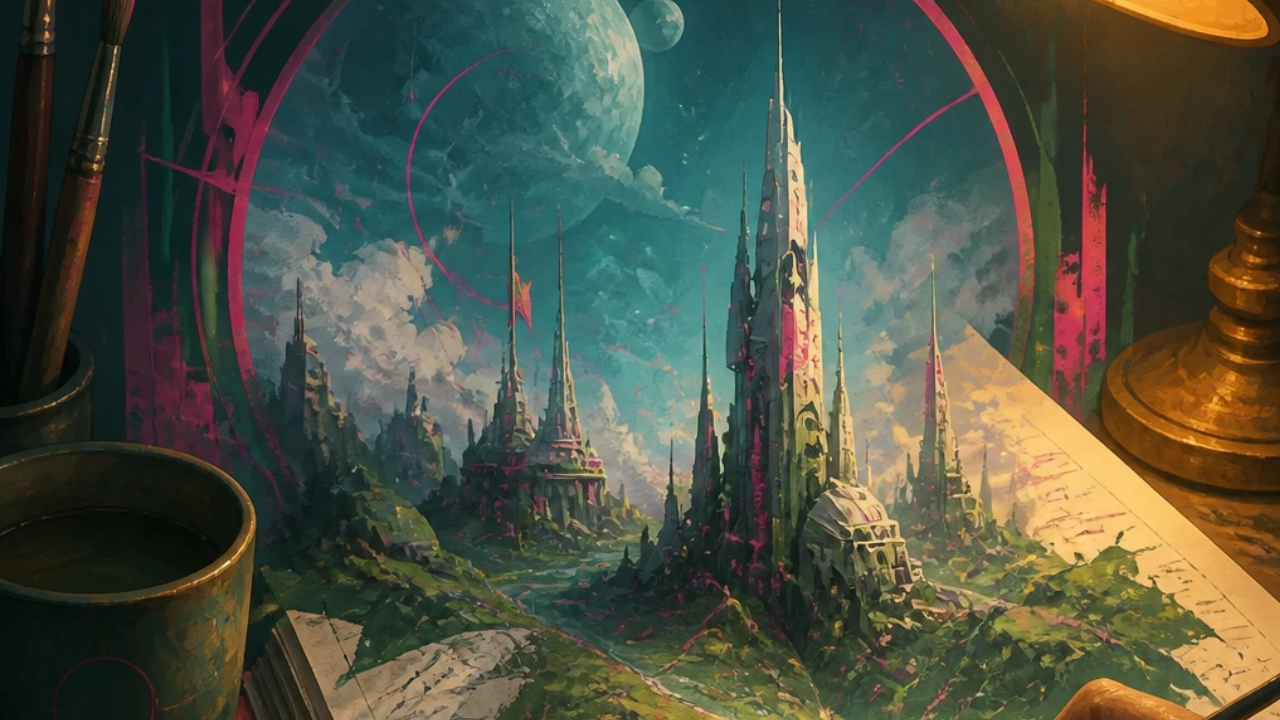
An open sketchbook transforming into a detailed alien city and worldbuilding map
Worldbuilding Is Basically Asking “Then What?”
Worldbuilding can sound intimidating.
You hear the word and immediately picture maps covering an entire wall, twelve thousand years of fictional history, invented languages, family trees, trade routes, religious schisms, and somebody explaining a currency system nobody asked about.
It can be that.
It does not have to start there.
Most of the time it begins with one thing.
Say you have a city on a planet where massive storms never stop.
Fine.
How do people get around?
Maybe nobody builds tall buildings.
Maybe the city is underground.
Where does food come from?
How does somebody make money?
Who owns whatever technology keeps everyone alive?
What happens when that system breaks?
Now you are building a world.
You did not need a map.
You needed another question.
That is what I like about worldbuilding when I am trying to get unstuck creatively.
It gives the imagination some rails without telling it exactly where to go.
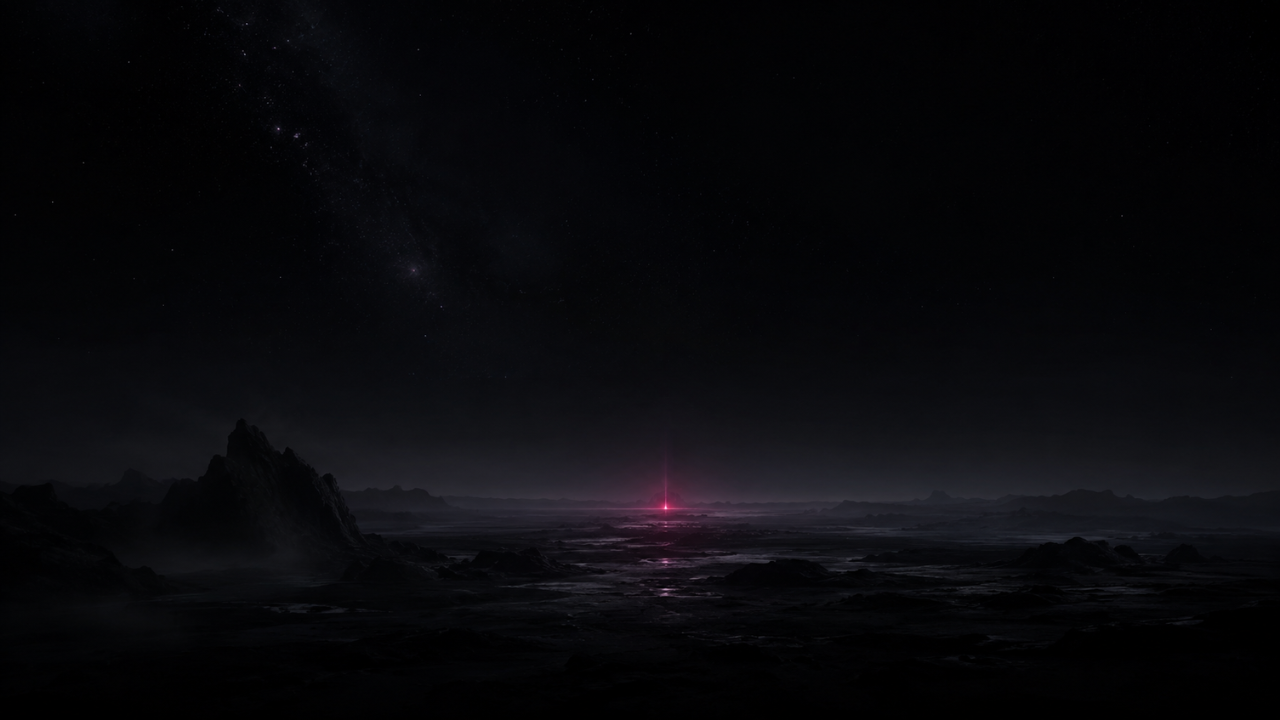
Start with a red desert.
That is just an image.
Now say the people living there collect all their water from morning fog.
Better.
Then decide the families who control the fog collectors are also the families with political power.
Now something is happening.
You can feel the world starting to push back.
I find the same thing happening with miniature painting.
A figure starts as plastic.
Then I pick colors.
Add wear.
Change the base.
Suddenly I am wondering where this person has been.
Why is the armor damaged?
Who made the weapon?
What kind of place leaves that color of dust behind?
That is part of what keeps pulling me deeper into miniature painting.
The miniature becomes a tiny worldbuilding prompt sitting on the desk.
It does not need a complete answer.
It just needs to make me ask one more question.
I Get Stuck When I Demand the Finished Thing Too Early
This is probably one of my bigger creative problems.
I want to know whether the idea is worth doing before I have actually done enough with it to find out.
That sounds ridiculous when I write it down.
Still true.
I want the finished story.
The finished article.
The finished paint scheme.
The finished world.
And if I cannot see that finished version clearly enough, I can convince myself the idea is not ready.
Sometimes I just kill it there.
Science fiction is useful because the genre is very comfortable with unfinished questions.
What happens if people can share memories?
Maybe it creates empathy.
Maybe privacy collapses.
Probably both.
What if a machine can predict violent crime incredibly well?
Sounds useful.
Until it predicts you.
What happens when people live for three hundred years?
Maybe relationships become deeper.
Maybe everyone gets really good at avoiding commitment.
You do not need to decide immediately.
Stay with the question.
Turn it around.
Make the optimistic version.
Then make the ugly version.
Usually the interesting version is somewhere in between.
Three circular portals showing alternative futures and speculative worlds
That is where science fiction becomes useful beyond cool technology and alien planets.
It lets us take an idea and poke at it.
Who benefits?
Who gets left out?
Who controls it?
Who hates it?
What does the first generation think about it?
What does the fifth generation think is completely normal?
Now we are getting somewhere.
A Few Ways I Use Sci-Fi to Get Creativity Moving
I do not think the answer is just consuming more stuff.
Trust me, I am perfectly capable of buying another book and calling it creative research.
Sometimes that counts.
Sometimes I am just buying another book.
The useful part is doing something with the idea afterward.
Here are a few easy ways to start.
1. Steal the Question, Not the Answer
Pick something from a story that stuck with you.
Do not copy the spaceship.
Figure out why the spaceship interested you.
Maybe it is because everyone on board lives for generations.
Good.
That is your question now.
What happens when a ship becomes somebody’s entire world?
Or maybe the interesting thing was a city controlled by an algorithm.
Forget the specific city.
Ask what happens when people stop understanding how the rules governing their lives are being made.
Take the question somewhere else.
That is usually more useful than borrowing the surface.
2. Write Something Tiny
Do not start with Chapter One.
That is how you accidentally give yourself homework.
Write 100 words.
A courier lands on the wrong moon.
Someone finds an old robot under their house.
A city changes its laws every morning.
A kid gets a message from the adult version of themselves.
That is enough.
You only need one person, one problem, and enough room for something to happen.
If you want to keep going afterward, great.
If not, you still made something.
3. Give an Ordinary Object a Different World
Pick something sitting near you.
A coffee mug.
Headphones.
A key.
A receipt.
Now pretend it came from somewhere else.
Who owns it?
What is it made from?
Is it valuable?
Disposable?
Illegal?
Would somebody from that world understand why you use it the way you do?
This gets weird faster than you would think.
A key gets especially interesting in a society where nobody owns physical property.
Now why does it exist?
There is your story.
4. Make Something You Can Touch
Draw a bad map.
Seriously.
It can be terrible.
Paint a miniature.
Cut images out and make a mood board.
Build something out of cardboard.
Make a fake newspaper clipping from your fictional city.
Sketch a building you have no idea how to actually draw.
The point is getting the idea out of your head.
Sometimes the moment it becomes physical, you notice something you could not see while you were just thinking about it.
Creativity Has to Fit Inside the Life I Actually Have
This is the part I keep coming back to.
I can create the perfect imaginary version of my creative life pretty easily.
I have hours every day.
The office is clean.
Nobody needs anything.
I am completely rested.
Every idea works.
Apparently I also live in science fiction.
My actual life has work, family, responsibilities, unfinished chores, tired evenings, kids, schedules, and plenty of days where I do not feel especially creative.
Waiting for all of that to clear out is not a plan.
That was a big part of why I wrote Returning to Creativity: Why I’m Making EpicAgain.
I am trying to figure out how creativity fits inside the life I already have.
Not some imaginary life where I suddenly get six uninterrupted hours every afternoon.
Sometimes I get ten minutes.
Fine.
Ten minutes is enough to write down a strange idea.
Or sketch a doorway.
Or paint one part of a miniature.
Or think through why the people in some imaginary city never build windows.
That still counts.
I am slowly trying to stop treating small creative work like it is the consolation prize.
Sometimes small is how you stay connected.
The Spark Usually Looks Smaller Than I Expect
I think I spent a long time expecting creativity to come back dramatically.
Some huge idea.
A rush of motivation.
Suddenly I would be writing every night and finishing projects again.
That sounds nice.
It is also not usually how it happens.
More often, I notice something.
A color.
A line in a book.
A weird ship design.
A miniature somebody else painted.
Then I start thinking about it.
One question shows up.
Then another.
Maybe I make a note.
That is usually the spark.
Tiny.
Easy to ignore.
And if I follow it for a little while, sometimes it turns into something bigger.
Keep Following the Weird Thing
I am still figuring out exactly what Creative Spark is going to become.
That feels appropriate.
Some months it will probably be writing.
Other months painting, worldbuilding, hobbies, routines, movies, games, or whatever else has managed to get my imagination moving.
I do not want this series to become another collection of advice telling busy people they just need better discipline.
That is not what I am looking for.
I want to pay attention to the things that actually make me want to create again.
Science fiction happens to be one of the biggest.
It gives me impossible places to visit.
Then it sends me home with questions.
Every once in a while, one of those questions refuses to leave.
That is usually when I know I should follow it.