
Two free guides. One small creative adventure. Start your adventure here!

Restoring Old Aeldari: Stripping Years of Paint From Facebook Marketplace Miniatures

Sometimes the cheapest way to build an army means buying somebody else’s old project and accepting that your first hobby session is going to involve a toothbrush.
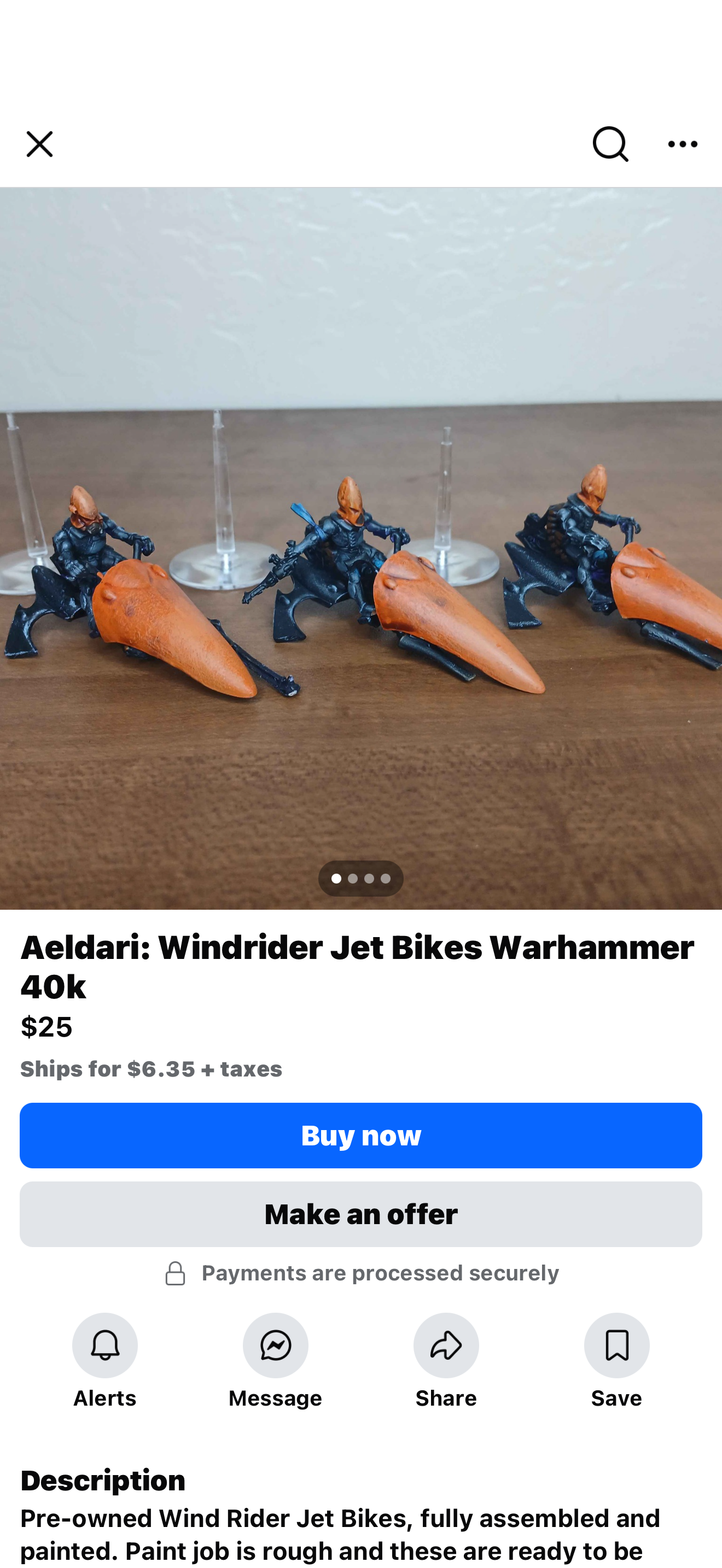
Facebook Marketplace gets dangerous once you learn to look past a bad paint job.

A miniature covered in thick orange, green, white, blue, or several colors that seem to have gotten into an argument can look pretty rough in a listing.

But the model is still under there.

Hopefully.

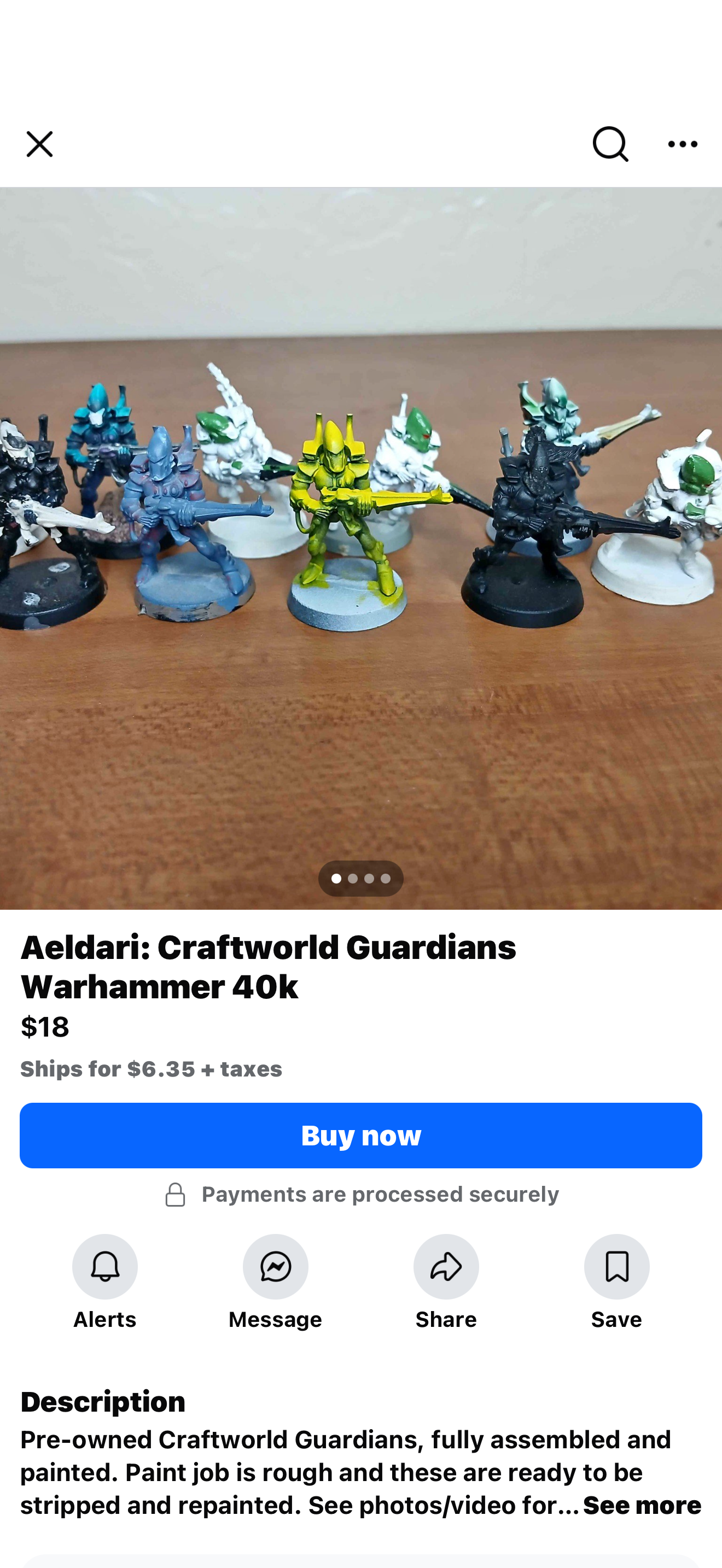
As I have been building my first Aeldari army, I picked up a batch of older Guardians and three Windrider jetbikes through Facebook Marketplace. They were already assembled and very, very painted.

The seller was not hiding that. These were inexpensive models meant to be stripped, cleaned up, and put back on the table.

That was exactly what I wanted.

I Wanted Practice Models, Not Perfect Models
I am still figuring out the black-and-pink paint scheme I want to use across this army.

Which means I need somewhere to make mistakes.

I would much rather discover that an idea looks terrible on an inexpensive used Guardian than on one of the models I have been especially excited to paint.

These Guardians are perfect for that.

There are enough of them that I can play around with how much pink I actually want, how I highlight the black armor, what I do with helmets, weapons, spirit stones, and all the other ideas that tend to look much better in my head than they do the first time I put paint on plastic.

The Windriders give me the same opportunity on a bigger surface.

Those old jetbike cowls are basically giant test panels.

Before I could start experimenting with my paint, though, I had to remove somebody else’s.

The Starting Point Was Rough

The Guardians looked less like one army and more like the leftovers from several completely unrelated painting projects.

There were black ones, white ones, blue ones, green ones, and one particularly committed yellow-and-green Guardian.

The Windriders were at least consistent. Dark riders. Bright orange jetbikes.

Unfortunately, some of that paint was thick.

I could have primed over everything and hoped for the best, but that would have buried even more of the detail.

And that was really the problem.

I did not need every molecule of old paint removed.

I just needed the sculpt back.

Armor edges needed to look like edges again. Helmets needed definition. Weapons needed to stop looking like vaguely rifle-shaped chunks of paint.

So I decided to strip the whole batch and see what was actually underneath.

Using LA’s Totally Awesome to Strip the Old Paint
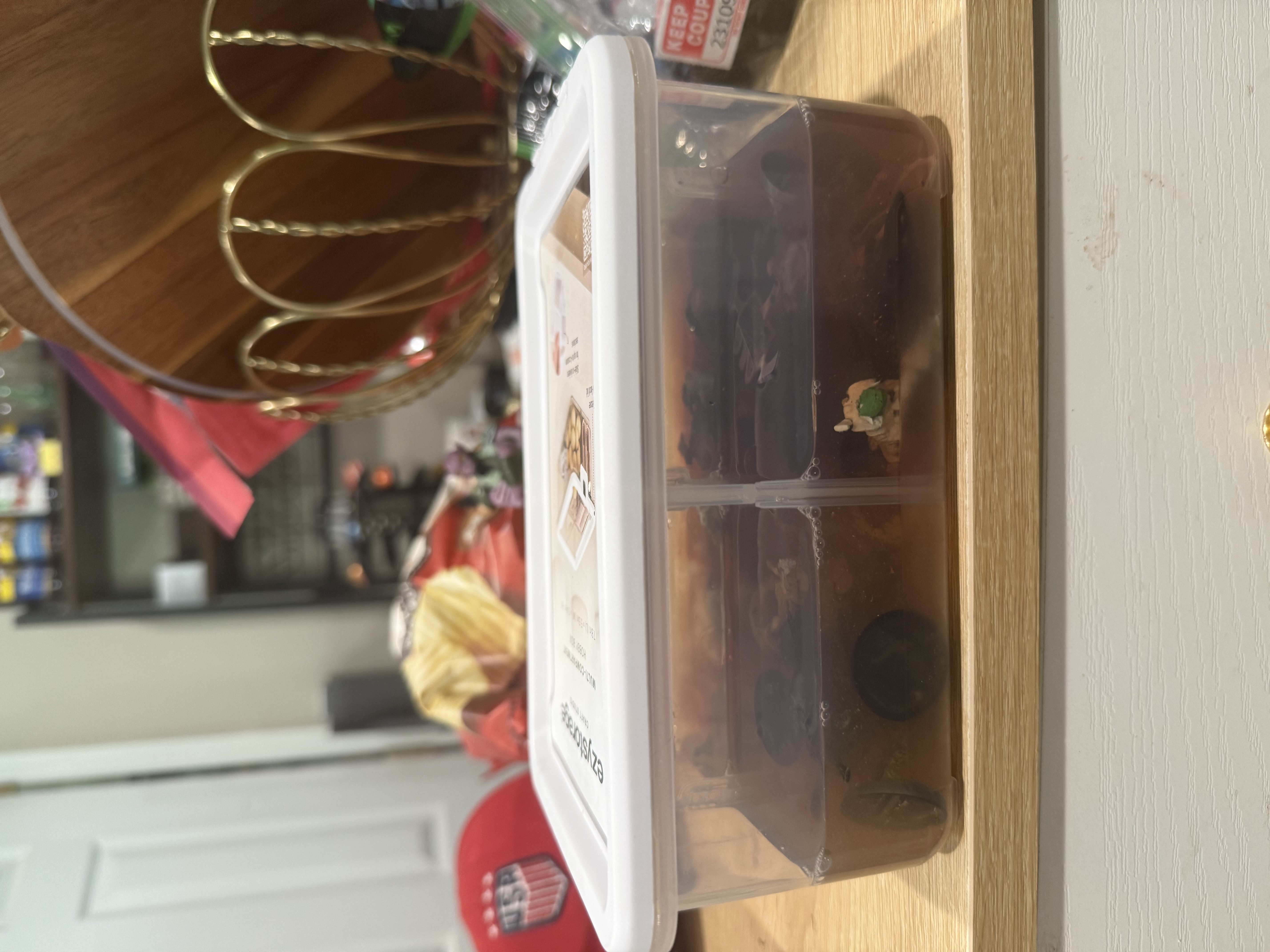
For the stripping bath, I used LA’s Totally Awesome All-Purpose Cleaner.

It is a household cleaner and degreaser, not a product made specifically for miniatures. I was repurposing it for hobby use, so I followed the handling information on the container rather than assuming miniature painters have somehow discovered better chemical safety rules than the company that makes it.

You can find the manufacturer’s information on LA’s Totally Awesome here:

https://www.lastotallyawesome.com/products/all-purpose-cleaner/

My setup itself was highly technical.

A plastic container, cleaner, and a pile of old Aeldari.

That was pretty much it.

I submerged the models and let the cleaner start working through the old layers. I checked on them instead of treating soaking time like some exact formula, because these miniatures had clearly lived very different lives before they reached me.

Some had different primers. Paint thickness varied all over the place. I would not be surprised if there were several different kinds of paint involved too.

A few layers started giving up almost immediately.

Others had apparently decided they were part of the model now.
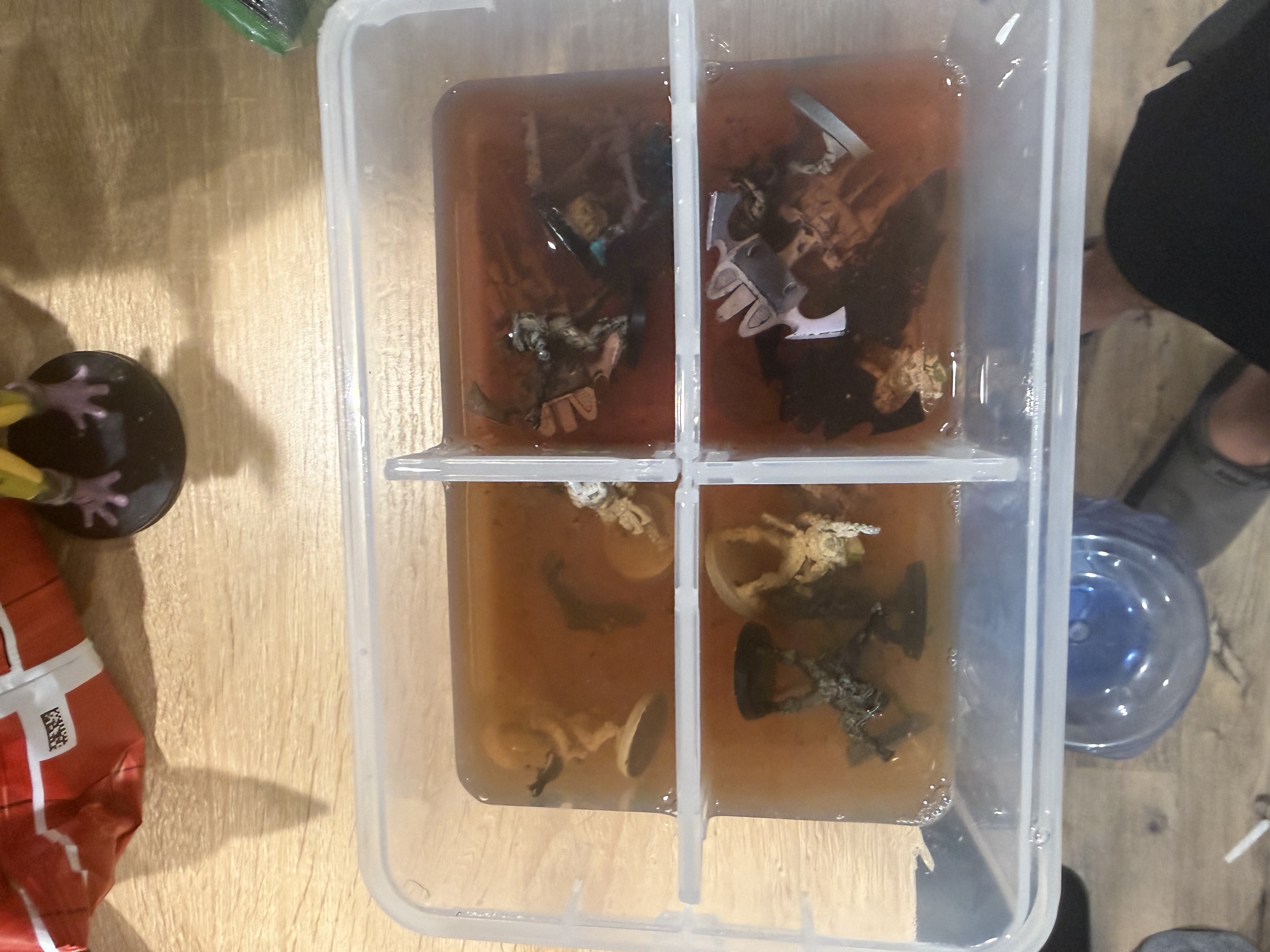
The Brown Soup Is Apparently Progress

One of the more satisfying parts was watching the cleaner stop looking clean.

It happened pretty quickly.

Old paint started coming away from the models and the liquid turned into a murky brown-orange mess that looked increasingly questionable the longer everything sat in it.

Good.

That meant at least some of the paint was moving into the soup instead of staying on my Aeldari.

Once the old layers softened up, the cleaner had done about as much as it could do on its own.

Now I actually had to work.

The Toothbrush Did Most of the Work

An old toothbrush ended up doing most of the actual paint removal.

And I mean an old toothbrush.

This one is not going back into anybody’s bathroom afterward.

The bristles were stiff enough to work loosened paint out of armor, helmets, weapons, bike surfaces, and bases without immediately chewing into the plastic underneath.

I would scrub a section, clear away the loose paint, and see what I had.

Some areas came clean pretty easily.

The recesses were another story.

Aeldari have plenty of little seams, armor transitions, weapon details, and tiny corners where old paint can settle in and apparently begin planning for retirement.

Trying to bully it out usually was not worth it.

Scrub what will move. Check the detail. Put the model back in the cleaner if it needs more time.

Then do it again.

Very exciting television.

The Wire Brushes Were for the Stubborn Parts

I also used small wire brushes where the paint was especially stubborn.

This is where I slowed down.

A wire brush is much more aggressive than a toothbrush, especially on plastic. If you get carried away, you stop restoring the miniature and start sanding your Guardian with metal bristles.

That felt like a bad trade.

So the toothbrush stayed my normal tool. The wire brushes only came out for problem spots, and even then I used light pressure and checked constantly to make sure I was attacking paint instead of detail.

If you are doing this yourself, I would absolutely start with nylon first.

Metal bristles can work, but there is no prize for getting the paint off three minutes faster if the helmet looks like it survived orbital re-entry afterward.

I Wasn’t Trying to Make Them Factory New

This was probably the biggest lesson from the whole process.

At first, I wanted every model back to bare plastic.

It feels like that should be the goal. Old paint gone. Clean reset. Start over.

Except eventually you are standing over a container with a toothbrush, trying to remove one tiny blue dot from the deepest recess on a thirty-year-old miniature, and you have to ask yourself what exactly you are accomplishing.

If a little staining or old primer remains somewhere but the sculpt is sharp and there is no thick buildup left, I am done.

The next primer coat does not care about my archaeological standards.

What matters is getting the heavy paint off and bringing the details back.

So now I check a few things:

  • Are the armor edges visible again?
  • Are panel lines and recesses clear?
  • Did the faces and helmets keep their detail?
  • Are the weapons free of heavy buildup?
  • Does the surface feel smooth enough to prime?

If the answer is yes, that model is ready to move on.

Used Miniatures Feel Less Intimidating

There is another thing I have started to like about these older models.

They already have history.

Somebody built them. Somebody picked those colors. They may have played games with them, displayed them for years, thrown them into storage, or eventually looked at the box and decided it was finally time for them to go.

Now they are becoming part of my first army.

For some reason, that makes them easier to experiment on.

A brand-new miniature can feel weirdly precious.

You just paid for it. The plastic is clean. Everything looks perfect. There is a little voice telling you that maybe you should know exactly what you are doing before the brush touches it.

These Guardians have already survived somebody else’s paint job, years of storage, Facebook Marketplace, and a bath in brown cleaning fluid.

They can handle me figuring out pink.

If the first attempt looks terrible, fine.

We already know where the stripping container is.

A used miniature is a pretty good place to give yourself permission to experiment.

Facebook Marketplace Is Becoming Part of the Hobby

I originally started looking at used miniatures because they were cheaper.

That is still a big part of the appeal.

But I am starting to enjoy the restoration itself.

There is something satisfying about finding an old sculpt buried under somebody else’s paint, cleaning it up, figuring out exactly what you bought, repairing anything that needs attention, and eventually folding it into a completely different army.

It scratches a different part of the hobby than opening a fresh box.

New models give you the clean start.

Used ones give you a rescue mission.

Apparently my Aeldari army is going to have a little of both.
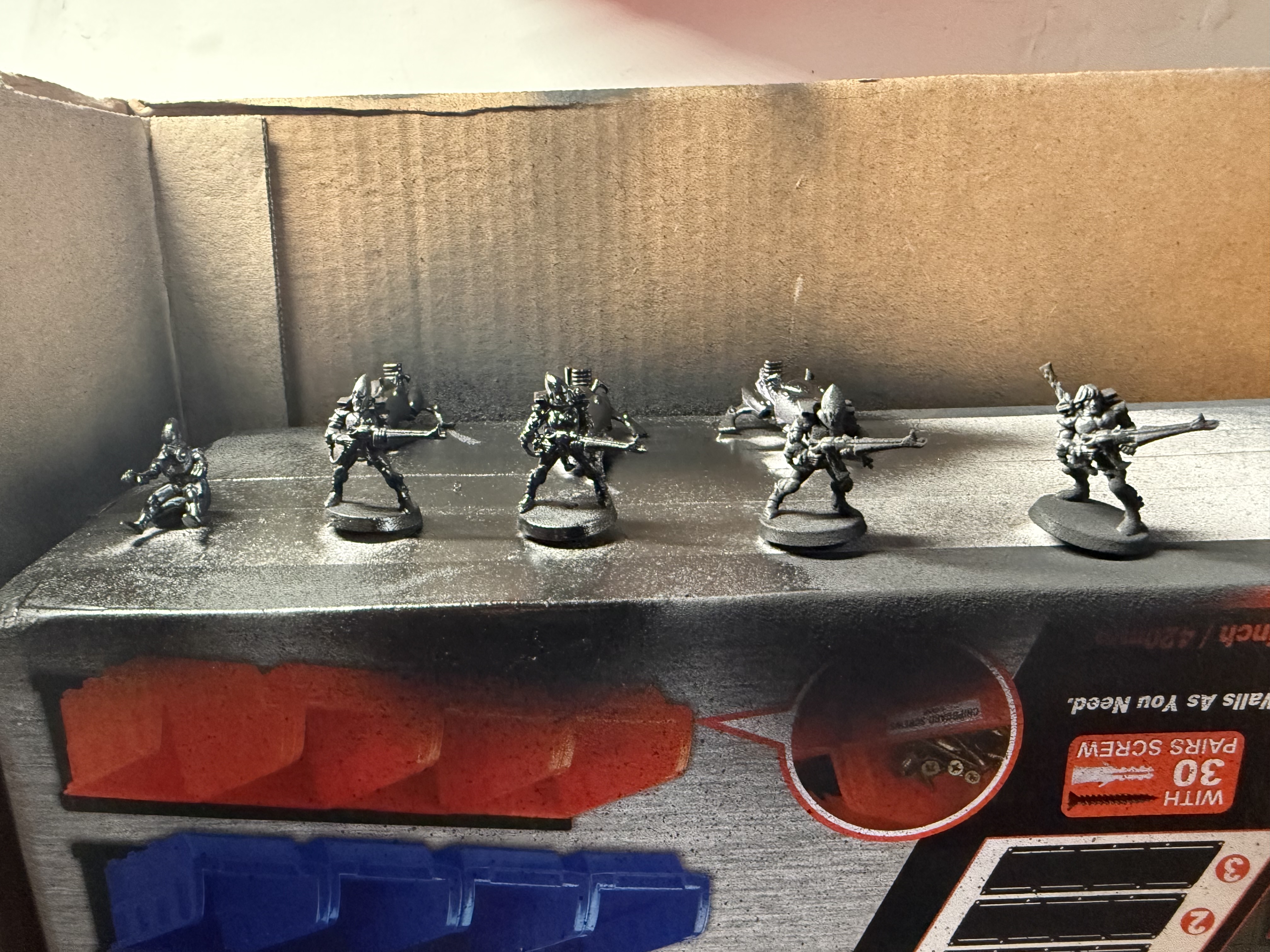
The Next Step Is Finally Making Them Ours

Once everything is cleaned, rinsed, completely dry, and ready for primer, I finally get to the part I bought these models for.

Black and pink.

That has been the plan for this army from the beginning.

I just do not know exactly what version of black and pink yet.

The Guardians are going to help me figure that out.

I can try different amounts of pink, change the helmet treatment, move accents around, play with weapons and spirit stones, and see how far I can push things before the army starts looking less like a unified force and more like another Facebook Marketplace listing.

The Windriders might be even more useful.

Those big curved cowls give me enough room to experiment with the brighter color against the black without immediately turning the whole jetbike into a flying piece of bubblegum.

This is the part of miniature painting I am beginning to enjoy the most.

https://epicagain.com/miniature-painting/

I do not know exactly what the finished army looks like yet.

I have a direction.

Now I get to try things and see what survives contact with an actual paintbrush.

Some ideas will work.

Others absolutely will not.

That is fine.

These models started as somebody else’s Aeldari.

Then they spent a while sitting in what looked like extremely questionable soup.

Now I get to figure out what they become next.

That seems like a pretty good second life for a box of old space elves.

Starting Warhammer 40K as a Complete Beginner: Why I Chose Aeldari

I didn’t choose my first Warhammer 40K army because someone told me it was the easiest one for a beginner. I chose Aeldari because the way they play sounded interesting, the models gave me plenty of room to experiment with paint, and my four-year-old daughter thought the idea of space elves was great. That last one may not appear in many competitive army guides. It still mattered. Starting Warhammer 40K from absolutely zero means making a surprising number of decisions before you have any real idea what you’re doing. There are factions, subfactions, Combat Patrols, datasheets, paints, lore, army lists, weapon options, and enough abbreviations floating around online to make you wonder if everyone else received an orientation packet you somehow missed. So naturally, one of the first big questions is which army to choose. I ended up with Aeldari.

Starting Warhammer 40K Means Choosing Something You Actually Care About

A lot of beginner advice focuses on finding the easiest army. That makes sense. Warhammer 40K already has a lot to learn, so picking a forgiving faction can remove some of the friction. But I think there is another part of the decision that matters just as much, especially when you are brand new. You have to actually want the army. Not just the rules. The army. You are going to spend hours building these things. Then you are going to spend more hours painting the miniatures. Eventually you have to learn what all the models do, remember which weapons belong to which unit, and figure out why the beautifully painted squad you carefully positioned just disappeared from the table. Probably because you positioned it less carefully than you thought. If I was going to put that much time into one faction, I wanted one that interested me beyond whether it happened to be considered beginner-friendly at the moment.

Your first Warhammer 40K army probably shouldn’t just be the army somebody tells you is easiest. It should be an army that gives you enough reasons to keep building, painting, learning, and playing it.

The Aeldari Playstyle Sounded Like Something I’d Actually Enjoy

The first thing that pushed me toward Aeldari was the way the army is supposed to play. At a broad level, Aeldari are fast, mobile, and specialized. Their units tend to have particular jobs rather than simply being good at everything, and much of their battlefield identity revolves around getting those units into the right place at the right time. That isn’t just community shorthand. Games Workshop’s own guide to starting an Aeldari army describes them as relying on specialist units for precise, powerful attacks while using speed to compensate for forces that can often be relatively fragile. That immediately sounded more interesting to me than choosing an army primarily because it could absorb mistakes.

I Like the Idea of Movement Matter­ing

I like the idea that where I put something should matter. Movement, positioning, picking a fight, getting a specialized unit where it needs to be, and then trying to get it out again all sound like the kind of tactical problems I want to learn. The current Warhammer 40,000 Aeldari Faction Focus still puts a heavy emphasis on that speed, particularly across the faction’s vehicles and mobile shooting. Of course, liking the concept and executing it correctly are two completely different things. I am very much at the first part. But that is also why the army appealed to me. I want to learn the positioning part of the game rather than just discovering which units can stand in one place most efficiently.

Specialized Units Also Mean More to Learn

This is also where I think the usual question of whether Aeldari are a good Warhammer 40K beginner army gets slightly complicated. The same specialization that makes them interesting can make them less forgiving. If one unit is particularly good at solving one kind of problem, I eventually need to learn what that problem is. Speed does not automatically make an army easier either. Moving very quickly in the wrong direction is still moving in the wrong direction. You just arrive at the mistake sooner. And many Aeldari units trade durability for mobility or offensive power, so poor positioning can have consequences. That doesn’t make them a bad beginner army. It just means good for beginners and easy to play aren’t necessarily the same thing.

Then My Daughter Heard “Space Elves”

The second reason was considerably less technical. My four-year-old daughter loved the idea of space elves. Fair enough. There are substantially worse sales pitches. Warhammer 40K is full of enormous armored soldiers, walking skeleton robots, alien swarms, daemons, religious machinery, and several factions that appear to have looked at the phrase “too many skulls” and rejected the premise entirely. And then there are elegant psychic space elves flying around on anti-gravity vehicles. That clicked with her. Her interest didn’t determine the whole decision, but it gave me another reason to like it. Part of what I want from getting into hobbies again is finding places where my own interests can overlap naturally with the things my kids find interesting. Not because every hobby has to become a family activity. Some things can just be mine. But if I’m going to spend hours painting tiny science-fiction warriors and my daughter is already interested in what they look like, what colors they should be, and the fact that they are apparently elves in space? That’s a pretty good bonus. It also connects to the bigger reason I’m building The Creative Return in the first place. I want creativity and hobbies to be things that exist alongside family life rather than things I vaguely remember having time for before it.

Aeldari Gave Me Room to Paint Something That Was Mine

The painting side may have been just as important as the tabletop side. One of the reasons I wanted to start Warhammer was the miniatures themselves. I didn’t just want an army that sounded fun to play. I wanted models that I would actually enjoy painting, experimenting with, and eventually making look like my army rather than a slightly worse copy of the picture on the box. Aeldari are extremely good for that. Different Craftworlds already use dramatically different color schemes, while Aspect Warriors traditionally bring their own recognizable colors and visual identities. Games Workshop’s beginner painting material specifically points out the faction’s wide range of colors and the freedom painters have to incorporate those traditions however they want. That opened the door for what I wanted to do anyway. Experiment.

I Didn’t Want the Box Art to Become a Rule

There is nothing wrong with painting an established Craftworld scheme exactly as shown. Some of them look great. But as a new painter, I like the idea that I can try different combinations without feeling like I broke some sacred rule because the left knee pad is the wrong shade of red. I especially wanted room to work pink into the army for my daughter. And Aeldari feel almost built for that kind of experimentation. Sleek armor, bright colors, contrasting helmets, spirit stones, Aspect Warriors, vehicles, and all the little details give me a lot of places to play with color without making every model look identical. That matters because painting isn’t just the chore standing between buying a box and playing the game. For me, it is part of the reason to buy the box at all.

I didn’t just want an army that sounded fun to play. I wanted an army I would still want to work on when there wasn’t a game scheduled.

Are Aeldari Actually a Good Beginner Army?

I think they can be. But I would put an asterisk the size of a Wraithknight next to that answer. If by “good beginner army” you mean an army designed to forgive every bad decision while you learn the rules, Aeldari probably aren’t the most obvious answer. The faction’s emphasis on specialization, speed, and positioning means there is quite a bit to learn. Some units are less durable than the giant armored warriors found elsewhere in Warhammer 40K, and using the wrong tool for the wrong job can go badly. But if by “good beginner army” you mean an army that gives you reasons to stay interested while you learn? That is different. Aeldari have a huge visual identity, lots of different unit styles, fast vehicles, Aspect Warriors, Wraith constructs, psychic weirdness, plenty of painting options, and enough variation that I can see several different directions an army could eventually go. I find that much more useful than being told I should start with something else purely because it has a gentler learning curve. The rules can be learned. Wanting to spend the next hundred hours with the models is harder to fake.

The First Army Doesn’t Have to Be the Perfect Army

This is probably the biggest thing I have taken from choosing my first Warhammer 40K army. I don’t think there is a perfect choice. Rules change. Points change. Units get stronger and weaker. New books appear. Games Workshop occasionally reaches into the machinery and moves several important gears around while everyone is still arguing about the previous arrangement. If your entire reason for choosing a faction is that somebody online says it is currently the easiest or strongest option, that reason has an expiration date. The models don’t change nearly as quickly. Neither does the basic fantasy of the faction. If you love the lumbering war machines, pick the lumbering war machines. Do you want an endless swarm of horrible bugs, there is an army waiting for you. If giant armored knights are the reason you started looking at Warhammer in the first place, that probably tells you something useful. For me, it was fast, specialized space elves that I could paint in colors my daughter and I both thought looked cool. That seems like enough of a reason to start.

For Me, That Was Aeldari

I am still at the beginning of all this. That’s important. This isn’t an article written after years of tournament games explaining why everyone else has misunderstood Aeldari. It is the opposite. I am learning the army while I learn Warhammer 40K itself. And that is part of what I want to document on EpicAgain: starting hobbies from the uncomfortable point where other people already seem to know all the terminology, all the tricks, and apparently which shade paint produces the objectively correct buckle. I picked Aeldari because the playstyle makes me want to understand the game. I picked them because the models make me want to paint. And I picked them because my daughter thinks space elves are cool. None of that proves they are the correct first Warhammer army. It only proves they were the right one for me to start with. I still have to learn how to play them. But at least I picked an army I actually want to learn.