
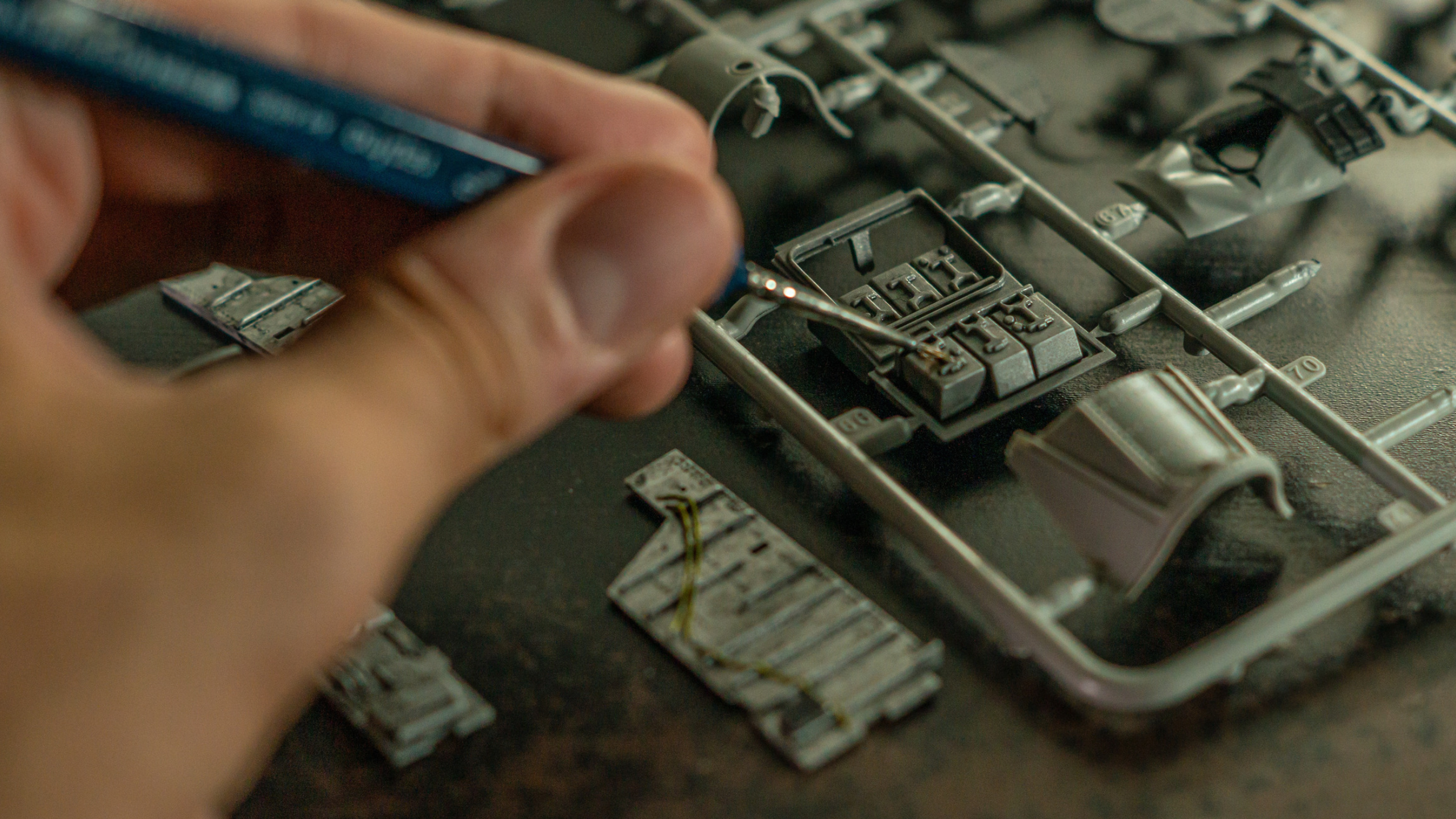
It usually starts with one miniature.
A towering armored warrior. A strange little goblin riding something with far too many teeth. An elegant alien skimmer that looks like it should be illegal to park in a normal garage.
You stop scrolling. You look closer. You think, “That looks cool.”
And then you make the dangerous mistake of asking the internet how to start Warhammer.
Suddenly you are being introduced to several fictional millennia, multiple game systems, army-building advice, rules discussions, painting equipment, edition changes, and an argument about which faction is supposedly doomed this month. You came here because of one excellent plastic wizard. Now you appear to be enrolling in a postgraduate program.
The good news is that Warhammer does not require an entrance exam. The bad news is that the hobby has so many interesting doors that beginners often try to walk through all of them at once.
So here is a smaller plan: pick the door that matches what made you curious. You can open the others later.
First, Decide What You Actually Want From Warhammer
Warhammer is not one activity. It is a collection of overlapping hobbies. Some people spend their evenings painting individual models. Some want tactical games with friends. Others get lost in novels, art, factions, and the absurdly elaborate history of these worlds. Plenty eventually do all three, but that does not mean you have to start with all three.
Try this question: if you could only do one Warhammer thing next weekend, what would make you happiest?
Door One: “I want to paint something.”
Door Two: “I want to play a game.”
Door Three: “I want to explore the story.”
That answer is your starting point, not a lifetime contract. Choosing a door means you can stop researching the entire hobby and do one real thing.
Door One: I Want to Paint Something
If the miniature itself grabbed you, start there. You do not need an army list to paint a miniature. You do not even need to know whether its faction wins games.
Your first quest is wonderfully unimpressive: choose one model you genuinely like and get paint on it.
One model. Not a starter army. Not a thirty-color shopping basket. Not a beautifully organized workstation that requires moving the dining room into the garage.
Look for an introductory miniature-and-paint set if you want a straightforward bundle. Warhammer Colour publishes beginner tutorials covering basic preparation, basecoating, shading, drybrushing, and other techniques. You can follow one simple guide or pick a few colors and experiment.
A sensible first setup is a model, the supplies needed to assemble it safely, an appropriate primer if the paint process calls for one, a small selection of paints, a brush, water, and a surface you can clean. Follow safety instructions for tools and paints, especially around children. You can acquire fancy lighting and seventeen specialty brushes after you know you enjoy holding the first one.
For your first paint session, aim to finish one visible section. An armor plate. A cloak. A shield. A suspiciously expressive goblin face.
The first model is not a job interview. It is a place to find out whether you enjoy the process.
When I started choosing an Aeldari army, I was interested in how the models looked and how much room they gave me to experiment with color. The project even took a different turn when my daughter became interested in pink space elves. That was a useful reminder: a paint scheme can be a creative choice, not a test of whether you copied the box correctly.
If you discover that you love painting but do not particularly care about playing, you are still doing Warhammer. No imaginary hobby inspector is going to confiscate your brush.
Door Two: I Want to Play a Game
If the appeal is moving tiny armies across a table, making risky decisions, and watching dice ruin your excellent plans, begin with a format designed to be manageable.
For Warhammer 40,000, look at Combat Patrol. It uses compact, predefined forces so you can learn the game without immediately building a giant custom army list. As of the July 2026 update, Games Workshop says the Combat Patrol rules in its Warhammer 40,000 app are free, without needing a Codex or subscription for that content. Check that the specific force you are considering is supported in the current app, especially if you are buying an older secondhand box.
For Warhammer Age of Sigmar, look at Spearhead. It is a smaller format using predefined forces from dedicated boxed sets, with downloadable rules for each Spearhead. It is built to get players into games without first assembling a sprawling army.
Neither option means “buy the box immediately.” In fact, I would suggest the opposite first.
Your first quest is to watch or join one introductory game. Ask a local hobby shop, club, or Warhammer store whether someone runs demonstrations or beginner nights. Ask whether you can borrow an army or watch a teaching game. A friendly player explaining why that unit just charged the wrong thing can be more useful than three hours of video tutorials.
If you are learning with a friend, use a beginner-oriented starter set or arrange to borrow suitable forces, dice, terrain, measuring tools, and any format-specific cards or materials. Free rules do not necessarily mean you already own every physical thing required for a game. Check the current format requirements before purchasing.
For game one, measure success by what you understood, not the final score. Did you learn how a turn works? Did you move toward an objective? Did you understand one ability better by the end? Excellent. Your troops have already achieved more than many fictional military commanders.
Door Three: I Want the Story
Maybe you are here because the setting caught you. That is a perfectly good reason to start, and it may be the least expensive door to open.
Warhammer 40,000 offers a far-future galaxy full of empires, aliens, ancient grudges, and a truly irresponsible quantity of skulls. Age of Sigmar is a high-fantasy setting of realms, gods, monsters, cities, and armies with very different ideas about civilization.
Do not start with a demand to understand the complete timeline. Pick one faction you find intriguing and one conflict involving them.
Your first quest is to answer three questions: Who are these people? What do they want? Who or what is in their way?
Read a short official faction introduction, sample a story, or explore a beginner-friendly novel connected to that group. If a character or setting hooks you, follow it. If not, switch factions. There is no prize for stubbornly studying a corner of the lore you do not enjoy.
The lore door can also lead to painting or gaming later. A favorite character might make you want a model for your shelf. A battle you read about might make you curious about how the tabletop game represents it. But the reading was never just preparation. Enjoying the world is already participation.
Warhammer 40,000 or Age of Sigmar?
You can spend days researching which game is the better investment. A simpler question is which world you want to spend time in.
Does science-fiction warfare, alien technology, and ancient space civilizations make you curious? Start by exploring 40K.
Do you want fantastical creatures, magical realms, monsters, and armored heroes? Age of Sigmar may be the more interesting doorway.
This is not a claim that one is easier, cheaper, or better for everyone. Your local community matters too. If your friends play one game every Thursday and nobody nearby plays the other, that is useful information if tabletop gaming is your goal.
And if you are mostly painting or reading, the local player count matters much less. The best universe for your first miniature may simply be the one whose models you keep coming back to look at.
Choosing a Faction Without Turning It Into Homework
There is a temptation to search for the best beginner faction. That can help if you know exactly what kind of game experience you want, but “best” is often doing far too much work in that sentence.
Try the Three-Yes Test instead.
First: Do I like looking at these models? You may spend many evenings assembling and painting them. Visual interest matters.
Second: Does the faction’s general story or battlefield personality interest me? You do not need to know every rule. You just need a reason to be curious.
Third: Can I imagine enjoying a small first project with them, even if I lose my early games or change my color scheme?
If you have three yeses, you have a strong candidate. If you only have one, keep exploring before making a large purchase.
I chose Aeldari because their fast, specialized style interested me, their models looked fun to paint, and the idea of space elves made the project feel inviting at home. That choice does not guarantee easy games. It gives me a reason to keep learning.
Rules and competitive rankings can change. Your affection for a weird little army of tree spirits, skeletons, or futuristic warriors is a much sturdier foundation.
The “Do Not Buy Yet” Box
Warhammer has a remarkable ability to make the next purchase feel like the thing standing between you and having fun. Sometimes it is. Often it is not.
Before you know which door you enjoy, postpone the big army expansion, the premium painting station, the huge collection of paints, and the stack of faction books you have not yet learned how to use.
If you are painting, one small project will teach you what supplies you actually need next.
If you are playing, confirm the current rules and materials for your chosen format, and ask your local group what they use before buying books or older boxed sets. A standalone force box may not include an opponent’s army, a board, terrain, or all the accessories needed to play.
If you are reading, do not buy six novels because someone says they are essential. Finish one story and see whether you want another.
There is no shame in buying hobby supplies you love and can afford. But buying everything before doing anything can turn curiosity into an expensive waiting room. Your goal is to discover the activity, not assemble a museum gift shop.
Your Seven-Day First Quest
You do not need seven days of free evenings. Think of this as seven tiny decisions you can spread across a week or two.
Day 1: Pick your door. Painting, playing, or story. Write it down.
Day 2: Choose two factions that catch your eye. Do not research the entire roster.
Day 3: Give each faction the Three-Yes Test. Pick one to explore first.
Day 4: Find your smallest next action. One miniature, one beginner game, or one short piece of lore.
Day 5: Check what you already have or can borrow. Make a short shopping list only if something is genuinely missing.
Day 6: Spend twenty minutes doing the hobby, not preparing to do it. Put down paint, watch or join the teaching game, or read the story.
Day 7: Ask what you want to do again. That is your next quest.
Notice what is missing: no deadline to finish an army, no requirement to memorize every rule, no pressure to select a permanent faction, and no promise that the first miniature will look like the studio photograph.
If life interrupts halfway through, nothing has been lost. Pick up at the next small action. Hobbies are allowed to fit around real life.
A Note to the Veteran Helping a New Player
If a friend asks how to get into Warhammer, you have a wonderful opportunity to make the door smaller rather than showing them the entire castle.
Ask what attracted them first. Then help them do that thing.
If they love painting, hand them a model and a brush. If they want to play, offer a simple teaching game with borrowed miniatures. If they love the story, recommend one approachable entry point connected to a faction they already like.
Save the competitive meta, edition history, and fifteen exceptions to the rules for the moment they become useful. Enthusiasm is generous, but a fire hose of knowledge can feel remarkably similar to a locked gate.
The best introduction is one that leaves someone excited to come back.
You Are Allowed to Begin Before You Understand
There will always be more Warhammer than you know. More models, more stories, more rules, more painting techniques, more opinions about whether that particular shade of blue is technically correct.
Good. That means the hobby has room to grow with you.
You do not need to master it before you start. You need one small reason to begin and one next action that fits your actual life.
That model you stopped scrolling for? Go look at it again. Decide whether you want to paint it, play with it, or learn why it exists.
Pick a door. Take the tiny first quest. The rest of the world can wait until you are ready to explore it.
No Comments yet!