

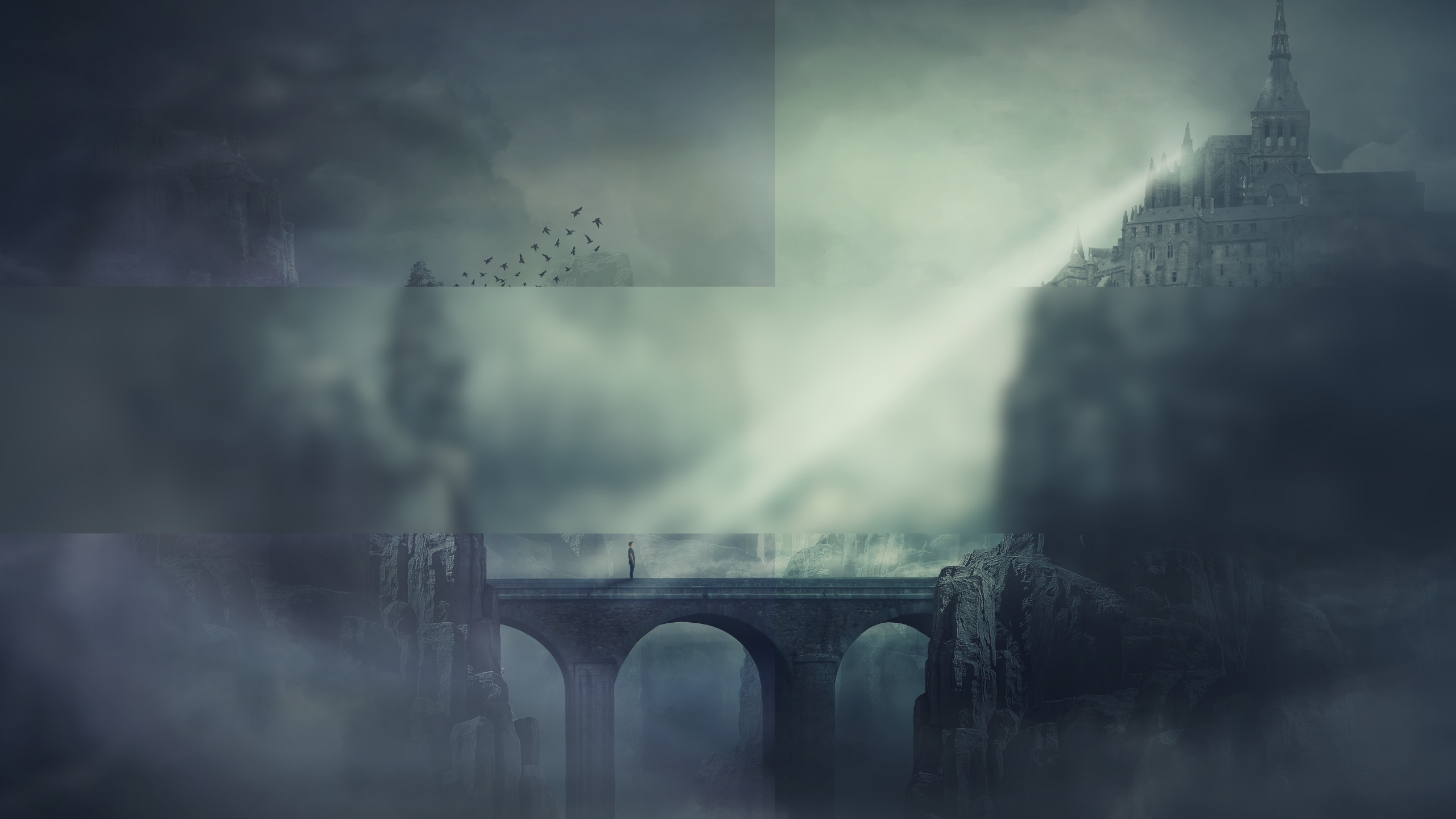
And then there are fictional worlds where the kingdom was corrupt before the hero arrived, the rebellion may be worse, the gods might not care, the person giving the inspirational speech is probably lying, and the victory at the end comes with a body count and several uncomfortable moral questions.
Welcome to grimdark.
It is a term that gets thrown around constantly now, especially anywhere fantasy, science fiction, Warhammer, brutal television, morally gray characters, and catastrophic fictional civilizations overlap.
But grimdark is more than a synonym for really dark.
A story does not become grimdark simply because people die.
It is not grimdark because the villain wins.
It is not grimdark because everyone wears black armor and somebody has placed a skull on the architecture.
Although, admittedly, the skulls do not hurt.
At its best, grimdark is about what happens when people try to survive, succeed, believe, love, govern, fight, or remain human inside systems that are profoundly broken.
That is what makes it interesting.
And that is also why I keep finding myself drawn back to it.
What Does Grimdark Mean?
The simplest definition is this:
Grimdark is a style of speculative fiction built around morally complicated characters, brutal consequences, broken institutions, and worlds where traditional heroic victories are difficult, compromised, or impossible.
The term is used most often with fantasy and science fiction.
A grimdark story might include:
- Morally gray protagonists
- Corrupt governments
- Religious institutions with competing motives
- Warfare without clean victories
- Political manipulation
- Desperate survival
- Betrayal
- Violence with lasting consequences
- Social systems that cannot be repaired by defeating one villain
- Characters forced to choose between bad options
But none of those elements alone defines grimdark.
What matters is the worldview surrounding them.
Traditional heroic fantasy often asks:
Can the hero defeat evil?
Grimdark is more likely to ask:
What happens when everyone involved has blood on their hands?
Or:
What if destroying the monster does not fix the civilization that created it?
Or even:
What if doing the right thing still makes everything worse?
Those questions are what give grimdark its teeth.
Where Did the Term “Grimdark” Come From?
The word has roots in Warhammer 40,000, particularly its famous description of the setting:
“In the grim darkness of the far future…”
That phrase eventually became shorthand for stories sharing some of Warhammer 40K’s defining characteristics.
Civilization is decaying.
War is effectively permanent.
Institutions that supposedly protect humanity are often monstrous themselves.
Knowledge has been lost.
Religion, politics, technology, and military power are tangled together.
Heroism exists, but heroic people are operating inside machinery far larger and uglier than they are.
Over time, the term escaped its Warhammer origins and became a broader label for a certain kind of fantasy and science fiction.
And like most genre labels, everyone immediately began arguing about what actually qualifies.
Which is probably the most literary thing that could have happened.
Grimdark Is Not Just “Everything Is Awful”
This is where I think grimdark gets misunderstood.
There is a shallow version of dark storytelling that basically amounts to:
More suffering equals more mature.
Kill enough characters.
Add torture.
Make every institution corrupt.
Ensure every relationship ends badly.
Have someone betray somebody every fifty pages.
Cover the whole thing in mud.
Congratulations. Prestige fiction.
But darkness alone is not especially interesting.
If every person is terrible, every choice is meaningless, every institution is hopeless, and every good action is punished, the story can actually become predictable.
Nothing matters.
Everyone loses.
Roll credits.
Strong grimdark works because there is still something at stake.
Someone still loves someone.
Someone still believes something.
Someone still wants justice.
Someone still refuses to become the worst version of themselves.
Even if they fail.
In fact, those things often become more meaningful because of the darkness surrounding them.
A candle means very little at noon.
Put it inside a collapsed cathedral at midnight and suddenly you notice it.
Grimdark and Moral Grayness
One of the most recognizable features of grimdark is the morally gray character.
Classic heroic storytelling tends to give us clearer moral categories.
The hero may be flawed, but we generally know who we are supposed to support.
Grimdark makes that much harder.
A general might genuinely love his people while ordering atrocities.
A revolutionary might be fighting a monstrous government while slowly becoming just as dangerous.
A priest might sincerely believe in the faith while participating in a corrupt religious institution.
A mercenary might do terrible things professionally and still show more compassion than the supposedly righteous people around him.
The interesting question becomes less:
Who is good?
And more:
What does this person do when every available choice costs something?
That does not mean morality disappears.
Quite the opposite.
Grimdark becomes boring if morality does not matter.
The moral tension comes from characters being unable to navigate the world without compromise.
Their choices still matter.
Sometimes they matter terribly.
Grimdark vs. Dark Fantasy
These two terms overlap constantly, but they are not quite the same.
Dark fantasy usually describes fantasy containing horror, disturbing supernatural elements, bleak themes, frightening monsters, or psychologically dark material.
A dark fantasy story can still have a very traditional hero.
You could have a noble knight fighting unspeakable monsters in a horrific world.
The setting is dark.
The morality is not necessarily complicated.
Grimdark tends to push farther into political, institutional, and moral decay.
The monster may not be the real problem.
The kingdom hiring the knight might be.
Or the knight.
Or the church.
Or the rebellion.
Or the ancient magical system everyone relies on.
Or all of them simultaneously.
Dark fantasy often says:
There are terrible things in the darkness.
Grimdark sometimes replies:
Yes, and we built half of them.
Grimdark vs. Dystopian Fiction
Grimdark also overlaps heavily with dystopian fiction.
But dystopia usually focuses on a society organized around a particular oppressive political or social system.
Think surveillance states, authoritarian regimes, rigid caste systems, engineered populations, or totalitarian control.
The dystopian society itself is often the central subject.
Grimdark can contain dystopias, but its world may be much messier.
There might be hundreds of competing governments.
Religious factions.
Empires.
Corporations.
Mercenary fleets.
Ancient institutions.
Collapsed worlds.
Independent settlements.
None necessarily represents the system.
The universe may be broken not because one evil regime conquered everything, but because history produced layers upon layers of competing failures.
That kind of messiness is one reason grimdark works particularly well with deep worldbuilding.
The setting itself can become a record of old decisions, failed reforms, forgotten wars, religious schisms, political compromises, and civilizations still living inside consequences created centuries earlier.
Science Fiction Is Perfect for Grimdark
Fantasy gets a lot of the grimdark conversation, but science fiction may be an even better playground for it.
Science fiction lets you increase the scale.
Instead of one corrupt kingdom, you can have a civilization spanning thousands of worlds.
Instead of a forbidden magical artifact, you can have technologies capable of changing the definition of humanity.
Instead of generations remembering an ancient war, you can have political systems carrying consequences forward for ten thousand years.
Now introduce questions about:
- Artificial intelligence
- Genetic engineering
- Interstellar empire
- Religious authority
- Consciousness
- Immortality
- Colonization
- Technological inequality
- Warfare
- Personhood
- Corporate power
- Lost civilizations
- Political legitimacy
Suddenly grimdark has an enormous sandbox.
And those questions get particularly interesting because science fiction does not have to invent wholly fictional ethical dilemmas.
It can stretch questions we are already asking until we can see them differently.
Who gets access to powerful technology?
What counts as a person?
How much liberty should people surrender for security?
What happens when governments become too large to understand the people they govern?
Does technological progress make civilization more moral?
What happens when institutions outlive the principles that created them?
Now put those questions twenty thousand years in the future.
Things get interesting.
Warhammer 40,000 and the Grimdark Extreme
If you are trying to understand grimdark science fiction, Warhammer 40,000 is the giant cathedral-shaped elephant in the room.
Its setting takes many grimdark elements and turns every knob until it breaks off.
Humanity survives inside the Imperium of Man, an enormous authoritarian civilization built around war, bureaucracy, religious fanaticism, technological stagnation, and the worship of an effectively dead emperor.
And somehow, many of the alternatives are worse.
There are alien civilizations.
Chaos gods.
Daemons.
Ancient machines.
Tyranid swarms.
Orks.
Aeldari factions carrying the consequences of their civilization’s catastrophic past.
Entire planets can disappear into wars involving billions of people.
It is deliberately excessive.
That is part of its personality.
But underneath the monumental absurdity, Warhammer frequently lands on a very effective grimdark idea:
Humanity may be fighting to survive while simultaneously becoming something horrifying in order to survive.
That contradiction is powerful.
Is Game of Thrones Grimdark?
This gets debated because genre labels are apparently incapable of existing peacefully.
George R.R. Martin’s A Song of Ice and Fire contains many elements associated with grimdark:
- Political brutality
- Morally complicated characters
- War
- Betrayal
- Institutional corruption
- Characters dying without satisfying narrative justice
- Good intentions creating disastrous outcomes
But it also contains traditional heroism, honor, sacrifice, love, supernatural good and evil, and characters who clearly care about doing what is right.
Some readers call it grimdark.
Others consider it dark epic fantasy rather than true grimdark.
I think the disagreement itself reveals something useful:
Grimdark is better understood as a spectrum than a checklist.
Stories can borrow heavily from the grimdark tradition without embracing its bleakest worldview.
Character-Driven Grimdark
Joe Abercrombie’s First Law books are another frequent reference point.
Where Warhammer works at an enormous civilizational scale, The First Law often demonstrates how effective grimdark can be at the level of character.
People try to change.
Sometimes they fail.
People believe they are heroes.
Sometimes they are monsters.
Political events that initially appear straightforward become increasingly complicated as motives, power, history, and manipulation are revealed.
The genre works particularly well when the reader realizes:
I understand why this person did this terrible thing.
Not approve.
Understand.
That distinction is important.
Great grimdark does not require the reader to abandon morality.
It forces the reader to exercise it.
Does Grimdark Have to Be Nihilistic?
I do not think so.
And this is probably where my interest in the genre becomes strongest.
There is a difference between grim and meaningless.
A world can be brutal without meaning being impossible.
People can fail morally without morality itself being fake.
Religious institutions can become corrupt without faith being false.
Governments can commit atrocities without justice becoming meaningless.
Humanity can repeatedly fall into the same traps without making redemption impossible.
In fact, I think grimdark becomes more powerful when there is something genuinely good to lose.
If nothing matters, tragedy cannot really exist.
Tragedy requires value.
Betrayal matters because loyalty matters.
Corruption matters because integrity matters.
Cruelty matters because compassion matters.
Damnation matters because salvation might have been possible.
That creates a version of grimdark I find much more interesting than simple nihilism.
Hope Works Differently in Grimdark
In heroic fantasy, hope is often enormous.
The army arrives.
The king returns.
The prophecy is fulfilled.
The darkness breaks.
The world changes.
Grimdark often works better with small hope.
One person refuses an order.
Someone saves a child when there is no strategic reason to do it.
A soldier chooses mercy.
A dying person tells the truth.
Two enemies decide not to kill each other.
Someone believes when belief appears irrational.
Someone forgives something that should have created another generation of revenge.
These moments do not necessarily fix the universe.
That is precisely why they matter.
Hope in grimdark is not always a sunrise.
Sometimes it is someone refusing to extinguish the last light.
Why Do People Enjoy Stories This Dark?
That is probably the obvious question.
Why spend hundreds of pages inside fictional worlds filled with war, corruption, betrayal, decay, and terrible people?
Part of the answer is simply that conflict is interesting.
But I think there is more to it.
Grimdark lets us explore situations where easy moral answers have been removed.
It creates pressure.
And pressure reveals character.
It asks:
- What do you really believe?
- What would you compromise?
- What would you refuse to compromise?
- How much evil would you tolerate to prevent something worse?
- Would you still choose what is right if it changed nothing?
- Would you forgive someone who does not deserve it?
- Can a corrupt institution still contain good people?
- Can a terrible person change?
- Can a civilization?
Those are not especially comfortable questions.
They are interesting ones.
When Grimdark Goes Wrong
The genre absolutely has weaknesses.
One of the biggest is confusing cynicism with intelligence.
Sometimes a character sincerely doing something good is treated as naive simply because the story wants to appear sophisticated.
Sometimes every religious person is corrupt.
Every politician is selfish.
Every soldier is traumatized.
Every marriage is miserable.
Every ideology is fraudulent.
Every hero is secretly awful.
After a while, that does not feel realistic.
It feels engineered.
Reality contains terrible people.
It also contains people who run into burning buildings for strangers.
Both are human.
Another problem is escalation.
Once your fictional world contains genocide, torture, planetary destruction, demons, slavery, cannibalism, authoritarianism, and a seventeen-year war, where exactly do you go next?
Sometimes grimdark settings become trapped in a competition with themselves.
Everything has to become darker.
Eventually darkness stops being shocking and becomes wallpaper.
Grimdark Needs Contrast
This might be the single most important ingredient.
Darkness needs contrast.
Give characters something worth protecting.
Friendship.
Family.
Faith.
Home.
Beauty.
A promise.
A memory.
A child.
A world.
Even humor.
Especially humor.
People make jokes in terrible situations.
Soldiers have always done it.
Families do it during crises.
Humans are remarkably good at finding absurdity while everything burns.
Those glimpses of ordinary humanity make fictional darkness feel far more real.
A story where everyone spends the entire novel staring into the middle distance and discussing the cruelty of existence may technically be grim.
It may also be exhausting.
Grimdark Is About Consequences
If I had to reduce the genre to one quality beyond darkness, it would be this:
Consequences matter.
Wars leave scars.
Political decisions create generations of problems.
Violence changes people.
Religious schisms outlive the people who caused them.
Technologies reshape civilizations.
Empires inherit the sins of previous empires.
Characters cannot simply deliver an inspirational speech and reset the world.
History sticks.
That is part of what makes grimdark worlds feel enormous.
The current story is rarely the beginning of anything.
Everyone is living inside the consequences of things that happened long before they were born.
And they are creating consequences for people who have not been born yet.
That is also one of the reasons I enjoy building large fictional settings. Good worldbuilding allows a grimdark story to feel like one chapter in a much older history instead of a stage constructed only for the current plot.
The Kind of Grimdark I Want to Explore
This is where the genre becomes especially interesting to me creatively.
I am not particularly interested in building a fictional universe where the final message is:
Everything is terrible and nobody matters.
I want the opposite tension.
I want a universe where everything can be terrible and choices still matter.
Where faith can be abused without being meaningless.
Where institutions founded with good intentions can decay.
Where entire civilizations can build themselves around ideas that are partly true and catastrophically incomplete.
Where terrible people might find redemption.
Where good people can become monsters.
Where history sometimes repeats because people have not changed as much as their technology has.
Where humanity can cross tens of thousands of light-years and still carry the same ancient problems inside itself.
And somewhere inside all of that darkness, grace remains possible.
Rare.
Costly.
Sometimes rejected.
Sometimes misunderstood.
But possible.
That is the kind of grimdark I want to explore through the worlds I build and, eventually, through the original fiction that grows out of them.
Not darkness for darkness’s sake.
Darkness that makes the light harder to ignore.
So, What Is Grimdark?
Grimdark is speculative fiction where the world does not arrange itself around the hero.
Institutions are compromised.
Characters are complicated.
Violence leaves consequences.
Victories cost something.
History refuses to stay buried.
Doing the right thing may not save everyone.
Sometimes it may not save anyone.
And yet people continue choosing.
That last part matters.
Because the most interesting grimdark stories are not really about proving that humanity is terrible.
We already know humans are capable of terrible things.
The more interesting question is what people do after the world gives them every excuse to become terrible too.
Some will.
Some will not.
Some will fall and crawl their way back.
Some will convince themselves their cruelty is righteousness.
Some will try to save civilizations.
Some will only manage to save the person standing beside them.
And sometimes that tiny victory is all the light the story needs.
That is grimdark.
Not simply a world without hope.
A world where hope has to survive something first.
Other Articles
Welcome to EpicAgain: Starting the Creative Journey Again

